5 Best AI Finance Assistant Tools for Startup Founders

Riten Debnath
18 Jun, 2026
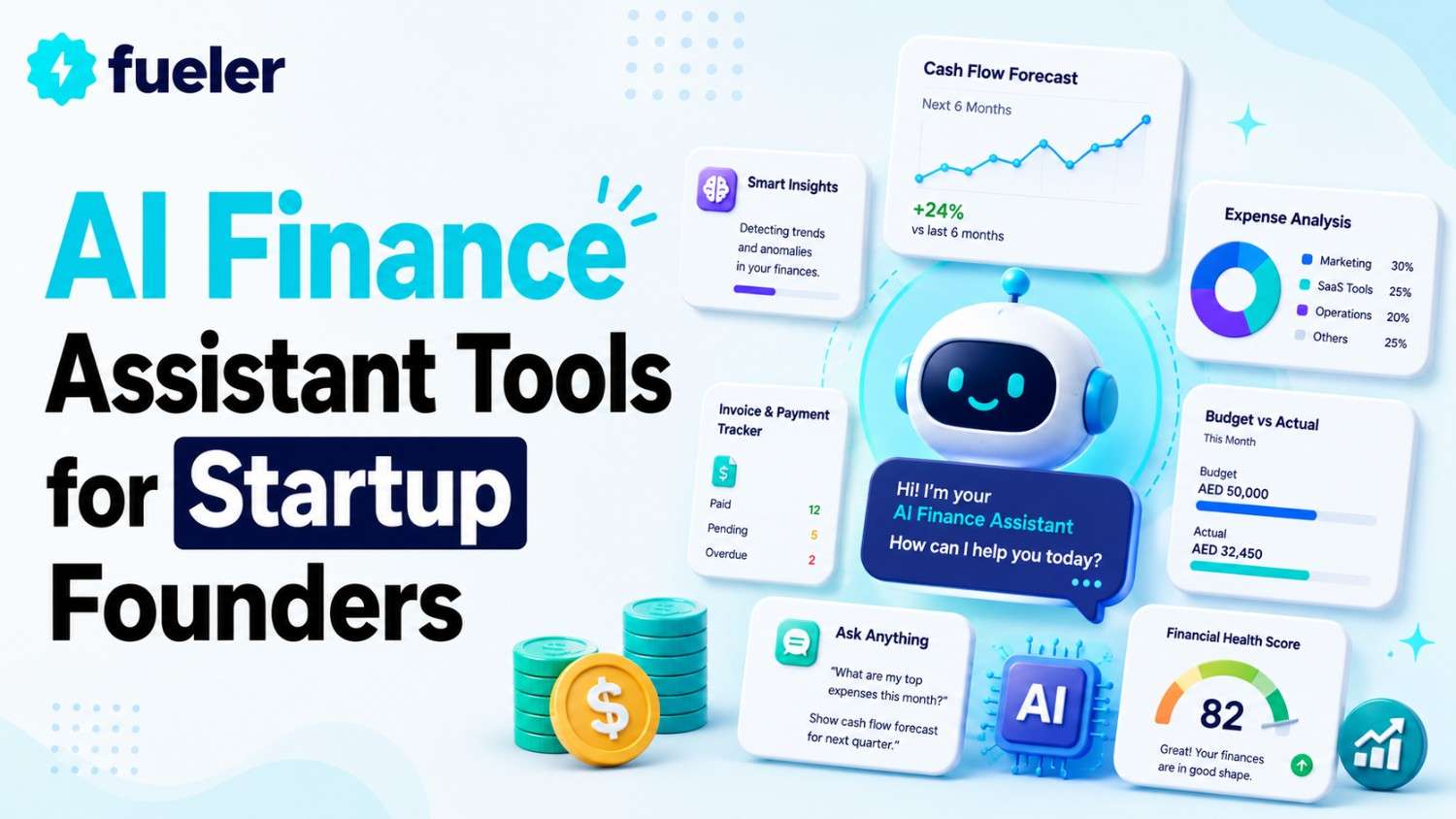
Venture capital allocation structures, shifting cash conversion cycles, and complex cash runway tracking mean that early-stage operators can no longer manage corporate finances using historical, disconnected spreadsheets. Relying on retrofitted accounting models leaves founders highly vulnerable to mid-quarter capital shortfalls and inaccurate budget forecasting.
I’m Riten, founder of Fueler, a skills-first portfolio platform that connects talented individuals with companies through assignments, portfolios, and projects, not just resumes/CVs. Think Dribbble/Behance for work samples + AngelList for hiring infrastructure.
To protect operating margins and sustain growth, modern startups rely on background automation to process raw transaction feeds, simulate cash runways under multiple market variables, and provide instant financial visibility. This strategic guide breaks down the market software solutions running automated financial analysis pipelines for early-stage organizations. You will learn how to evaluate predictive modeling accuracy, connect distributed operational databases, and deploy contextual algorithms that translate abstract accounting data into actionable execution paths.
Here are the best AI finance assistant tools for startup founders.
1. Clockwork AI
Best For: Seed and Series A startups using QuickBooks Online or Xero who need instantaneous cash flow forecasting, multi-variant runway tracking, and hands-off financial model construction.
Clockwork AI connects directly to primary cloud general ledgers to replace static forward-looking projections with real-time transactional monitoring models. The software builds weekly cash projections instantly, isolates recurring burning trends, and helps founders simulate major operational shifts without requiring manual ledger structure adjustments.
- Real-Time Runway Projection Assembly: The system directly reviews up to three years of raw operational accounting data to generate multi-variant runway models instantly, projecting net cash balances months ahead while completely eliminating manual formula maintenance.
- Granular Multi-Scenario Capital Simulation: Founders create customized scaling assumptions, target hiring paths, or sudden enterprise contract drops inside the portal, visualizing immediate downstream impacts on operating capital without altering core balance sheets.
- Automated Weekly Cash Tracker: The tracking engine runs constant transactional checks across global operational bank accounts, alerting executive teams to unexpected expenditure variations long before standard accounting periods close out.
- Direct General Ledger Synchronicity: Inbound transaction details mirror local ledger adjustments automatically the moment your books update, giving management access to accurate financial health charts without exporting vast CSV strings.
- Algorithmic Metric Visualization Dashboards: Complex operational data points transform into clean visual overview cards, allowing non-technical department leads to parse burn metrics, revenue changes, and payment collections comfortably.
Pricing:
- Basic: $39 per month
- Growth: $149 per month
- Pro: $299 per month
- Custom Enterprise: Custom pricing via custom quotes
Why It Matters in 2026:
The tool removes structural forecasting delays for early-stage executives who lack full-time finance departments. By turning transaction histories into self-updating models within minutes, it gives management teams accurate financial guidance when presenting metrics to institutional investors.
2. Aleph
Best For: Fast-growing tech companies needing a central data architecture that connects complex cloud databases, payment rails, and spreadsheets into a verified financial truth ledger.
Aleph acts as an analytics layer that unifies split transactional databases, internal headcount tracking pipelines, and standard web spreadsheets under a single processing framework. It maintains the absolute flexibility of traditional desktop models while using back-end intelligence to keep data synced, audited, and perfectly observable.
- Unified Centralized Data Consolidation: The platform joins records from separate billing systems, customer databases, and production ledgers simultaneously, organizing disjointed operational metrics into a single, standardized financial information framework.
- Two-Way Spreadsheet Synchronization Engines: Financial analysts build customized formulas in standard Google Sheets or Microsoft Excel workbooks while pulling live, verified system data directly from connected corporate pipelines.
- Fully Observable Audit Pathways: Every calculation trace displays original underlying transaction documentation upon inspection, completely removing black-box software calculation risks and ensuring total transparency during detailed compliance reviews.
- Dynamic Team Headcount Planning: Growth managers construct complex salary models, geographical tax projections, and scaling cost frameworks that update operational cash forecasts automatically as new personnel clear company onboarding.
- Rapid Multi-System Data Transformation: Custom script engines automatically clean raw transactional information streams, sorting incoming international customer records into appropriate regional accounting categories without custom engineer builds.
Pricing:
- Standard Platform: Starts at $500 per month (billed annually)
- Scale Tier: Starts at $1,200 per month
- Enterprise Solution: Quote-based pricing tailored to data sizes
Why It Matters in 2026:
Aleph solves the problem of disconnected financial spreadsheets for teams handling multiple software-as-a-service billing rails. It lets analysts keep their preferred spreadsheet layouts while ensuring the underlying data streams stay updated, accurate, and completely verified.
3. Fathom
Best For: Bootstrapped startups, digital agencies, and professional advisors requiring professional management reporting frameworks paired with automated performance narratives.
Fathom delivers advanced performance reporting, structured multi-entity consolidation, and long-range scenario modeling for organizations transitioning away from simple accounting readouts. The platform stands out for its text generation layer, which interprets numerical balance shifts and converts them into clear management narratives automatically.
- Contextual Financial Narrative Generation: The built-in summary engine reads period-over-period balance changes to draft comprehensive executive updates, saving founders hours of manual report preparation before monthly board meetings.
- Verified Traceable Calculation Metrics: Reviewers hover over any generated text figure to instantly reveal the exact formula components used, preventing calculation errors and providing deep transparency across complex business units.
- Multi-Company Group Ledger Consolidation: Decentralized corporate structures connect different regional operating accounts smoothly, standardizing unique transactional flows into a single base currency for unified tracking.
- Targeted Stakeholder Profile Customization: Custom reporting configurations adjust layout styles and analysis depth based on intended audiences, optimizing presentations for banking partners, internal team leaders, or angel investors.
- Interactive Financial Benchmark Evaluation: Management monitors custom operational goals against regional industry data, pinpointing hidden inefficiencies in business performance compared to broader market rivals.
Pricing:
- Standard (1 Company): $55 per month
- Multi-Entity Tiers: Scales predictably (e.g., $100 per month for 2 companies, $215 per month for 5 companies)
Why It Matters in 2026:
Fathom eliminates the manual effort involved in translating financial data into plain language for board decks and leadership reviews. It helps lean startup teams deliver institutional-grade financial analysis without dedicating days to writing summary text.
4. Datarails
Best For: Mid-market startups and finance operators who refuse to abandon Microsoft Excel but need corporate-grade model consolidation, version tracking, and natural language analytics.
Datarails delivers advanced financial planning and analysis capabilities while allowing teams to work entirely inside native Excel environments. By building a secure database layer over traditional workbooks, it automates manual file grouping, tracks cell-level changes, and lets operators query data pools using natural language.
- Spreadsheet Integrity and Version Regulation: The platform records every cell modification across shared corporate workbooks automatically, giving finance leads a detailed historical timeline to reverse accidental formula breakages.
- Natural Language Analytical Chat Engines: Executives query complex consolidated models using simple conversational phrases, generating accurate variance reports and spending insights without building new pivot frameworks manually.
- Automated Data Source Mapping: The infrastructure ingests data points from enterprise resource platforms and customer relationship systems, inserting entries into designated spreadsheet rows without manual copy-pasting.
- Corporate Executive Presentation Assemblies: Real-time data loops push validated spreadsheet calculations directly into executive presentation slide rooms, keeping pitch metrics accurate right up to investor call times.
- Granular Operating Variance Spotting: Detection systems highlight deep discrepancies between projected department budgets and actual monthly outlays, helping leadership teams adjust capital distributions quickly.
Pricing:
- Custom Annual Subscriptions: Typically starts around $10,000 to $15,000 per year based on data integrations and user scale
Why It Matters in 2026:
The tool prevents broken models and manual errors caused by passing spreadsheets across distributed teams. It provides advanced version controls and data extraction tools while letting teams use the Excel environments they already know.
5. Tellius
Best For: Data-heavy technology startups, scale-ups, and platforms requiring automated root-cause financial investigation across massive, multi-source data infrastructures.
Tellius combines machine learning models with natural language processing to accelerate deep financial data analysis across multiple enterprise data stores. Instead of simply generating standard balance readouts, the system isolates exactly why key financial metrics changed, exposing underlying operational trends that traditional accounting tools miss.
- Automated Financial Variance Investigation: Machine learning systems analyze multi-source transaction layers instantly to pinpoint the precise hidden variables driving margin compressions or sudden revenue surges.
- Conversational Business Intelligence Querying: Non-technical operators ask natural questions of large database clusters, instantly returning accurate visual charts and trend breakdowns without writing complex database queries.
- Proactive Operational Anomaly Flagging: Background tracking monitors continuous capital movements, alerting finance directors to outlier spending patterns or abnormal transactional velocities before period closeout.
- Unified Multi-Cloud Ledger Synthesis: The processing core connects cloud data warehouses, billing platforms, and legacy application databases, running unified analysis across previously siloed information.
- Predictive Performance Driver Analysis: Statistical models evaluate changing sales velocities, pricing variations, and customer retention metrics to project future cash flows across different product offerings.
Pricing:
- Pro Plan: Custom pricing based on data processing volumes and user seats (free trial paths available upon consultation)
Why It Matters in 2026:
Tellius prevents fast-growing companies from making strategic mistakes by extracting deep financial insights out of massive, unorganized data pools. It helps operators move past basic descriptive bookkeeping into deep predictive analysis without hiring large data science teams.
Which Tool Should You Choose?
Selecting the right system depends entirely on your startup's structural stage, existing data complexity, and reporting requirements:
- Early-Stage & Bootstrapped Startups: Clockwork AI offers the fastest time-to-value by connecting directly to QuickBooks or Xero, building operational forecasts in minutes with zero setup friction.
- Excel-Dependent Finance Teams: Datarails protects your existing modeling logic while adding enterprise-grade database security, version tracking, and conversational querying tools.
- Multi-Database Technology Startups: Aleph provides the ideal connection layer for tech platforms that need to unify real-time database metrics, payment processors, and working sheets safely.
- Data-Heavy & Fast-Scaling Enterprises: Tellius delivers maximum analytical horsepower for multi-product operations that need to scan millions of rows of data to isolate margin drivers.
- Advisors & Agency Operators: Fathom is the perfect solution for creating polished management reports and automated summaries for non-technical investors or client stakeholders.
Building a Strong Career or Portfolio With AI Finance Assistant Tools
Modern tech companies look for operational finance experts who know how to build clean data integrations, set up automated scenario loops, and maintain secure audit frameworks. Mastering modern analytics platforms, configuring multi-source data pipelines, and translating abstract numbers into clear business summaries provides modern professionals with exceptional proof of work.
Documenting your optimization methods, reporting pipelines, and metric frameworks within a public digital portfolio highlights your real operational capability to prospective clients. Publishing these technical breakdowns on Fueler establishes clear professional authority, proving to modern hiring teams that you can deploy high-value financial infrastructure that protects their capital runway.
Final Thoughts
Deploying intelligent financial management software across your startup's back-office infrastructure isn't about chasing technology trends; it's a vital requirement to protect your capital runway and make informed strategic decisions. Continuing to rely on static, manually compiled spreadsheets slows down your operations and leaves you exposed to undetected cash drain variables.
Implementing integrated tracking pipelines that ingest transaction records, check budgets, and run scenario projections automatically ensures your management team can respond to changing market realities instantly. Evaluate your current transactional volume, identify where your reporting bottlenecks sit, and select the system that keeps your operational metrics accurate, clean, and investor-ready.
FAQ
How do modern AI finance tools connect to existing startup general ledgers safely?
Most modern analytics platforms connect securely to standard accounting software using encrypted API links, which read transaction records and sync ledger updates safely without modifying your underlying historical data.
Can predictive financial tools fully automate investor board report generation?
Yes, platforms like Fathom evaluate your monthly accounting updates automatically to draft clear executive summaries and performance breakdowns, creating presentation-ready reports that require only minimal human editing.
Do these analytics platforms require a dedicated team of in-house data engineers to set up?
No, systems like Clockwork AI sync with popular bookkeeping software instantly to create dashboards within minutes, though more advanced tools like Aleph may need a brief onboarding window to connect custom enterprise databases.
Can financial scenario assistants prevent a startup from running out of capital?
While software cannot source new capital independently, automated tracking systems run continuous runway updates that alert founders to rising burn rates or shortfalls months before they create an operational crisis.
What is the primary difference between Datarails and standard Microsoft Excel software?
Datarails builds a centralized, secure database layer over standard workbooks, which preserves Excel’s classic spreadsheet interface while adding robust multi-file consolidation, automatic cell-level audit tracking, and conversational data search.
What is Fueler Portfolio?
Fueler is a career portfolio platform that helps companies find the best talent for their organization based on their proof of work. You can create your portfolio on Fueler. Thousands of freelancers around the world use Fueler to create their professional-looking portfolios and become financially independent. Discover inspiration for your portfolio
Sign up for free on Fueler or get in touch to learn more.

What should you do next?
You've read the article. Now turn your skills into proof of work and unlock more opportunities.
Build your proof of work portfolio
Create a clean portfolio with projects, assignments, resumes, and AI stack details that companies actually want to see.
Create your Fueler portfolio →Apply through assignments, not resumes
Stand out by solving real tasks from companies hiring on Fueler.
Explore assignments →Get discovered by companies
Make your work public and let recruiters discover your skills through actual projects instead of keywords.
Get discovered →