15 Best Coworking Spaces for Creators and Digital Nomads in Hyderabad in 2026
Riten Debnath
17 Sep, 2026
Hyderabad has quietly become one of India's strongest cities for people who work online. The city's technology corridor around HITEC City, Madhapur, and Gachibowli has brought together startups, global companies, freelancers, consultants, developers, marketers, and an increasingly active creator community. At the same time, areas such as Jubilee Hills and Banjara Hills offer a very different environment, with cafés, studios, cultural spaces, restaurants, and independent businesses.
That gives creators an interesting choice. You can work in a large professional coworking centre close to technology companies, choose a smaller community-led workspace, or look for a place that supports content creation and creative collaboration more directly.
I’m Riten, founder of Fueler, a skills-first portfolio platform building the career infrastructure for 100 million creative professionals. Fueler connects talented individuals with companies through assignments, portfolios, and projects, not just resumes or CVs. Think of it as Dribbble/Behance for work samples combined with AngelList for hiring infrastructure.
For me, the interesting question is not simply which coworking space has the nicest interiors. It is whether the space fits the way you work and the kind of people you want around you. If you are a designer, writer, developer, marketer, photographer, or video editor, your workspace can become part of your professional network. Having a portfolio that clearly shows your work makes those unexpected conversations much more useful.
Hyderabad's Coworking Market Has a Clear Geography
Unlike some larger Indian cities, Hyderabad's coworking market is relatively concentrated. HITEC City, Madhapur, and Gachibowli form the main technology and flexible-workspace corridor, while the Financial District extends that ecosystem further west. Current 2026 workspace data identifies HITEC City and Madhapur as the city's densest coworking market, with Gachibowli forming the other major cluster.
That concentration is useful for digital nomads because you can choose a neighbourhood based on the kind of work you want to be around.
If you want startup and technology connections, HITEC City, Madhapur, and Gachibowli are natural places to start. If you are more interested in creative businesses, lifestyle brands, content, workshops, and cultural activity, Jubilee Hills and Banjara Hills can offer a different experience.
There is also a practical reason to choose your neighbourhood carefully. You do not want to spend two hours travelling to a coworking space just because it has better interiors. A workspace that is fifteen minutes away and fits your routine can be much more useful.
15 Coworking Spaces for Creators and Digital Nomads in Hyderabad
1. CoKarma
CoKarma is one of the more community-oriented names in Hyderabad's coworking scene. It has locations across areas including HITEC City, Begumpet, and the Financial District, giving independent professionals several options depending on where they live and work.
The community angle makes it relevant to freelancers and creators. Its spaces include collaborative areas, lounges, meeting rooms, and community events, so the experience is not limited to sitting at a desk. Current 2026 research also highlights its community and networking orientation.
For a creator, that matters because some of the most useful professional relationships develop through repeated casual interactions rather than formal networking events.
Creator fit: Freelancers, designers, writers, marketers, developers, and founders.
Why consider it: A balance between professional infrastructure and community
2. 91Springboard
91Springboard is particularly relevant if networking is one of the main reasons you want to leave your home office.
Its Hyderabad locations include hubs around Kondapur, Madhapur, and the Raheja Commerzone area. The organisation positions its spaces around startups, entrepreneurs, freelancers, and community events, with meeting rooms and flexible workspace options.
That makes it a practical environment for creators who want to be around people building businesses. A designer may meet a founder. A writer may meet a marketer. A developer may meet a product manager. These connections are not guaranteed to become work, but they create more opportunities for conversations.
Creator fit: Startup-focused creators and independent professionals.
Networking potential: High if you participate in community activities.
3. WeWork Hyderabad
WeWork is useful if you prefer a more polished and structured coworking experience. Hyderabad locations cover major business areas including HITEC City, Madhapur, and the Financial District.
For creators, the main benefit is versatility. You can work independently, take client calls, use meeting rooms, meet a small team, or spend an entire day working without needing to change environments.
The trade-off is that a large professional coworking network may not feel as intimate as a small creator community. If you are looking specifically for deep community relationships, smaller spaces may suit you better.
Creator fit: Consultants, designers, founders, remote employees, and client-facing freelancers.
Best use: Professional workdays and client meetings.
4. Awfis
Awfis has one of the broader footprints in Hyderabad, with locations across HITEC City, Kondapur, Gachibowli, Financial District, Jubilee Hills, Banjara Hills, Begumpet, Ameerpet, and other areas.
That geographic coverage is one of its biggest advantages.
For digital nomads, the ability to find a workspace close to where you are staying can be more important than having access to a particular brand. For freelancers who move around the city for meetings, multiple locations can also reduce unnecessary travel.
Creator fit: Digital nomads, freelancers, consultants, remote professionals, and startup teams.
Networking potential: Depends on the individual centre and member mix.
5. Innov8
Innov8 is worth considering if you want a modern workspace with a stronger premium-office feel without necessarily committing to a conventional office.
It can work particularly well for creators who regularly interact with clients. A freelance designer presenting a brand concept, a consultant conducting a workshop, or a small creative team meeting a client can benefit from professional meeting infrastructure.
The workspace itself does not need to be highly creative for it to be useful to a creator. Sometimes reliability and professionalism are exactly what you need.
Creator fit: Designers, consultants, founders, marketers, and small creative teams.
Networking potential: Moderate to good.
6. T-Hub
T-Hub is different from a conventional coworking operator because its significance comes from Hyderabad's startup and innovation ecosystem.
For creators working with startups, this distinction matters. You are not simply looking for another desk. You are looking for proximity to founders, technology businesses, innovation programmes, investors, mentors, and people building new products.
It can therefore be particularly interesting for product designers, developers, startup-focused marketers, consultants, and other professionals whose work connects closely with early-stage companies.
Creator fit: Product professionals, developers, designers, startup consultants, and technology-focused creators.
Networking potential: Strong within the startup ecosystem.
7. iKeva
iKeva offers coworking and flexible office environments across Hyderabad and is relevant for professionals who want a more business-oriented workspace.
For creators, it can make sense when your freelance career involves established companies rather than only early-stage startups. Meeting rooms, private spaces, and professional facilities become more important as client work becomes more formal.
It is therefore less about the stereotypical "creative coworking" experience and more about having dependable infrastructure around your independent work.
Creator fit: Consultants, designers, freelancers, startups, and client-facing professionals.
Networking potential: Moderate.
8. Workafella
Workafella is another option for people who need a professional workspace with flexible office infrastructure.
For a solo creator, its value may simply be having a reliable desk and meeting environment. For a growing creative business, the proposition changes. Private workspaces, meeting facilities, and a professional setting can become much more important.
This makes it particularly relevant to creators who are building small agencies or service businesses rather than working entirely alone.
Creator fit: Creative agencies, consultants, freelancers, and small teams.
Networking potential: Business-oriented rather than purely creator-focused.
9. DevX
DevX has coworking locations in HITEC City and Banjara Hills and offers features including meeting rooms, community events, lounges, dining, and 24/7 operations.
That combination can work well for people with non-standard schedules. A developer working with an overseas team, a video editor working late, or a freelancer with international clients may not follow a typical nine-to-five routine.
Its Banjara Hills presence also gives it relevance beyond the central technology corridor.
Creator fit: Developers, freelancers, remote professionals, consultants, and creative teams.
Networking potential: Good for professional and technology connections.
10. The Chalet, Jubilee Hills
The Chalet is one of the more interesting choices for creators because it is not simply a traditional coworking office.
The Jubilee Hills space combines coworking with indie brands, retail, workshops, cultural activities, and a café. It has hosted activities such as pottery, acting, and other workshops, creating an environment that feels closer to a creative community than a conventional office.
For someone who works in design, fashion, content, art, photography, or other creative fields, this type of environment can be particularly valuable.
Creator fit: Designers, artists, writers, photographers, content creators, and independent creative businesses.
Networking potential: High for creative and cultural connections.
11. Collab House
Collab House is worth exploring if you want a smaller environment rather than one of the city's major flexible-office brands. Current 2026 coworking research places it in Jubilee Hills and identifies it as an option for creative teams.
The appeal of a smaller space is that people can become familiar with each other more quickly. For freelancers, that can make referrals and collaborations more natural.
If your goal is simply to work in silence, however, you should visit first and understand the environment before committing.
Creator fit: Creative teams, freelancers, designers, marketers, and independent professionals.
Networking potential: Good in a smaller community setting.
12. @Work Coworking
@Work is particularly interesting for the content-creator side of the coworking market.
Its Hyderabad offering has been positioned around content creators and includes specialised production-oriented infrastructure such as podcast rooms, lighting, backdrops, and creator-focused facilities.
This is an important shift in what coworking can mean for creators. If your work involves video, podcasting, livestreaming, or frequent content production, a normal desk is only one part of what you need.
Creator fit: Video creators, podcasters, streamers, social media professionals, and content teams.
Networking potential: Particularly relevant for people working in digital content.
13. Cowork Valley
Cowork Valley is another Hyderabad option for professionals who want a coworking environment outside the biggest national operators. Current 2026 coworking listings include it among Hyderabad's coworking spaces, with member feedback highlighting its work environment and facilities.
Smaller operators can sometimes offer a more personal experience because the community is easier to recognise and interact with.
For a freelancer, that can be useful when you are trying to build a local network rather than simply rent a desk.
Creator fit: Freelancers, entrepreneurs, small teams, and independent professionals.
Networking potential: Community-dependent, but potentially strong for regular members.
14. AltF Coworking
AltF is another flexible workspace option in Hyderabad, with current listings covering locations such as Begumpet and other parts of the city. It offers different workspace formats, including options suitable for individuals and teams.
It can be useful for professionals who want the practical benefits of coworking without necessarily looking for a heavily curated creator community.
For a digital nomad, the important questions are whether the location works for you, whether short-term access is available, and whether the facilities match your daily workflow.
Creator fit: Freelancers, consultants, startups, and small teams.
Networking potential: Moderate.
15. The Hub Hyderabad
The Hub is another option for independent professionals looking for flexible workspace, with current 2026 listings placing it in Kondapur.
Kondapur itself is strategically interesting because it sits close to Hyderabad's main technology corridor. That puts creators within reach of startups, technology companies, agencies, and other businesses that regularly hire or work with independent professionals.
Creator fit: Freelancers, developers, designers, consultants, and remote professionals.
Networking potential: Good for technology and business connections.
Which Part of Hyderabad Makes Sense for You?
Choosing the right neighbourhood can save you more time than choosing the right coworking brand.
Most flexible-workspace demand remains concentrated around HITEC City, Madhapur, and Gachibowli. But creators should not automatically follow the largest concentration of offices. If your work is highly visual or culture-driven, a Jubilee Hills environment can sometimes be more relevant than being surrounded by corporate offices.
The Best Space Depends on the Work You Produce
A coworking space should match your production model.
If you are a software developer, your biggest concerns may be internet stability, power backup, quiet seating, and long working hours.
If you are a graphic designer, the quality of the environment, screen setup, natural light, and access to collaborators may matter more.
If you are a video editor or content creator, production facilities become important. A podcast room or recording setup can save you from building an expensive studio at home.
If you are a writer or strategist, you may want a balance between quiet focus and access to people who work in marketing and business.
This is why there is no universal "best" coworking space for creators. The right choice changes with the type of creative work you actually produce.
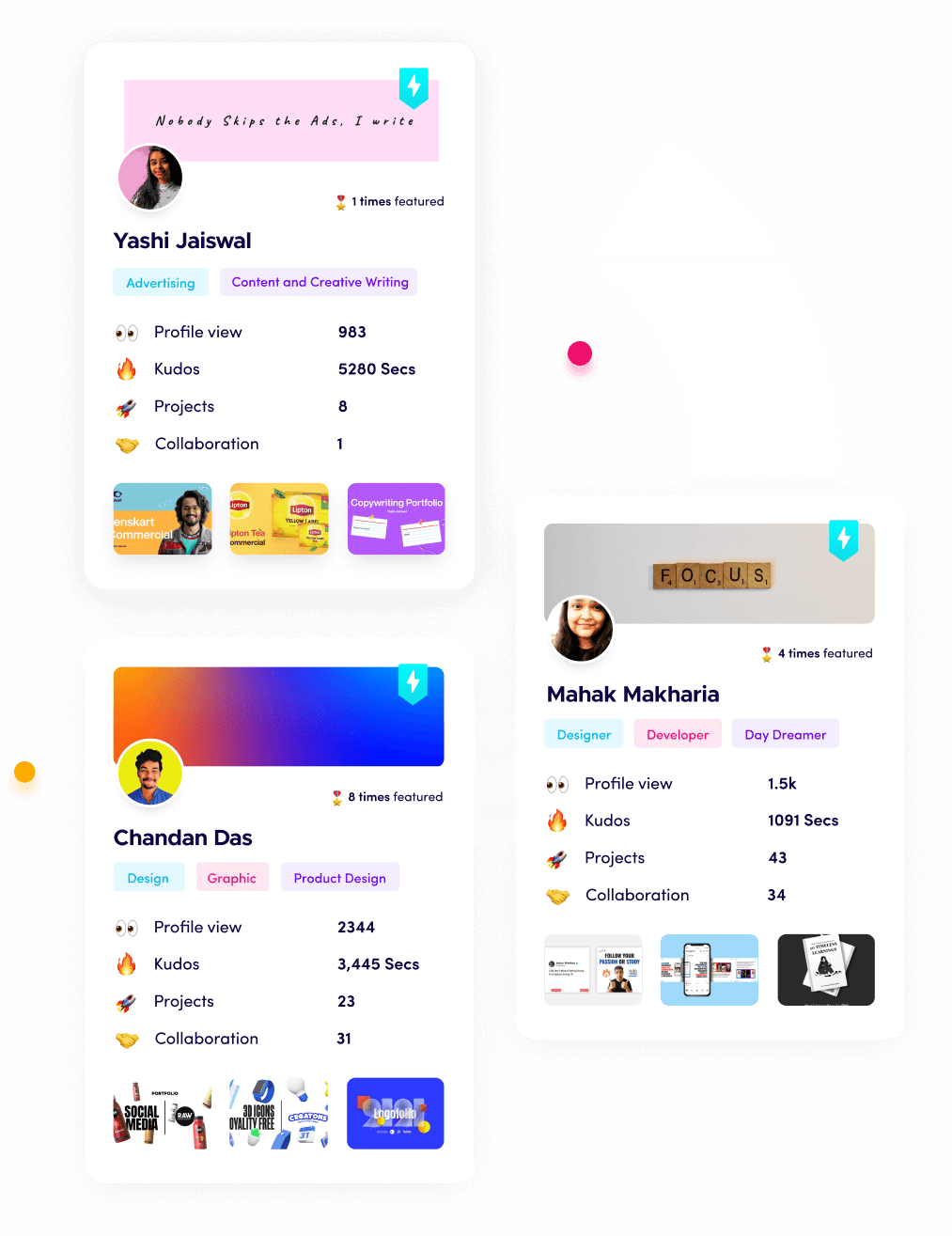
Five Fueler Profiles That Match Hyderabad's Creator Mix
I also would not use the same portfolio examples in every city article. Hyderabad's combination of technology, content, product, and creative work makes it useful to show different types of professionals from the Fueler directory.
These profiles come from different categories in the Fueler directory, including product design, content strategy, graphic design, video editing, and SEO/performance marketing.
The point is not to copy someone else's portfolio. It is to see how different professional disciplines can document their work and make their skills easier to understand.
How to Actually Get Value From a Coworking Community
A coworking membership does not automatically create a network.
You have to participate.
Start by becoming a familiar face. Work from the same space consistently instead of changing locations every day. Once people recognise you, conversations become easier.
Then pay attention to what people around you are building.
If someone is launching a startup, they may eventually need design. If someone runs an agency, they may need a freelancer. If someone is building a personal brand, they may need video editing or social media support.
Do not turn every conversation into a pitch.
A simple question such as "What are you working on?" can be much more useful than "Do you need a designer?"
If there is a genuine overlap, share a relevant project later. This is where a well-organised proof-of-work portfolio becomes useful.
Creator-Specific Facilities Are Becoming More Important
One of the more interesting changes in Hyderabad is that coworking spaces are beginning to think beyond desks.
@Work, for example, specifically markets creator-oriented infrastructure such as podcast rooms, lighting, backdrops, and production-friendly spaces.
That is a useful signal for digital creators.
A creator may need a quiet recording room on Monday, a workspace for editing on Tuesday, and a meeting space for a client on Wednesday. A traditional coworking membership does not necessarily solve all three problems.
Before joining, ask whether the space supports the actual format of your work. If you create videos, can you record there? If you run a podcast, is there acoustic treatment? If you photograph products, are shoots permitted? If you conduct workshops, can you book an event area?
These details can make one workspace much more useful than another even when the monthly price is similar.
Before You Sign Up, Test the Workspace
The smartest way to choose a coworking space is to experience it during your actual working hours.
Do not judge it only during a quiet afternoon tour.
Spend a few hours there if a day pass is available. Take a real client call. Work on something that requires concentration. Check whether the Wi-Fi remains stable. See how easy it is to find a power socket. Listen to the background noise.
Then observe the people.
Are there founders? Freelancers? Developers? Marketers? Creators? Corporate teams?
The answer should match your reason for joining.
If you are trying to build a freelance design career, a space full of potential startup clients and collaborators may be useful. If you simply need a quiet place to complete remote work, community may matter much less.
Key Takeaways
- Hyderabad's main coworking corridor runs through HITEC City, Madhapur, Gachibowli, and the Financial District.
- Jubilee Hills and Banjara Hills offer a different environment that can be interesting for creative and cultural professionals.
- CoKarma and 91Springboard are useful if community and networking are important.
- T-Hub is particularly relevant to professionals who want proximity to startups and innovation.
- @Work is worth considering for creators who need production-oriented infrastructure rather than only a desk.
- WeWork, Awfis, Innov8, Workafella, DevX, and iKeva can work well for professionals who prioritise flexible and professional infrastructure.
- The best coworking space depends on your work type, commute, need for community, and production requirements.
- A portfolio can make coworking relationships more valuable because it gives potential collaborators and clients something concrete to evaluate.
Final Thoughts
Hyderabad is an interesting city for creators because you do not have to choose between a technology ecosystem and a creative ecosystem.
You can spend your morning around startups in HITEC City, meet a client in Gachibowli, attend a workshop in Jubilee Hills, or work from a creator-oriented space in Madhapur. The city gives you different versions of professional life within a relatively concentrated geography.
That is why I would start with your neighbourhood rather than the coworking brand.
Think about the kind of people you want to meet. Think about the work you produce. Think about how often you need meetings, recording facilities, quiet focus, or community interaction.
Then try the space before committing.
For a freelancer or digital nomad, the ideal coworking space is not necessarily the one where you meet the most people. It is the one where the right conversations happen without getting in the way of the work you came there to do.
And when those conversations happen, make sure you have something useful to show.
Your portfolio should demonstrate the work behind your skills, not simply list what you claim to be good at.
Frequently Asked Questions
1. What are the best coworking spaces for creators in Hyderabad?
There is no single option for every creator. CoKarma, 91Springboard, The Chalet, @Work, T-Hub, and Urban coworking options across HITEC City and Madhapur can suit different types of creators. The right choice depends on whether you prioritise community, startup networking, content-production facilities, quiet work, or client meetings.
2. Which areas in Hyderabad are best for digital nomads?
HITEC City, Madhapur, and Gachibowli are the main coworking and technology corridors. They are useful for people who want access to startups, technology companies, and professional services. Jubilee Hills and Banjara Hills can be more interesting for creators who value lifestyle, culture, workshops, and creative businesses.
3. Are there coworking spaces in Hyderabad for content creators?
Yes. Some coworking spaces are increasingly adding creator-specific infrastructure rather than offering only desks. @Work, for example, markets facilities designed around content production, including podcasting and recording-oriented infrastructure.
4. How can freelancers network at a coworking space in Hyderabad?
Become a regular rather than constantly changing workspaces. Attend relevant community events, talk to people about what they are building, and look for genuine overlaps between your skills and their needs. Share your portfolio only when it becomes relevant to the conversation rather than treating every interaction as a sales opportunity.
5. How much does coworking cost in Hyderabad?
Prices vary by neighbourhood, operator, membership type, and workspace format. Current 2026 research shows day passes commonly ranging from roughly ₹349 to ₹800, while monthly memberships vary widely depending on whether you choose a hot desk, dedicated desk, or private cabin. Always confirm the current price directly with the workspace before joining.
Why 100,000+ professionals use Fueler
Fueler helps professionals showcase proof of work through projects, assignments, case studies, and achievements.
- Thousands of professionals use Fueler to create their digital portfolio
- Thousands of projects are published on Fueler. Check here
- Startups and Companies hire through proof of work on Fueler
- Used by freelancers, creators, marketers, video editors, writers, designers, and product managers
Our mission is to help the next 100 million professionals build a verified professional identity through proof of work

What should you do next?
You've read the article. Now turn your skills into proof of work and unlock more opportunities.
Build your proof of work portfolio
Create a clean portfolio with projects, assignments, resumes, and AI stack details that companies actually want to see.
Create your Fueler portfolio →Apply through assignments, not resumes
Stand out by solving real tasks from companies hiring on Fueler.
Explore assignments →Get discovered by companies
Make your work public and let recruiters discover your skills through actual projects instead of keywords.
Get discovered →