Best Website Builders for US Startups in 2026

Riten Debnath
01 Dec, 2025
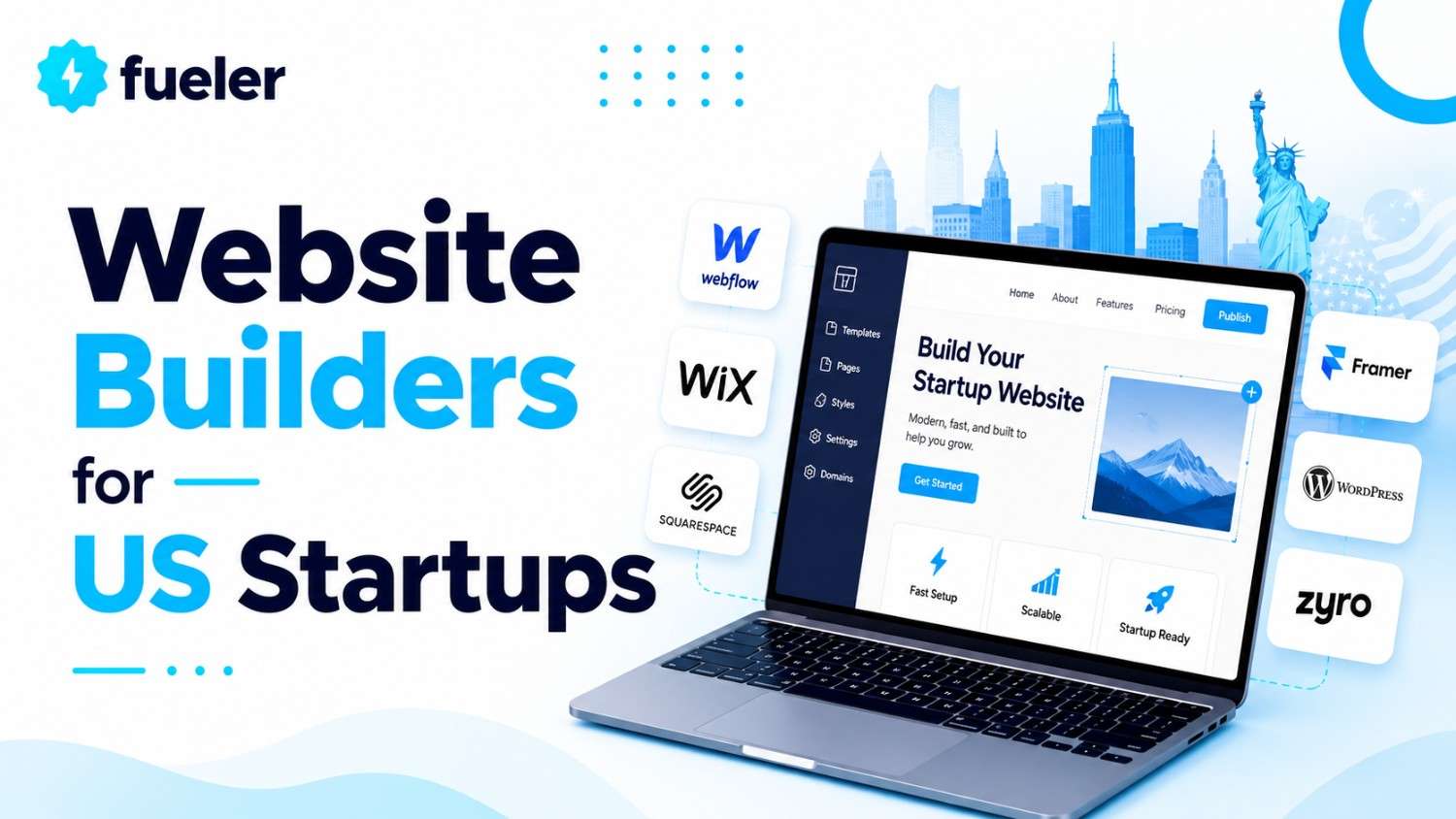
Starting a new business in 2026 means having a strong online presence is more important than ever. The website for your startup is your 24/7 store, showcasing your brand, products, and mission to the world. But building a website can be confusing, especially when there are so many website builders claiming to be the best. Choosing the right platform can save you time and money while making your startup look professional and trustworthy. Equally important is securing your domain name through one of the best domain registrars, ensuring long-term ownership, privacy protection, and transparent renewal pricing.
I’m Riten, founder of Fueler - a skills-first portfolio platform that connects talented individuals with companies through assignments, portfolios, and projects, not just resumes/CVs. Think Dribbble/Behance for work samples + AngelList for hiring infrastructure
Design.com – AI Website Builder for Startup Success
Design.com’s website builder helps startups quickly create professional websites with AI-generated designs and intuitive editing tools. Users can go from idea to launch in minutes, customizing layouts, colors, fonts, and branding elements without coding. With built-in support for domains, contact forms, and online payments, it’s a practical choice for early-stage companies that need a polished web presence fast.
Key Features
- AI Website Generation: Enter your business name and optional keywords, and the AI instantly generates unique, fully responsive website designs.
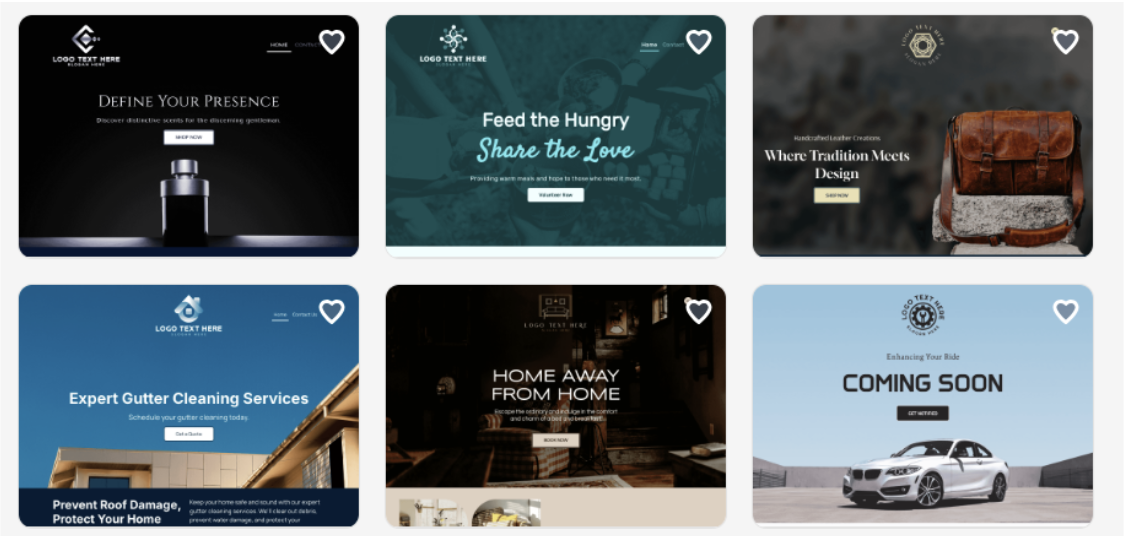
- Template Finder: Browse over 3,000 website templates to quickly find a design that fits your startup’s style and industry.
- Full Customization: Edit fonts, colors, layouts, icons, and backgrounds to align with your brand identity, giving complete creative control.
- Responsive Design: All websites are mobile-friendly and optimized for tablets and desktops, ensuring a seamless experience for users on any device.
- One-Click Publishing: After customization, publish your website instantly, saving time and simplifying your launch process.
- Built-in Website Features: Add contact forms, payment options, and other essential features directly into your website so you can manage everything in one place.
- Premium Logo Design: Each website includes a premium logo, giving your startup a strong, professional brand identity from day one.
- Cascading Brand System: Your brand colors and styles automatically carry across your website, social media, and print designs, keeping everything consistent as you grow.
… and more:
Why Design.com Matters for Startups
For startups, time and efficiency are critical. Design.com allows teams to launch a professional, branded website quickly without hiring a developer or designer. Its AI tools reduce trial-and-error, while the all-in-one platform supports growth by integrating payments, forms, and consistent brand colors across your website and other design assets from day one.
BrandCrowd – All-in-One Branding + Website Builder for Startups
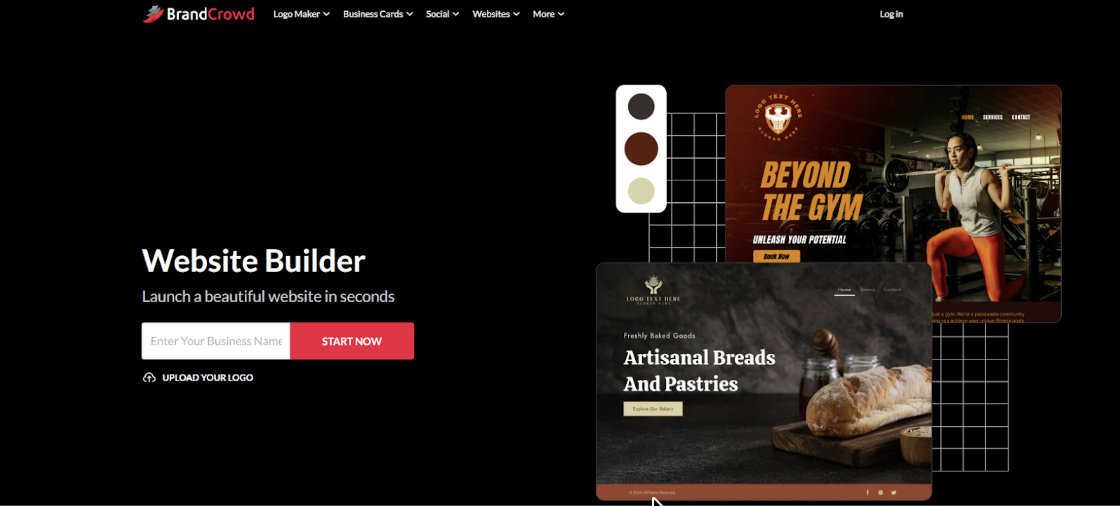
BrandCrowd helps startups launch professional websites that stay fully aligned with their brand identity. With an easy-to-use editor and a library of over 3,000 website templates, founders can quickly build and publish a polished site without needing a designer or developer. Its website maker is built for early-stage startups that want to look credible fast while keeping branding consistent across everything they create.
Key Features
- Drag-and-Drop Editor: Quickly arrange layouts, sections, and elements without coding so you can build a brand-consistent website that matches your startup’s identity.
- Premium Logo and Brand Integration: Each website includes a premium logo design you can instantly apply across your site, helping you launch with a strong, consistent brand from day one.
- Cascading Brand Colors and Fonts: Set your typography and color palette once, and your brand styles automatically carry across your website, social media, and other design assets for a consistent look everywhere.
- Mobile-Optimized Layouts: Your website automatically adapts to phones, tablets, and desktops while maintaining your brand's look and feel across all screens.
- Hosting and Publishing: Manage your website, updates, and hosting in one place so your brand stays consistent and lives without needing multiple tools or technical setup.
- Startup-Ready Features: Add contact forms, payments, and other essential features so your website is ready to support your business from day one.
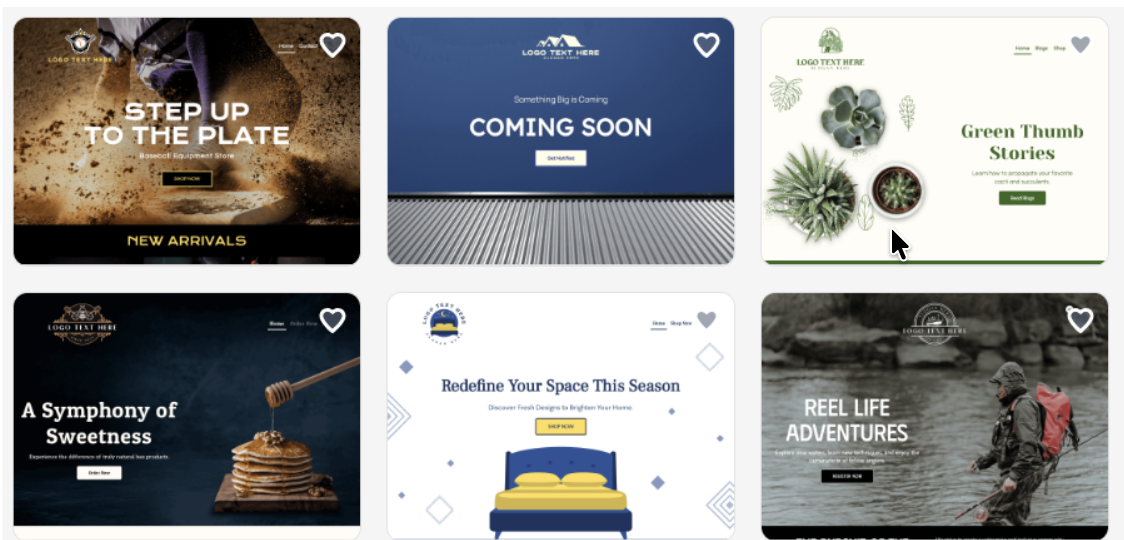
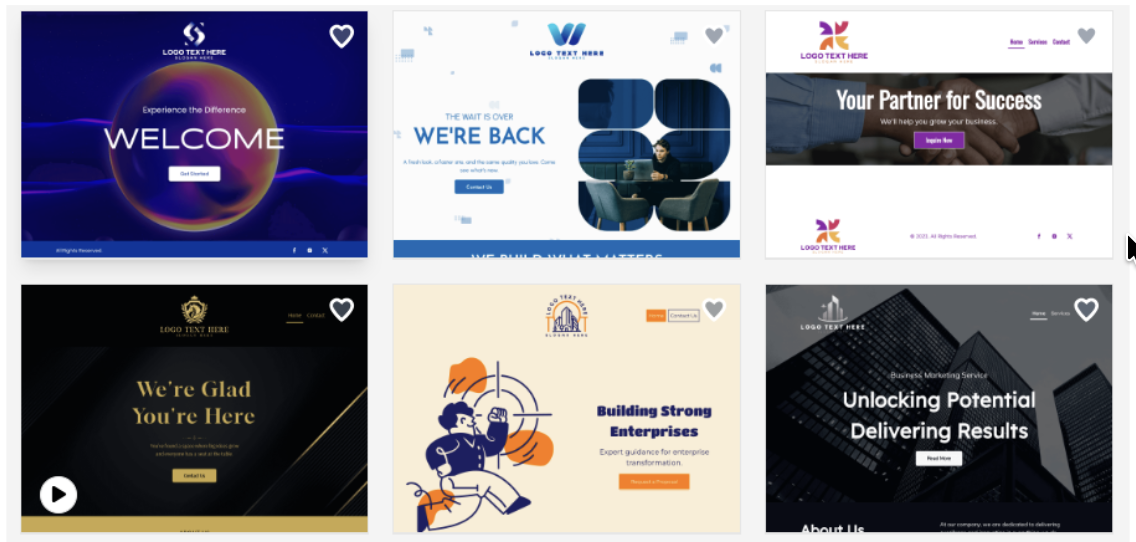
Explore BrandCrowd’s sample templates below for inspiration:
Why BrandCrowd Matters for Startups
BrandCrowd helps startups maintain professional brand consistency from day one, even with limited resources. Its all-in-one approach to branding and website creation ensures your logo, fonts, and colors stay consistent across your website and other designs through cascading brand styles, helping you build trust, launch faster, and focus on growing your business instead of dealing with technical setup.
Wix: The Most Flexible Website Builder for Startups
Wix offers one of the most user-friendly website building experiences. Its drag-and-drop editor allows startup founders without any coding skills to create a custom site. With hundreds of templates and the freedom to customize almost everything, Wix fits any startup’s industry or style with ease.
- Offers more than 800 customizable admin templates created by professional designers, ensuring your startup can find a style that really fits your brand identity and audience.
- The drag-and-drop editor is intuitive and easy to use, letting you place any element exactly where you want without writing code or relying on designers.
- Integrated SEO tools help optimize your site’s ranking on Google and other search engines, including customizable meta tags, alt text for images, and clean URLs that enhance your site’s discoverability online.
- Advanced e-commerce capabilities enable startups to launch online stores quickly, with payment gateways, inventory management, and promotional tools like discount codes and abandoned cart recovery all built in.
- Wix ADI (Artificial Design Intelligence) automatically creates a personalized website based on your answers to simple questions about your startup, dramatically speeding up the setup process for those short on time.
Why Wix matters for startups
For US startups launching in 2026, Wix provides unmatched flexibility combined with accessible design and marketing tools. This means you can focus on growing your business, knowing your website will support your vision professionally and attractively.
Squarespace: Stylish, Polished Websites That Build Your Brand
Squarespace is famous for its elegant templates that appeal to startups wanting a clean, professional image. This platform offers powerful built-in marketing tools and seamless integration with social and content platforms.
- The collection of award-winning templates is perfect for startups looking to make a strong visual impression, delivering mobile-optimized and pixel-perfect designs that adapt to any screen size flawlessly.
- In-built analytics dashboard provides real-time insights on user behavior, site traffic, and sales performance, enabling startup founders to make data-driven marketing decisions without third-party tools.
- Integrated marketing features include email campaigns, SEO optimization, and social media tools to help startups connect with and grow their customer base with less hassle.
- The blogging platform supports content marketing, allowing startups to publish articles that improve SEO, build authority, and engage their audience around their products or services.
- Effortless integration with major social media platforms like Instagram and Facebook lets startups showcase their latest updates and products dynamically, increasing brand visibility and interaction.
Why Squarespace matters for startups
Squarespace empowers startups to present polished, trustworthy brands online without requiring design expertise. Its marketing and analytics tools make it easier to attract customers and build lasting digital connections as a fledgling business.
Shopify: E-commerce Powerhouse for Product-Driven Startups
Shopify is the leading platform for startups focused on selling products online. It provides everything from store setup to secure payment processing and customer management.
- A comprehensive e-commerce toolkit includes user-friendly product catalog management, secure payment gateways, shipping and tax calculations, and inventory control to simplify store operations.
- Supports multi-channel selling across online marketplaces, social media platforms, and physical retail, enabling startups to reach customers wherever they shop.
- Hundreds of customizable themes adapt to different product types, with mobile responsiveness and fast loading times to boost conversions.
- Built-in marketing features cover SEO, email marketing, discount offers, and abandoned cart recovery, all focused on increasing sales and customer loyalty.
- App marketplace offers thousands of plugins and extensions for startups to add advanced features like subscriptions, loyalty programs, and analytics tailored to their niche.
Why Shopify matters for startups2
For US startups planning to sell products in 2026, Shopify delivers a secure and scalable solution designed for growth. Its robust tools, including AI shopify store builder, simplify e-commerce operations so entrepreneurs can focus on expanding their business.
Weebly: Affordable and Simple for First-Time Website Builders
Weebly offers a straightforward and affordable platform with an easy editing experience that suits startups launching on a budget or with limited tech skills.
- Drag-and-drop website builder with pre-made layouts helps startups build a professional-looking site with minimal effort, focusing on usability over overwhelming design options.
- E-commerce capabilities include product pages, payments, and inventory, allowing startups to launch small online stores quickly without extra costs for advanced tools.
- Integrated marketing tools such as SEO settings and email campaigns help startups improve visibility and reach customers without extra services.
- Hosting and security provided as part of plans ensure startups don’t need to manage technical aspects, reducing hassle and lowering operational risks.
- Mobile-friendly designs ensure visitors have a smooth experience on smartphones and tablets, which is critical for customer engagement today.
Why Weebly matters for startups
Weebly combines ease of use with budget-friendly plans, making it a solid choice for new startups in the US seeking simple online presence quickly. It allows founders to launch without heavy investment or technical knowledge.
Zyro: AI-Powered Website Builder for Fast Results
Zyro focuses on speed and simplicity, with AI tools that help startups generate content, design layouts, and optimize websites quickly.
- AI Writer assists in generating original, SEO-friendly website copy based on your startup’s niche, phrase suggestions, and content goals.
- AI Heatmap predicts which website sections will get the most attention to help optimize layout and calls to action, boosting conversions.
- Fast and easy drag-and-drop website builder with mobile responsiveness for professional look on any device.
- Integration with popular marketing and payment services supports business growth without extra technical setup.
- Affordable pricing plans with scalable options support startups as they grow from launch to scaling phases.
Why Zyro matters for startups
Startups looking to save time while maintaining quality benefit from Zyro’s AI-powered tools. In 2026, fast and effective website launch at a low cost helps startups get ahead in competitive markets.
GoDaddy Website Builder: Trusted Brand with Complete Solutions
GoDaddy combines its reputation as a domain registrar with a powerful website builder to help startups get online fast while managing domains and hosting all in one place.
- Simple step-by-step setup, including domain registration and hosting, streamlines the process for startup founders who want a no-fuss launch.
- Built-in marketing and SEO tools improve site visibility, including email marketing campaigns and social media integration.
- E-commerce features allow selling products with secure checkout options, and inventory and order management.
- 24/7 customer support provides startups with peace of mind and expert help whenever needed.
- Mobile-friendly templates ensure visitors have smooth experiences regardless of device, boosting engagement and sales.
Why GoDaddy matters for startups
GoDaddy’s all-in-one approach reduces the complexity of launching and managing a startup website, making it a trusted choice for fast and reliable online presence in the US market.
WordPress.com: Highly Customizable for Growth-Focused Startups
WordPress.com offers unmatched customization through plugins and themes, ideal for startups planning long-term growth with unique website needs.
- Thousands of themes and plugins enable startups to add features like memberships, forums, advanced SEO, and marketing automation as business needs evolve.
- Full control over design and functionality allows growth-driven startups to create highly personalized websites supporting complex processes or content marketing strategies.
- Built-in analytics and SEO tools help monitor traffic and improve search rankings organically.
- Scalable hosting plans support website traffic growth from launch to millions of visitors without performance issues.
- Extensive community and support networks provide resources and expert help to guide startups.
Why WordPress.com matters for startups
For startups ready to invest in customized, scalable websites, WordPress.com offers professional-grade tools vital for growth and flexibility in 2026’s competitive online space. To support this approach, partnering with experienced teams that provide Wordpress development services can help ensure the website is built to scale and adapt over time.
Fueler: Showcasing Your Skills Through a Portfolio Platform
Before the final thoughts, it’s important to remember how Fueler can help startup founders and freelancers showcase their work through portfolios and project assignments. Unlike traditional resumes, Fueler lets you demonstrate your skills directly to potential collaborators and investors, creating trusting relationships that support your startup’s digital and business growth.
Final Thoughts
Choosing the right website builder in 2026 is critical for US startups aiming to make a mark online. Wix, Squarespace, Shopify, Weebly, Zyro, GoDaddy, and WordPress.com all offer different strengths catering to various startup needs, from design flexibility to e-commerce power. By selecting a builder aligned with your goals and skills, you ensure your digital presence helps your startup grow sustainably and attract real customers.
FAQs
What is the easiest website builder for US startups in 2026?
Wix and Weebly are great for beginners due to their drag-and-drop interfaces and flexible templates.
Which website builder is best for e-commerce startups?
Shopify leads for product-selling startups with extensive tools for managing online stores and sales.
Can I optimize my startup website for SEO using these builders?
Yes, most builders like Wix, Squarespace, and WordPress.com have built-in SEO tools to improve search rankings.
How much does it cost to build a website for a startup in 2026?
Costs vary by builder and features but range from free basic plans to $30-$50/month for premium services.
How does Fueler help startup founders?
Fueler connects founders and freelancers through skills-first portfolios, allowing them to showcase projects and build trusted professional relationships.
What is Fueler Portfolio?
Fueler is a career portfolio platform that helps companies find the best talent for their organization based on their proof of work. You can create your portfolio on Fueler, thousands of freelancers around the world use Fueler to create their professional-looking portfolios and become financially independent. Discover inspiration for your portfolio
Sign up for free on Fueler or get in touch to learn more.

What should you do next?
You've read the article. Now turn your skills into proof of work and unlock more opportunities.
Build your proof of work portfolio
Create a clean portfolio with projects, assignments, resumes, and AI stack details that companies actually want to see.
Create your Fueler portfolio →Apply through assignments, not resumes
Stand out by solving real tasks from companies hiring on Fueler.
Explore assignments →Get discovered by companies
Make your work public and let recruiters discover your skills through actual projects instead of keywords.
Get discovered →