20 Branding Agencies in Bangalore Every Designer Should Know in 2026

Riten Debnath
15 Sep, 2026
Bangalore has become one of India's strongest cities for design, branding, technology, and creative work. From SaaS startups and D2C brands to large technology companies, businesses in the city are investing heavily in how they look, communicate, and differentiate themselves.
For designers, this creates opportunities across brand identity, graphic design, packaging, digital design, art direction, visual communication, UI/UX, and creative strategy. But getting noticed by a good branding agency requires more than knowing Photoshop, Illustrator, Figma, or other design tools. Agencies want to see how you think, how you solve a brief, and how you turn an idea into a usable visual system.
I’m Riten, founder of Fueler, a skills-first portfolio platform building the career infrastructure for 100 million creative professionals. Fueler connects talented individuals with companies through assignments, portfolios, and projects, not just resumes or CVs. Think of it as Dribbble/Behance for work samples combined with AngelList for hiring infrastructure.
A strong branding portfolio should also demonstrate proof of execution. If you are unsure what that means, proof of work explains why showing actual projects can be more powerful than simply listing skills on a resume. You can also explore graphic designer portfolios that attract clients and Fueler's guide for Indian designers for practical examples.
Why Bangalore Is a Strong City for Branding Designers
Bangalore has a large concentration of technology companies, startups, consumer brands, agencies, product companies, and venture-backed businesses. This creates a broad market for designers who understand both visual craft and business communication.
Branding work in Bangalore is also not limited to logo design. Agencies work on positioning, brand strategy, visual identity systems, packaging, websites, product experiences, motion design, social media assets, campaigns, and brand guidelines.
Current agency directories show a wide range of branding specialists operating in Bengaluru, from small specialist studios to larger multidisciplinary agencies. Clutch's September 2026 listings, for example, include agencies focused on branding, logo design, UX/UI, digital strategy, packaging, and related creative services.
That makes Bangalore an especially useful market for designers who want to understand how branding works beyond individual graphics.
1. Everything Design
Everything Design is a strategy and design-focused agency working across brand strategy, identity, website design, and digital experiences. Its Bangalore positioning is particularly relevant for designers interested in the connection between branding and business growth.
The agency is useful to study because its approach brings strategy and implementation together. Designers can learn how identity systems are translated into websites, visual assets, communication, and broader customer experiences.
Designers can explore: Brand identity, visual design, web design, brand strategy, communication design.
Skills to build: Typography, layout, visual systems, brand thinking, digital design, presentation.
What to show in your portfolio: Complete identity systems rather than isolated logos.
Why designers should study it: It demonstrates how branding can become a larger business and digital experience rather than remaining a logo exercise.
2. VGC
VGC is a long-established branding and design agency with work spanning brand communication, packaging, experiences, and identity. Its work is particularly useful for designers who want to understand how a brand behaves across physical and digital touchpoints.
For an aspiring designer, studying agencies like VGC can help you understand why consistency matters. A brand identity needs to work across packaging, environments, communication materials, and other customer-facing experiences.
Designers can explore: Branding, packaging, communication design, environmental design.
Skills to build: Brand systems, typography, layout, packaging, art direction.
What to show: A project showing how one visual identity works across several touchpoints.
3. Studio Sorted
Studio Sorted focuses on branding, strategy, identity, and implementation. The agency's work is relevant for designers who want to understand the relationship between research, positioning, visual identity, and execution.
The important lesson for designers is that good branding does not begin with opening Illustrator. It begins with understanding the business, audience, problem, and positioning.
Designers can explore: Brand strategy, identity design, packaging, spatial applications.
Skills to build: Research, concept development, typography, visual storytelling, presentation.
What to show: Your research and iterations alongside the final identity.
4. Lollypop Design Studio
Lollypop Design Studio is known for design-led work across digital products, user experiences, and brand identity. Its branding process includes research, moodboards, identity development, and documented visual guidelines.
For designers, Lollypop is particularly useful because it shows how a visual identity can be turned into a structured system. Instead of delivering only a logo, a designer needs to think about color, typography, usage rules, layouts, and consistency.
Designers can explore: Brand identity, UX, UI, visual design, design systems.
Skills to build: Visual hierarchy, research, UI design, typography, design systems.
What to show: A complete brand system with clear rules and applications.
5. Brandemic
Brandemic is a Bangalore-based branding and design-thinking company working across brand identity, strategy, messaging, visual identity, packaging, UI/UX, and digital experiences.
Its broad service mix makes it interesting for designers who want to work across multiple creative formats. The agency's work demonstrates how branding can extend from identity design into packaging, websites, photography, and other communication assets.
Designers can explore: Brand identity, packaging, graphic design, UI/UX, creative direction.
Skills to build: Concept development, typography, packaging, visual storytelling, digital design.
What to show: Branding projects that demonstrate how your concept survives across multiple formats.
6. NOW Media
NOW Media positions itself around branding, strategy, storytelling, design, and creative direction. Its services include branding, rebranding, website development, packaging, motion graphics, photography, and video.
This makes it useful for designers who want to become multidisciplinary. Modern branding often requires designers to think about static graphics, digital experiences, motion, content, and launch campaigns together.
Designers can explore: Brand identity, rebranding, packaging, motion, digital design.
Skills to build: Art direction, visual storytelling, motion, branding, digital execution.
What to show: A case study where one concept is adapted across static, digital, and motion formats.
7. SeekThem Design Agency
SeekThem is a branding and design firm listed in Bengaluru's current branding agency rankings. Its services include branding, logo design, web design, and related digital work.
The agency is especially relevant for designers interested in identity systems and practical brand assets. Its current Clutch profile highlights work involving logo design, brand guidelines, digital assets, and visual identity.
Designers can explore: Branding, logo design, visual identity, web design.
Skills to build: Logo design, typography, layout, brand guidelines, client communication.
What to show: Logo development, identity rationale, guidelines, and real-world applications.
8. Hooman Studio
Hooman Studio works across branding, marketing, corporate branding, visual identity, UX/UI, websites, and digital development.
This makes it a useful agency to study if you want to understand how brand design connects with digital products. A designer working in this environment may need to think beyond static identity and understand how the brand behaves on websites and digital interfaces.
Designers can explore: Corporate branding, visual identity, UX/UI, web design.
Skills to build: Brand systems, UI design, visual hierarchy, responsive design.
What to show: A brand identity translated into a complete digital interface.
9. Flight Mode Studio
Flight Mode Studio is a branding and marketing agency with a strong focus on brand identity, visual identity, UX/UI, and web development.
The agency is useful for designers because it demonstrates the growing overlap between branding and digital execution. A strong identity needs to function on websites, campaigns, social platforms, and other digital surfaces.
Designers can explore: Brand identity, UX/UI, websites, digital branding.
Skills to build: Visual identity, UI design, typography, responsive layouts, creative direction.
What to show: Digital-first branding projects with responsive applications.
10. Wilson Wings
Wilson Wings combines branding, marketing, UX/UI, and web design. Its branding work includes brand development and visual identity design.
For designers, this is an example of an agency where brand thinking and digital product thinking can overlap. It is useful for anyone who wants to move from traditional graphic design toward broader digital brand experiences.
Designers can explore: Brand identity, UX/UI, digital design, marketing design.
Skills to build: Visual systems, UI, design thinking, communication, prototyping.
What to show: A case study explaining both the brand problem and the digital solution.
11. Tea & Oranges Design
Tea & Oranges Design is a smaller branding-focused studio working across branding, UX/UI, and packaging design.
Its positioning makes it interesting for designers who want to understand the work of specialist creative studios. Smaller agencies can give designers exposure to strategy, concept development, client presentations, and execution rather than restricting them to one narrow production task.
Designers can explore: Branding, packaging, UX/UI, visual identity.
Skills to build: Research, concept development, typography, packaging, presentation.
What to show: A project from research and moodboard through final identity and applications.
12. Brandshark
Brandshark works across branding, web development, UX/UI, content marketing, social media, and digital experiences.
This combination is useful for designers who want to work in startup and growth environments. The designer may need to create an identity and then help apply that identity across websites, campaigns, social media, and other marketing assets.
Designers can explore: Branding, UI/UX, web design, marketing design.
Skills to build: Digital branding, UI, graphic design, content design, visual consistency.
What to show: A complete brand launch with identity, website, social assets, and campaign creatives.
13. Mikado UX/UI & Branding Studio
Mikado combines branding with UX/UI and product design. This makes it particularly relevant for designers who want to understand how brand identity influences digital products.
A designer working at this intersection needs to understand both visual expression and usability. The strongest portfolios therefore show not only attractive screens but also why particular design decisions were made.
Designers can explore: Branding, UX/UI, product design.
Skills to build: Interface design, design systems, typography, interaction design, brand application.
What to show: A project demonstrating how a brand's identity translates into a digital product.
14. Vamos Digital
Vamos Digital works across branding, marketing, corporate identity, visual identity, web design, and digital strategy.
It is relevant for designers who want to develop an understanding of how visual identity supports broader marketing goals. A designer should know not only how something looks but also what message it communicates and which audience it is designed for.
Designers can explore: Corporate identity, visual identity, web design, digital strategy.
Skills to build: Brand strategy, visual communication, web design, presentation.
What to show: Brand work accompanied by clear audience, positioning, and communication objectives.
15. Zensciences
Zensciences is a multidisciplinary branding and marketing agency with capabilities across brand strategy, corporate identity, UX/UI, and digital strategy.
Its work is useful for designers interested in B2B, technology, and corporate branding. The agency's current profile highlights brand strategy, visual identity, UX/UI, and digital strategy as important areas of its work.
Designers can explore: Brand strategy, corporate identity, UX/UI, digital communication.
Skills to build: Strategic design, information hierarchy, typography, digital systems.
What to show: Case studies where design decisions are connected to a clear business or communication problem.
16. Red Baton
Red Baton is a design and development company working across UX/UI, websites, branding, and digital experiences.
For designers, Red Baton is particularly relevant because branding and digital product design can often happen within the same project. The agency's current profile highlights branding, UX/UI design, website development, and attention to detail.
Designers can explore: Branding, UX/UI, website design, digital experiences.
Skills to build: UI design, design systems, visual communication, responsive design.
What to show: A digital brand experience with strong attention to usability and visual consistency.
17. ThunderClap
ThunderClap works across brand strategy, positioning, visual identity, web design, web development, conversion optimization, digital strategy, and video production.
This makes it a good agency to study if you are interested in the relationship between branding and performance. Brand design does not exist in isolation. Websites, campaigns, and digital experiences need to communicate clearly and move users toward an action.
Designers can explore: Brand strategy, positioning, visual identity, web design.
Skills to build: Brand thinking, web design, communication, conversion-focused design.
What to show: Projects that explain the design objective and how the final experience supports the business goal.
18. Confetti Design Studio
Confetti Design Studio focuses on branding and packaging design and operates in both Delhi and Bengaluru.
Packaging makes this agency especially relevant for designers interested in consumer brands. Packaging design requires an understanding of hierarchy, shelf visibility, typography, color, information design, and physical production.
Designers can explore: Branding, packaging, graphic design.
Skills to build: Packaging systems, typography, print design, visual hierarchy, mockups.
What to show: Packaging projects with multiple product variants and a clear visual system.
19. Minute Creative
Minute Creative is listed among Bengaluru's branding companies and represents the kind of smaller creative agency that designers should keep on their radar.
Smaller studios can be valuable for early-career designers because projects often require broader involvement. Instead of only producing one asset, you may get exposure to ideation, visual exploration, presentation, revisions, and final execution.
Designers can explore: Branding, graphic design, creative direction.
Skills to build: Concept development, typography, layout, presentation, client collaboration.
What to show: Projects where your contribution can be clearly explained from brief to final outcome.
20. Mellow Designs
Mellow Designs works across branding, UX/UI, business consulting, web design, graphic design, packaging, print design, marketing strategy, and digital strategy.
The agency is useful for designers who want to build multidisciplinary skills. Its branding work is combined with digital and physical design, making it relevant to designers who do not want to restrict themselves to a single format.
Designers can explore: Brand identity, UX/UI, packaging, web design, print design.
Skills to build: Visual identity, digital design, packaging, typography, design systems.
What to show: A complete project showing how the same identity works across digital and physical touchpoints.
Which Type of Branding Agency Should You Target?
Not every branding agency will be the right fit for every designer. Your target should depend on the kind of work you want to do.
What Should a Branding Designer Put in a Portfolio?
A branding portfolio should make your design thinking visible. A collection of polished logos is not enough because an agency cannot understand the problem you solved, the decisions you made, or how you developed the final identity.
For every important project, explain the original brief, the target audience, your research, the initial ideas, design iterations, final direction, and applications. If you redesigned a brand, explain what was wrong with the old identity and what you changed.
You can also show rejected concepts when they help explain your decision-making. Strong portfolios are often more convincing when they reveal the process behind the final work.
A useful structure is:
- The brief: What was the client or brand trying to solve?
- Research: What did you learn about the market and audience?
- Concept: What was your central creative idea?
- Design development: How did the idea become a visual system?
- Final identity: Show the logo, typography, colors, graphics, and other elements.
- Applications: Show the identity in real situations.
- Outcome: Explain what changed or what the project achieved.
If you are starting from zero, do not wait for a large client project. You can create self-initiated branding projects and use them to demonstrate your thinking. The goal is to show evidence of ability.
Digital Design Talent to Explore on Fueler
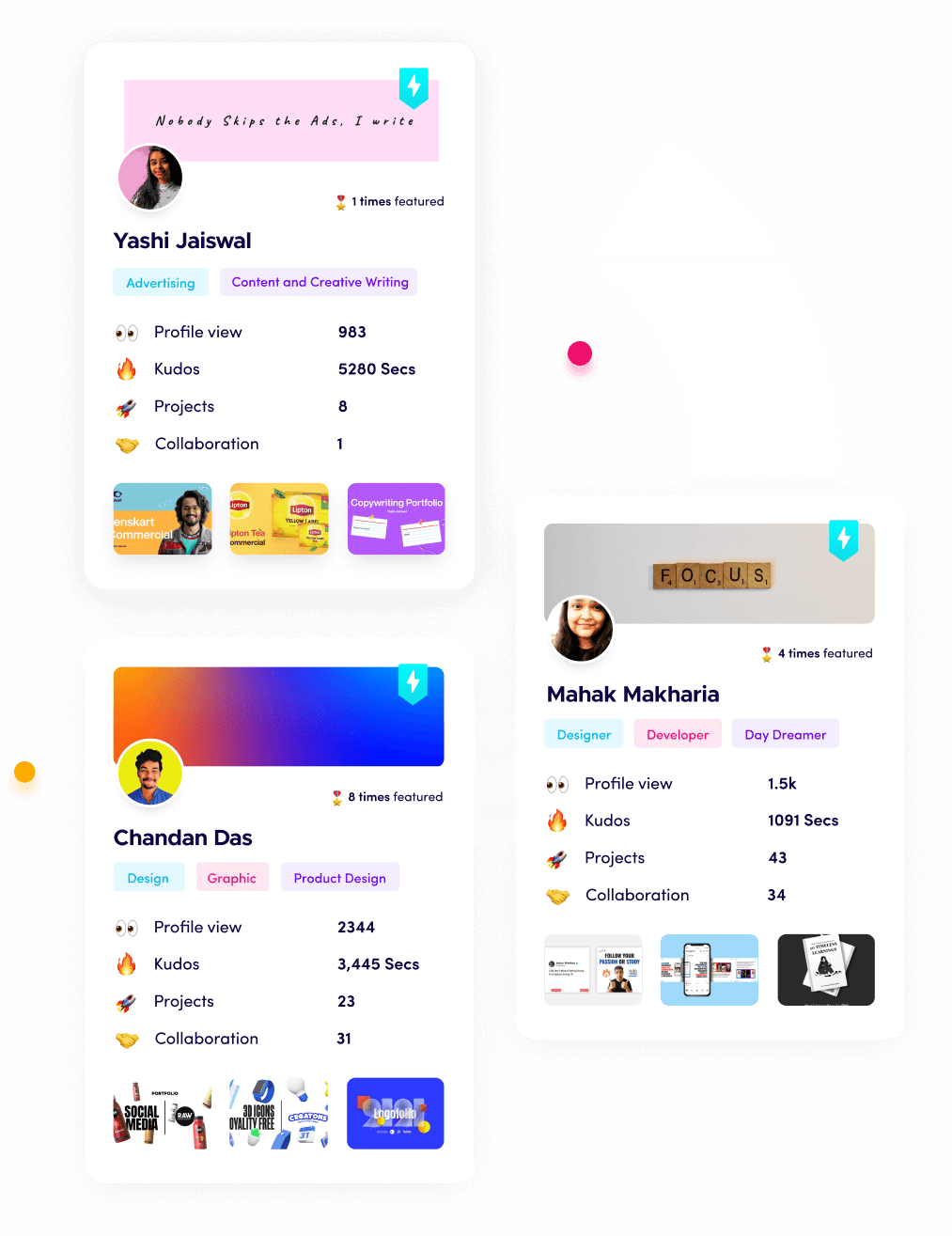
Designers can also study real portfolios to understand how other creatives present their work. Fueler's design portfolio ecosystem includes designers working across graphic design, UI/UX, branding, illustration, and visual communication. The important thing is to treat these as portfolio examples and evaluate the actual work rather than assuming current availability or location.
These examples show why designers should build portfolios around actual work. Fueler's own portfolio resources repeatedly emphasize showing context, process, skills, and outcomes rather than treating the portfolio as a simple gallery.
How to Get a Design Job at a Branding Agency in Bangalore
Getting into a branding agency requires more than sending a resume to every company you can find. Your application should make it easy for a creative director or recruiter to understand your design ability within a few minutes.
Start by selecting five to seven strong projects. Do not include every design you have ever created. Select work that matches the agency and role you want.
If you are applying to a packaging-focused agency, show packaging. If you want a brand identity role, show identity systems. If you want digital brand design, show websites, interfaces, and digital campaigns.
Before applying, study the agency's work. Look at its visual style, industries, types of clients, and design approach. Then position your portfolio accordingly.
Your outreach can be simple. Explain who you are, what type of design you do, why you are interested in the agency, and link directly to your strongest work.
Most importantly, make the portfolio easy to evaluate. A creative director should not have to click through ten unrelated pages before finding your best branding project.
Build Proof of Work Before You Apply
One of the biggest mistakes junior designers make is waiting for a professional client before building a professional portfolio.
You do not need to wait.
Create a fictional brand identity for a realistic business. Redesign the identity of an existing brand as a design exercise. Create packaging for a hypothetical D2C product. Build a complete visual identity for a fictional SaaS company.
The important part is to explain your decisions.
For example, instead of uploading a logo and writing "Brand identity project," explain:
Problem: The fictional startup looked too generic compared with competitors.
Research: Competitors relied heavily on similar blue and purple technology branding.
Direction: Create a more distinctive identity based on clarity and human interaction.
Execution: Develop the logo, typography, color system, illustrations, website direction, and social templates.
Result: Show the complete identity system across multiple applications.
That is much stronger evidence of design ability than simply uploading ten attractive graphics.
Fueler's proof-of-work approach follows this principle by encouraging professionals to show what they actually built, the context behind the work, and the skills demonstrated through the project.
Final Thoughts
Bangalore's branding industry gives designers the opportunity to work on much more than logos. The strongest agencies work across strategy, identity, packaging, digital products, websites, campaigns, content, and complete brand experiences.
If you want to build a career in this space, focus on becoming someone who can solve visual communication problems, not someone who simply knows design software.
Study agencies such as Everything Design, Lollypop, Brandemic, SeekThem, Flight Mode Studio, Zensciences, Red Baton, and the other studios on this list. Look at how they present their work, how they build identity systems, and how they connect design with business problems.
Then build your own proof of work.
Your portfolio should answer one question clearly:
Can this designer take a problem, think through it, and create a strong solution?
If the answer is obvious from your portfolio, you are already much closer to getting noticed by a good branding agency.
FAQs
1. Which are the best branding agencies in Bangalore for designers?
Agencies such as Everything Design, Lollypop Design Studio, Brandemic, SeekThem Design Agency, Flight Mode Studio, Zensciences, Red Baton, and NOW Media are useful companies for designers to study because their work spans branding, identity, digital design, strategy, or related creative disciplines.
2. What skills do branding agencies look for in designers?
Commonly useful skills include typography, visual identity, graphic design, art direction, layout, design systems, packaging, UI/UX, presentation, and creative problem-solving.
3. Do I need professional client work to get a branding design job?
No. Self-initiated projects can demonstrate your ability if you present them like real case studies. Explain the brief, research, design decisions, iterations, final work, and applications.
4. How many projects should a branding portfolio have?
Five to seven strong projects are usually better than dozens of unrelated designs. Prioritize relevance and depth over quantity.
5. Should a branding designer include the design process in their portfolio?
Yes. Showing research, sketches, moodboards, iterations, rejected concepts, and design decisions helps agencies understand how you think rather than only seeing the final visual.
Why 100,000+ professionals use Fueler
Fueler helps professionals showcase proof of work through projects, assignments, case studies, and achievements.
- Thousands of professionals use Fueler to create their digital portfolio
- Thousands of projects are published on Fueler. Check here
- Startups and Companies hire through proof of work on Fueler
- Used by freelancers, creators, marketers, video editors, writers, designers, and product managers
Our mission is to help the next 100 million professionals build a verified professional identity through proof of work

What should you do next?
You've read the article. Now turn your skills into proof of work and unlock more opportunities.
Build your proof of work portfolio
Create a clean portfolio with projects, assignments, resumes, and AI stack details that companies actually want to see.
Create your Fueler portfolio →Apply through assignments, not resumes
Stand out by solving real tasks from companies hiring on Fueler.
Explore assignments →Get discovered by companies
Make your work public and let recruiters discover your skills through actual projects instead of keywords.
Get discovered →