How Do Mesa Students Build and Launch Startups in One Year?

Riten Debnath
18 Jul, 2026
Last updated: July 2026
The traditional business school model is fundamentally broken for anyone who wants to build a modern company. Sitting in a lecture hall reading a twenty-page case study about a corporate decision from 1995 does not prepare someone to launch a product in today's fast-moving market. To truly understand the startup ecosystem, builders have to create something real, make mistakes, and pivot in real time.
I’m Riten, founder of Fueler, a skills-first portfolio platform building the career infrastructure for 100 million creative professionals. Fueler connects talented individuals with companies through assignments, portfolios, and projects, not just resumes or CVs. Think of it as Dribbble/Behance for work samples combined with AngelList for hiring infrastructure.
An objective look at the education landscape reveals a massive shift. Over the last decade of tracking how early-stage companies scale in tech hubs like Bangalore, it has become clear that traditional MBA programs often teach people how to manage existing wealth rather than create new value.
This reality is exactly why alternative, execution-first education models have caught widespread analytical attention; they represent a radical shift away from standard textbooks toward forcing students to launch real businesses within a single year.

Quick Answer Summary
- Definition: An intensive, one-year learning-by-doing business program focused on startup creation and modern business operations.
- Who It Is For: Startup aspirants, early professionals, fresh graduates, and those looking for practical alternatives to a traditional MBA.
- Cost: Approximately 24 to 27 Lakhs INR for the flagship post-graduate program, reflecting real-world ecosystem value.
- Key Takeaway: Real business capabilities cannot be memorized from a textbook; they must be developed by shipping products, talking to users, and managing actual cash flows.
- Best Suited For: Individuals determined to break into the startup ecosystem as founders, product managers, growth marketers, or startup leadership operators.
What is the Mesa Post-Graduate Program in Startup Leadership?
The post-graduate program is a compressed, immersive architecture built explicitly for the modern economy. Instead of spending two years writing academic essays, students spend twelve months working in an environment modeled directly after top global startup accelerators like YC.
Understanding the Architecture
In depth, the experience operates less like a school and more like a venture builder. The curriculum drops classical, isolated subjects in favor of phase-based business milestones. You do not study marketing in a vacuum; you learn performance marketing because your live prototype needs its first 100 paying users by the end of the week.
Why the Ecosystem Demands It
In the real world, early-stage companies do not hire generalists who can only draw conceptual matrix diagrams on whiteboards. They hire operators who can write sharp copy, set up automated user engagement funnels using tools like WebEngage or Zapier, and build data dashboards without a massive engineering team. This program focuses on developing those exact tangible, day-one skills.
How it Differs from Traditional MBAs
A standard MBA at an IIM or ISB prepares professionals for highly structured corporate environments. They emphasize consulting frameworks, large-scale financial accounting, and corporate governance. Conversely, an execution-first model addresses the chaotic, highly unpredictable phase of zero-to-one product building.
Key Facts Table
How Do Mesa Students Build and Launch Startups in One Year?
To truly answer how Mesa students build and launch startups in one year, you have to look past standard academic schedules and examine the structured phases of validation, building, and scaling. The methodology breaks down the complex journey of a new business venture into clear, actionable steps.
Phase 1: Problem Identification and Customer Discovery
Students do not begin by writing long business plans in isolation. Instead, they are pushed immediately into the market to talk to real human beings. The focus is entirely on identifying distinct, painful consumer problems using practical frameworks like the Jobs-To-Be-Done (JTBD) model. Teams conduct exhaustive user research to uncover exactly what frustrations customers encounter daily.
Phase 2: Rapid Validation via Minimal Measurable Viable Products (MMVPs)
Before writing a single line of complex code or purchasing inventory, students must prove that market demand actually exists. They build simple, functional landing pages and run highly targeted growth marketing experiments. By launching low-risk micro-experiments, they collect hard behavioral data rather than rely on polite verbal feedback. If the target audience refuses to click or sign up, the business concept is immediately re-evaluated or discarded before resources are wasted.
Phase 3: No-Code Development and Operational Setup
Once validation metrics prove positive, students dive deep into building functional prototypes. Instead of hiring expensive external software developers, they learn to leverage modern no-code platforms and AI-driven automation systems to build applications and automate workflows. In parallel, teams setting up physical consumer brands establish real supply chain relationships, source inventory, structure pricing models, and coordinate fulfillment logistics from scratch.
Phase 4: Customer Acquisition Sprints
With a live product ready, the objective shifts directly to growth engineering. Students learn how to design, execute, and optimize conversion funnels. They run performance marketing campaigns on platforms like Meta Ads Manager, manage tightly controlled acquisition budgets, and execute unsexy but highly effective manual outreach strategies to win their first 100 paying customers.
Phase 5: Managing Real Cash Flow and Unit Economics
A business is not a real business until it transacts. Over an intensive eight-week sprint, student teams manage live operations where they are fully responsible for sourcing, marketing, selling, and tracking cash flows. They learn the brutal realities of financial sustainability by calculating their precise Customer Acquisition Cost (CAC), Lifetime Value (LTV), and contribution margins on their own balancing sheets.
Phase 6: Pitching to the Venture Capital Ecosystem
The year concludes by preparing students to talk to the capital markets. Through intense, simulated pitch sessions, students learn how to present clear traction metrics, defend operational choices, and communicate value without relying on buzzwords. They ultimately pitch their functional, revenue-generating businesses directly to active investors and venture capitalists during dedicated campus demo days.
The Operational Mechanics: Step-by-Step Execution
The absolute core of this model is structured execution. The entire calendar year is broken down into specific operational milestones designed to remove the fear of starting.
- Weeks 1–6: The Foundation Break: Deconstructing the actual Indian startup ecosystem. Students analyze hundreds of real business cases directly with the founders of companies like Meesho, CRED, or Flipkart, focusing on why these businesses succeeded or broke at scale.
- Weeks 7–12: Customer Discovery & Validation: Conducting user interviews, isolating customer personas, and defining explicit user requirements. Teams must formulate clear hypotheses and prove them true or false via initial landing page signups.
- Weeks 13–24: The Build and Launch Sprint: Activating no-code tech and AI tools to launch minimum viable products. For physical product tracks, this means handling product manufacturing, sourcing, and setting up digital storefront conversion funnels.
- Weeks 25–36: The Growth and Acquisition Push: Shifting entirely to live performance marketing, conversion rate optimization, and managing contribution margins. The goal here is simple: drive real transactions and secure consistent customer retention.
- Weeks 37–52: Scalability and Investor Readiness: Diving into deep fundraising simulations, mastering the mechanics of term sheets, and presenting audited traction data to real institutional venture capitalists.
Practical Career Outcomes and Benefits
Enrolling in an experiential program yields career returns that look wildly different from standard corporate management paths. Because you learn by doing, your resume reflects actual operational value rather than just academic grades.
Tangible Portfolio of Real Ventures
Instead of graduation certificates backed only by exam scores, you leave the program with a live portfolio. You can point to a real product launched on Product Hunt, a functioning web application, or a D2C brand that generated actual monthly revenue. For hiring managers at fast-growing companies, this visual validation is infinitely more compelling than a high GPA.
Advanced Mastery of Modern Product Tech
You build deep, hands-on familiarity with the modern tools required to operate a lean startup today. Students graduate knowing exactly how to configure marketing analytics, build automated data pipelines, map user journeys visually on Figma, and orchestrate complex software automations without requiring an engineering degree.
Deep Integration into the Startup Ecosystem
Because the learning happens directly within major startup hubs like Bangalore and involves continuous interaction with active operators, your professional network grows organically. You are mentored by active startup leaders, pitch to real institutional VCs, and collaborate with a focused cohort of highly driven builders.
Realities, Challenges, and Limitations
While an execution-first approach is incredibly powerful, it is definitely not a golden ticket for every student or professional. The intensity and lack of traditional structure can easily overwhelm certain individuals.
High Ambiguity and Psychological Friction
Building a business from zero means dealing with constant failure. Your initial product ideas will likely fail validation tests, your ad campaigns might lose money, and your user acquisition funnels will break. If you need highly structured environments, fixed grading rubrics, and predictable day-to-day schedules to thrive, the sheer chaos of a live build sprint will cause immense frustration.
Reliance on Intense Self-Direction
There are no professors chasing you to complete homework assignments here. The success of your MVP depends entirely on how hard you pitch, how quickly you iterate on bad user feedback, and how effectively you collaborate with your co-founders. Individuals who prefer passive listening over active shipping will quickly fall behind the rest of the cohort.
Absence of Legacy Corporate Placement Pipelines
Traditional business schools have decades-old relationships with massive legacy corporations, investment banks, and traditional consulting firms that hire hundreds of graduates every year. An entrepreneurial venture builder does not optimize for these paths. If your ultimate career goal is to climb the standard ladder at a century-old conglomerate, this non-traditional route is fundamentally misaligned with your objectives.
Structural Program Comparison
Financial Investment and Return on Investment (ROI)
Investing in a non-traditional program requires an analytical breakdown of costs versus long-term career outcomes. The financial equation must be evaluated on immediate ecosystem access and concrete skills gained.
Direct Costs and Tuition Structure
For the flagship one-year post-graduate track, the current core tuition fee lands between 24 and 27 Lakhs INR. Beyond direct tuition, you must factor in real-world living expenses for staying in a major tech hub like Bangalore, alongside operational capital required to fund your initial product validation experiments. Merit-based and profile-based scholarships are frequently available to offset these primary upfront costs.
Evaluating Long-Term ROI
The financial return should not be measured purely by initial placement statistics, although the ecosystem tracking shows competitive average packages hovering around 26 Lakhs INR. The real economic value lies in time compression and equity potential. By compressing years of trial-and-error founder mistakes into a single twelve-month container, you dramatically accelerate your career path. Whether you launch a venture that raises independent capital or join a breakout scale-up as a senior product leader, your ability to drive revenue from day one commands a significant premium in the market.
Future Career Opportunities and Trajectories
Graduating from a venture-building environment prepares you for specialized, high-impact roles across the tech and startup landscape. Industry demand remains exceptionally strong for individuals who can manage projects independently.
Founder / Co-Founder
The direct path. Armed with a validated business model, an initial functional prototype, and direct exposure to early-stage investors, many graduates continue scaling their cohort ventures full-time into sustainable companies.
Founder's Office / Chief of Staff
Startups scaling quickly need strategic generalists who can execute complex projects directly alongside the chief executive. Roles in the Founder’s Office demand rapid problem-solving capabilities, financial acumen, and an ability to manage cross-functional teams/skills developed directly during live build sprints.
- Estimated Compensation Range: 14 to 28 Lakhs INR per annum, depending significantly on the startup's funding stage.
Product Management (PM)
Managing a modern tech product requires bridging the gap between design, engineering, and business goals. Because students spend months defining clear user stories, building no-code prototypes, and analyzing conversion funnels, they transition seamlessly into fast-paced PM tracks.
- Estimated Compensation Range: 16 to 32 Lakhs INR per annum, with rapid vertical growth potential.
Growth Marketing & Growth Engineering
Companies no longer look for traditional brand managers who just coordinate billboard layouts. They need data-focused growth marketers who can set up complex performance ad campaigns, map automated customer retention flows, and deeply optimize web conversion rates.
- Estimated Compensation Range: 12 to 25 Lakhs INR per annum, often paired with performance incentives.
Who Should Choose This Path?
- Action-Oriented Builders: Individuals who are genuinely restless and want to spend their days shipping real products rather than listening to passive lectures.
- Aspiring Entrepreneurs: Anyone who is actively working on a business idea but wants a structured, supportive environment and access to seed capital to launch safely.
- Ecosystem Pivoters: Professionals with standard corporate backgrounds who want to rapidly transition into senior startup leadership or product roles without spending two full years out of the workforce.
- No-Code / AI Enthusiasts: Individuals who want to master the practical stack of modern software automation tools to build lean, highly efficient business models.
Who Should Avoid This Path?
- Corporate Ladder Climbers: Individuals whose primary professional goal is to land a conventional management track role at a massive, conservative legacy corporation.
- Structure Seekers: Anyone who experiences high anxiety when faced with open-ended problems, shifting market conditions, or highly ambiguous projects.
- Passive Learners: Students who prefer to sit quietly in the back of a large lecture hall, memorize static frameworks from presentation slides, and pass written exams via rote learning.
Final Thoughts
When we look closely at how the business landscape is evolving, the demand for execution-focused capability becomes incredibly obvious. Building a startup is not a theoretical science that can be mastered by reading books or analyzing what other companies did decades ago. It is an intensely practical craft that requires getting your hands dirty, facing real market rejection, and learning to read real human behavior.
If your ambition is to create something original, navigate the chaotic early days of a new company, or become a highly effective operator in the modern startup ecosystem, you must change how you learn. Choosing a path that forces you to build, validate, and launch real products in a compressed timeframe might feel intensely uncomfortable, but it is exactly where true operational competence is forged.
Key Takeaways
- Execution Over Theory: True business competence is developed by shipping real products and talking directly to customers, not by sitting through passive academic lectures.
- Structured Validation: Successful startup creation relies on running low-cost, data-driven experiments to verify actual market demand before spending capital.
- Modern Stack Mastery: Modern startup operators must know how to leverage no-code platforms, data analytics, and AI tools to remain lean and fast.
- Ruthless Focus on Economics: A venture cannot survive without a deep, continuous understanding of core unit economics, customer acquisition costs, and sustainable margins.
- Ecosystem Acceleration: Immersing yourself directly within active startup hubs like Bangalore and building strong peer networks dramatically compresses your professional growth timeline.

FAQ’s
How do Mesa students build and launch startups in one year?
Students follow a fast-paced, phase-based execution framework instead of traditional lectures. They identify real-world problems, build functional prototypes using no-code tools, and run growth marketing campaigns to acquire their first 100 paying customers. Teams manage real budgets and adjust their products based on actual customer data.
What is the total cost of the post-graduate program?
Core tuition is between 24 and 27 Lakhs INR. Students should also budget for Bangalore living expenses and small operational costs for their business experiments. Merit and profile-based scholarships are available to help offset these costs.
Can I join this program if I do not know how to code software?
Yes. The program explicitly teaches you how to build web applications, landing pages, and automated workflows using modern no-code platforms and AI tools. You do not need a technical engineering background to build and validate your ideas.
How does this program compare to a traditional tier-one MBA?
Traditional MBAs focus on corporate management theory, legacy case studies, and corporate ladders. Mesa operates like a startup accelerator, focusing entirely on the zero-to-one phase of building a business, growth marketing, and product management. You graduate with a real portfolio of live businesses rather than just a degree.
What specific career roles do graduates typically step into?
Graduates enter high-impact roles in the tech and startup ecosystem. Common tracks include launching their own companies as founders, joining the Founder’s Office as a Chief of Staff, or stepping into Product Management, Growth Marketing, and Business Operations.
Is there real venture capital access during the program?
Yes. Students interact with investors throughout the year during pitch simulations and presentations. The program concludes with a dedicated campus demo day where teams pitch their revenue-generating products directly to active venture capitalists and angel investors for feedback and funding.
Why 100,000+ professionals use Fueler
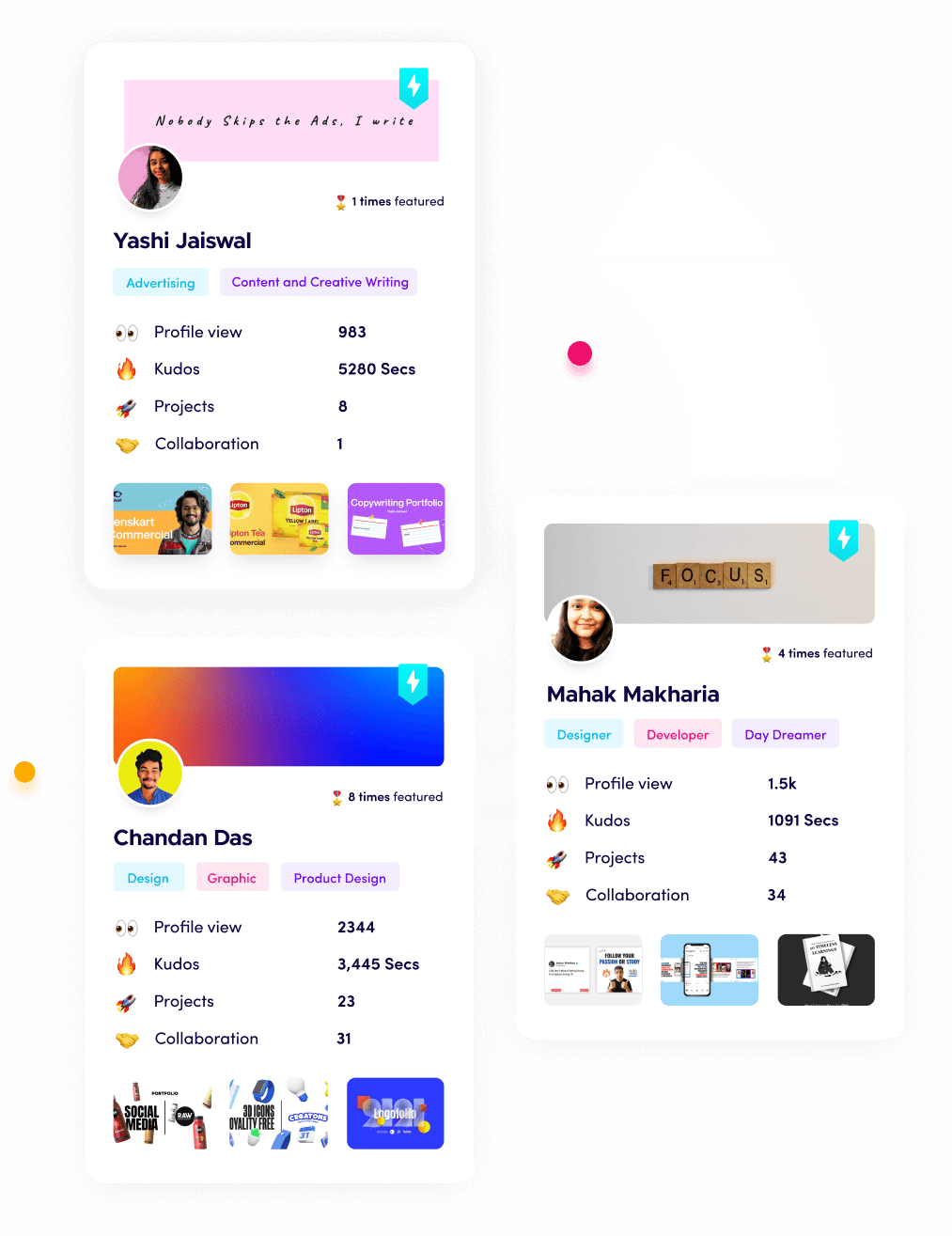
Fueler helps professionals showcase proof of work through projects, assignments, case studies, and achievements.
- Thousands of professionals use Fueler to create their digital portfolio
- Thousands of projects are published on Fueler. Check here
- Startups and Companies hire through proof of work on Fueler
- Used by freelancers, creators, marketers, video editors, writers, designers, and product managers
Our mission is to help the next 100 million professionals build a verified professional identity through proof of work

What should you do next?
You've read the article. Now turn your skills into proof of work and unlock more opportunities.
Build your proof of work portfolio
Create a clean portfolio with projects, assignments, resumes, and AI stack details that companies actually want to see.
Create your Fueler portfolio →Apply through assignments, not resumes
Stand out by solving real tasks from companies hiring on Fueler.
Explore assignments →Get discovered by companies
Make your work public and let recruiters discover your skills through actual projects instead of keywords.
Get discovered →