How Does Placement Support Work in the Tharun Speaks Video Editing Cohort?

Riten Debnath
11 Aug, 2026
Last updated: August 2026
If you have spent even five minutes looking at online courses, you already know the drill. Every self-proclaimed guru promises that buying their digital program will magically transform your bank account overnight. They drop flashy graphics, hold up fake client screenshots, and declare that their "secret formula" will make you a high-earning freelancer by next Tuesday.
Let us be completely honest: most course placement promises are total marketing fluff.
In the real creative economy, nobody gives a damn about your completion certificate, your shiny PDF badge, or how many hours of video lectures you watched on 2x speed. Creative agencies, startup founders, and top YouTubers do not hire certificates; they hire people who can cut footage, engineer viewer retention, and turn messy raw video into engaging content that drives views.
I’m Riten, founder of Fueler, a skills-first portfolio platform building the career infrastructure for 100 million creative professionals. Fueler connects talented individuals with companies through assignments, portfolios, and projects, not just resumes or CVs. Think of it as Dribbble/Behance for work samples combined with AngelList for hiring infrastructure.
At Fueler, we see thousands of editors pitch clients every single week. We know the exact difference between an editor who lands $500 monthly retainers and someone who spams 200 cold emails with zero replies.
When people ask me how placement support actually works in the Tharun Speaks Video Editing Cohort, I do not rely on promotional hype. Instead, I analyze public data, tier structures, and real talent-routing mechanics. Let us break down how the placement engine functions, where its limitations sit, and how you can actually leverage it to land paid work.
Quick Answer Summary
- Placement Exclusivity: Job and client placement support is not available to everyone; it is exclusive to the Ultimate Tier (₹14,999).
- Earning Cap Target: The program routes top performers into hiring pipelines with agency and creator roles paying up to ₹30,000 per month.
- Execution Mechanics: Placement works through internal assignment vetting, mentor reviews, and direct talent routing to hiring partners, rather than an automatic job placement.
- Proof-of-Work Requirement: You do not get placed just for showing up; you must build a clean, searchable portfolio of cohort assignments.
- Personal Accountability: Ultimate students are assigned a Personal Learning Manager to track assignment submissions and keep them eligible for placement pipelines.
What is the Tharun Speaks Video Editing Cohort Placement Engine?
The placement engine inside the Tharun Speaks Video Editing Cohort is a structured talent pipeline that connects vetted student editors with YouTubers, digital agencies, and content startups looking for creative talent.
Instead of acting like a traditional college placement cell that hands out generic job interviews, this cohort operates on a skill-first filter. The lead team and mentors evaluate student assignment submissions, monitor performance in edit battles, and flag top-tier editors who demonstrate strong visual pacing, clean sound design, and sharp storytelling mechanics.
STUDENT SUBMITS ASSIGNMENTS ──► MENTOR CRITIQUE & GRADE ──► HIGH-PERFORMER FILTER ──► DIRECT HIRING ROUTE
Understanding this setup matters because creator-led hiring works differently than corporate HR hiring. A YouTuber who produces three videos a week does not have time to screen 500 random resumes. They ask trusted creators like Tharun Naik for pre-screened editors who already understand visual hooks, cut rhythm, and project organization. That internal referral mechanism is what powers the placement support.
Key Facts
How Does Placement Support Work?
Let us take a detailed look at how an editor moves from an absolute beginner to a placed professional inside this ecosystem.
1. Tier Gating (The Placement Filter)
The first reality check you need to understand is tier gating. The Tharun Speaks cohort is split into three distinct pricing plans: Essential (₹4,999), Elite (₹6,999), and Ultimate (₹14,999).
If you join the Essential or Elite tiers, you receive training, live sessions, and asset packs, but you do not get access to the internal placement network. Direct placement support is built exclusively into the Ultimate tier. This tier structure ensures that the team only routes students who have received maximum tracking and accountability directly to hiring clients.
2. Accountability via the Personal Learning Manager
One of the biggest reasons people fail in online courses is simple human laziness: they start strong, get busy, miss two assignments, and drop out.
To prevent this drop-off in the Ultimate tier, students are paired with a Personal Learning Manager (PLM). The PLM does not teach you how to cut video; their sole job is to track your progress, nudge you when assignment deadlines approach, ensure you are watching the studio modules, and verify that you are actually completing your coursework.
If you do not complete your assignments, your PLM cannot clear you for the internal hiring pool. It operates like an operational filter to make sure only serious candidates reach hiring partners.
3. Assignment Audits and Mentor Reviews
Before any student is introduced to a hiring partner or agency, their work goes through rigorous mentor reviews. Dedicated senior editors review your project timelines and give point-blank feedback:
- "Your background music is drowning out the primary voiceover track."
- "This visual transition feels forced and breaks the narrative rhythm."
- "Your lower thirds are poorly aligned and obscure important screen elements."
RAW EDIT SUBMISSION ──► MENTOR CRITIQUE ──► TIMELINE FIXES ──► PORTFOLIO-READY ASSET
This feedback loop helps eliminate rookie errors. By the time your work reaches a potential employer, it has already been refined through professional critiques.
4. Edit Battles and Proof-of-Work Ranking
Throughout the cohort, students participate in community edit battles and real-time editing challenges. Every student is handed the exact same raw video files, voiceover tracks, and brief, then given a tight deadline to produce a finished video edit.
Edit battles act as a meritocratic leaderboard. The editors who consistently produce high-retention edits, execute creative motion graphics, and deliver polished sound design rise to the top of the cohort. When agencies or YouTubers ask Tharun's team for editor recommendations, the highest-ranking students in these challenges get flagged first.
5. Talent Routing to Hiring Partners
Once you have proven your consistency, built your assignment outputs, and cleared mentor reviews, the placement team routes your profile to external hiring partners. These partners typically include:
- Fast-Growing YouTubers: Creators looking for full-time long-form or short-form video editors.
- Creative & Digital Agencies: Content agencies managing video production for corporate clients, DTC brands, and personal brands.
- Startup Content Teams: Tech startups and media companies looking for in-house short-form content specialists.
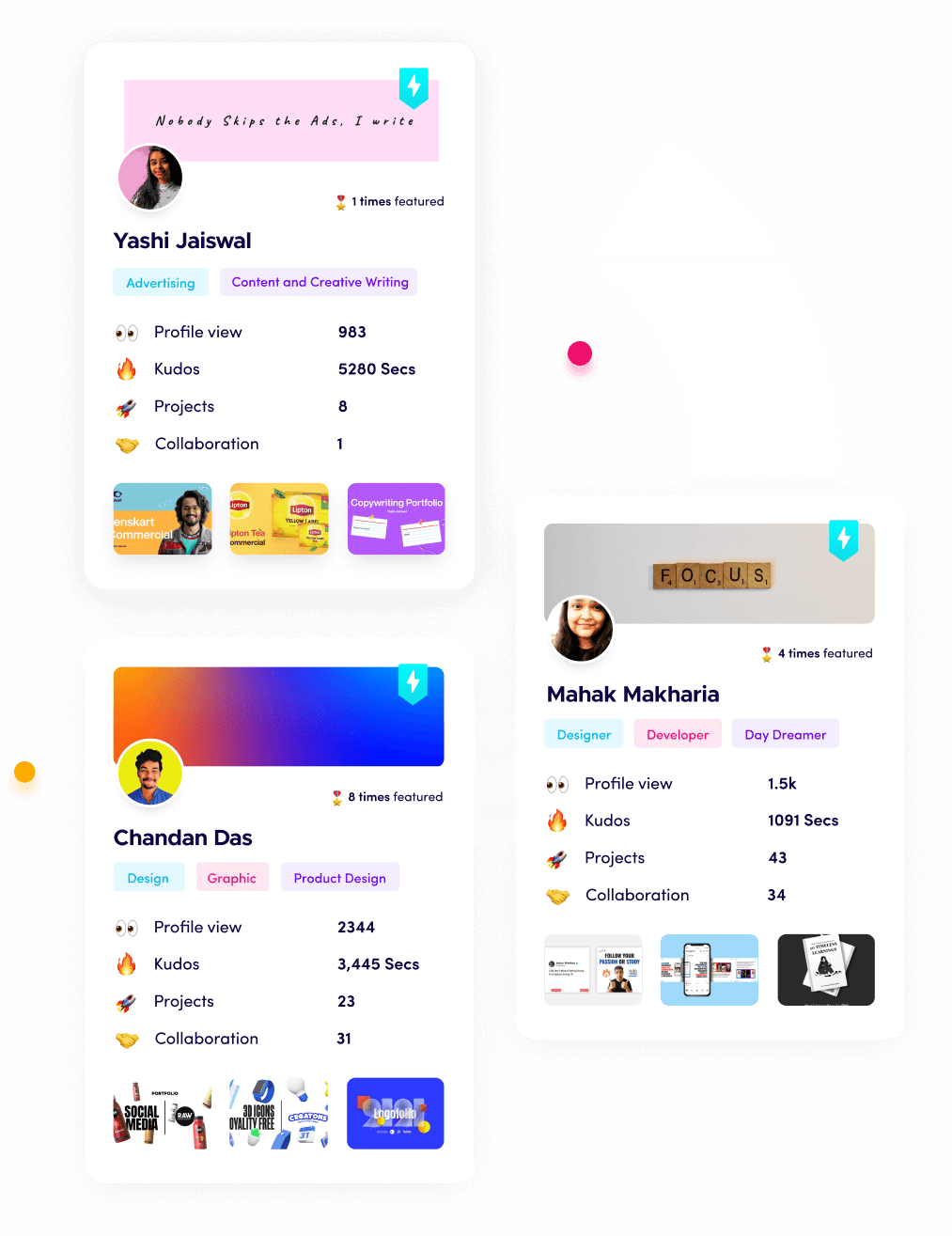
Rather than sending a traditional, boring two-page PDF resume, your work is shared as a clean, interactive proof-of-work portfolio. When you host your project assignments on a platform like Fueler, hiring managers can click through your actual edits, inspect your project descriptions, and instantly evaluate your editing capabilities without reading fluff.
Step-by-Step: The Placement Journey
Here is the step-by-step path an Ultimate-tier student takes to move through the placement funnel:
- Enrollment & Onboarding: You sign up for the Ultimate Plan (₹14,999) and get assigned a Personal Learning Manager (PLM).
- Skill Building (Weeks 1–4): You complete core modules covering Premiere Pro, After Effects, DaVinci Resolve, narrative pacing, and sound layering.
- Assignment Vetting (Weeks 5–6): You submit short-form and long-form video edits for mentor reviews, fixing errors based on direct feedback.
- Portfolio Assembly (Week 7): You compile your vetted assignments into a public proof-of-work portfolio on Fueler, complete with video breakdowns and project notes.
- Placement Routing (Week 8 onward): Your verified portfolio is submitted into the cohort's internal hiring channel, matching you with creator and agency roles paying up to ₹30,000/month.
Practical Benefits of the Placement Pipeline
- Direct Access to Hiring Clients: You bypass crowded job boards where thousands of applicants fight for attention.
- Pre-Vetted Credibility: Coming recommended through Tharun's core network gives clients instant confidence in your editing abilities.
- No Resume Waste: Hiring managers focus on your actual video edits rather than your academic qualifications or college degree.
- Accountability Protection: Having a PLM ensures you actually finish the program deliverables rather than abandoning the course halfway through.
Limitations and What They Don't Tell You
Placement support is a powerful tool, but it is not a magical fairy godmother. You need to be completely clear-headed about its real-world boundaries.
- It Is Not a Job Guarantee: Paying ₹14,999 for the Ultimate tier gives you access to placement opportunities, not a guaranteed salary. If your edits are sloppy and your work ethic is poor, no hiring partner will select you.
- You Must Win the Interview: The placement engine gets your portfolio in front of the hiring decision-maker. You still have to handle the discovery call, communicate clearly, and meet trial edit expectations.
- ₹30k/Month Is the Tier Cap for Initial Roles: Placement opportunities through the program generally top out around ₹30,000 per month for entry-to-junior roles. To push beyond that mark into ₹50,000+ territory, you must leverage cold outreach and expand your client roster independently.
Essential vs. Elite vs. Ultimate Placement Matrix
Placement ROI Breakdown
Does upgrading to the Ultimate tier make financial sense? Let us look at the math.
The price difference between the Elite plan (₹6,999) and the Ultimate plan (₹14,999) is ₹8,000.
If the placement engine routes you into a single junior video editor role or agency retainer paying ₹25,000 to ₹30,000 per month, you recover that additional ₹8,000 investment in your very first month on the job. That makes the Ultimate tier mathematically attractive for candidates who need a structured push into paid employment.
Who Should Pursue Placement Support?
- College Final-Year Students & Freshers: Anyone who needs an entry-level role in media, agency work, or creator teams right after finishing their studies.
- People Needing Strict Accountability: If you know you struggle to complete courses on your own, having a Personal Learning Manager keeps you on track.
- Editors Bad at Cold Outreach: If the thought of sending 100 cold emails terrifies you, leveraging an existing hiring pipeline gives you a direct path to clients.
Who Should Avoid Placement Tiers?
- Self-Motivated Freelancers with Existing Clients: If you already know how to pitch clients, negotiate deals, and close retainers independently, save your money and pick the Elite plan (₹6,999).
- Passive Learners: If you expect to watch video lectures without completing weekly assignments, you will not qualify for placement routing.
- Editors Wanting $5,000+ International Clients: The internal placement pipeline focuses primarily on Indian agency and creator roles up to ₹30,000/month. High-ticket international freelancing requires manual global pitching.
Final Thoughts
Placement support in the Tharun Speaks Video Editing Cohort is built on a practical, proof-of-work pipeline rather than empty promises. It operates as a meritocratic system: if you execute your assignments, fix your editing errors based on mentor critiques, and keep your portfolio organized, the placement engine gives you direct visibility in front of active hiring clients.
If you enroll in the Ultimate tier, do not treat it like a passive lottery ticket. Treat every assignment as if it were a real project for a paying client. Organize your best video cuts on a clean portfolio platform like Fueler, present your project breakdowns professionally, and let your actual proof-of-work do the heavy lifting. That is how you turn a video editing course into a long-term, paid career.
Key Takeaways
- Placement support is exclusive to the Ultimate Plan (₹14,999) and is not offered in lower tiers.
- The placement engine routes top-performing students to roles paying up to ₹30,000 per month.
- A Personal Learning Manager (PLM) tracks your assignment progress to ensure you remain eligible for hiring pipelines.
- Mentor reviews refine your editing assignments, catching rookie audio and visual mistakes before hiring managers view your work.
- Placement is merit-based; you must complete your projects and perform well in edit challenges to get recommended.
- A clean proof-of-work portfolio hosted on platforms like Fueler is what hiring partners review instead of traditional resumes.
FAQs
Which tier includes placement support in the Tharun Speaks Cohort?
Placement support is available exclusively in the Ultimate Plan (₹14,999). The Essential (₹4,999) and Elite (₹6,999) plans do not include direct job placement assistance.
What salary can I expect through the cohort's placement support?
The internal placement pipeline targets entry-level and junior editor roles with agencies, startups, and creators offering packages up to ₹30,000 per month.
Is job placement guaranteed if I buy the Ultimate Plan?
No, job placement is not guaranteed. You must complete assignments, pass mentor reviews, build a strong portfolio, and successfully clear client interviews to get hired.
What does a Personal Learning Manager do in the cohort?
A Personal Learning Manager (PLM) monitors your course progress, reminds you of submission deadlines, and ensures you complete required assignments, so you remain eligible for placement routing.
Do I need a traditional resume for video editing placement?
No. Hiring partners in the creator ecosystem review your proof of work portfolio, your actual video edits, cuts, and project descriptions rather than traditional text resumes.
Why 100,000+ professionals use Fueler
Fueler helps professionals showcase proof of work through projects, assignments, case studies, and achievements.
- Thousands of professionals use Fueler to create their digital portfolio
- Thousands of projects are published on Fueler. Check here
- Startups and Companies hire through proof of work on Fueler
- Used by freelancers, creators, marketers, video editors, writers, designers, and product managers
Our mission is to help the next 100 million professionals build a verified professional identity through proof of work

What should you do next?
You've read the article. Now turn your skills into proof of work and unlock more opportunities.
Build your proof of work portfolio
Create a clean portfolio with projects, assignments, resumes, and AI stack details that companies actually want to see.
Create your Fueler portfolio →Apply through assignments, not resumes
Stand out by solving real tasks from companies hiring on Fueler.
Explore assignments →Get discovered by companies
Make your work public and let recruiters discover your skills through actual projects instead of keywords.
Get discovered →