How to Build an Engineering Portfolio That Gets You Interviews

Riten Debnath
29 Aug, 2026
Last updated: August 2026
Standard software engineering resumes often fail to capture actual technical capabilities. When every applicant lists the exact same programming languages, framework keywords, and boot camp certificates, hiring managers struggle to separate genuine builders from candidates who merely copy tutorial code. Producing tangible evidence of your technical decision-making breaks through that noise and earns interview callbacks.
I’m Riten, founder of Fueler, a skills-first portfolio platform building the career infrastructure for 100 million creative professionals. Fueler connects talented individuals with companies through assignments, portfolios, and projects, not just resumes or CVs. Think of it as Dribbble/Behance for work samples combined with AngelList for hiring infrastructure.
Building a compelling software engineering portfolio requires more than dropping raw links to repository hosts. You will learn how to structure complex engineering projects, document system architecture, present code quality, and demonstrate technical problem-solving. These actionable steps will transform your past projects into high-converting proof of work.
Build Production-Ready Applications Instead of Tutorial Clones
Simple todo lists and basic weather apps fail to prove engineering capability. Hiring managers ignore simple tutorial code because it shows syntax copy-pasting rather than real intuition.
Building production-ready applications proves you can manage dynamic state, user authentication, network failures, and real database constraints. This bridges the gap between theoretical knowledge and real software execution.
- Implement complete user authentication systems: Integrate secure authentication workflows using JWTs, OAuth 2.0, or session handling with refreshed tokens, password hashing, and role-based access control. Showing secure user boundaries proves you understand backend security standards and data isolation practices required in modern production applications.
- Handle asynchronous state and edge cases: Design applications that handle API rate limits, network latency, payload validation, and partial service outages through retry mechanisms and fallback UI states. Handling unexpected execution failures demonstrates production-grade resilience and thoughtful user experience engineering.
- Manage database schemas and persistence layers: Create relational or document database schemas featuring indexed fields, foreign key constraints, migration scripts, and optimized query structures. Demonstrating structured data persistence shows you can design backends that remain fast as dynamic data scales over time.
- Integrate third-party API webhooks correctly: Connect external infrastructure like Stripe payments, SendGrid transactional emails, or AWS S3 file storage using secure webhook listeners and signatures. Handling third-party integrations proves your ability to build composable software systems connected to real enterprise tools.
- Expose real-time data streaming features: Incorporate WebSockets or Server-Sent Events to push live updates, notifications, or collaborative data state directly to client interfaces. Adding streaming interfaces proves you understand socket lifecycles, connection drops, and concurrent event delivery across active client connections.
Why It Matters
Building production-ready applications directly proves you can ship reliable code on day one without needing constant supervision. Hiring managers value engineers who understand how edge cases, security boundaries, and data persistence affect live users. Demonstrating this level of execution directly translates to higher interview conversion rates and stronger technical credibility during candidate evaluations.
Document Technical System Architecture and Design Choices
Raw source code alone rarely tells the full story of your engineering capability. Hiring teams review dozens of repositories daily and rarely audit individual files line by line.
Presenting clear architectural documentation transforms raw code repositories into readable technical case studies. Explaining database selection, data flow, and architectural trade-offs demonstrates clear system design awareness.
- Provide visual architectural system diagrams: Map out component relationships, API endpoints, microservices, background job queues, and database connections using clean, readable block diagrams. Clear visual representations allow technical leads to instantly grasp your system boundaries, data movement pathways, and overall application layout.
- Write comprehensive technical architectural decision records: Document why you chose specific frameworks, database engines, or caching solutions over popular alternatives, detailing explicit trade-offs and performance considerations. Writing down these architectural trade-offs proves you think deeply about long-term maintenance, cost efficiency, and performance bottlenecks.
- Explain API design and schema definitions: Detail your REST, GraphQL, or gRPC endpoint contracts, payload request formats, response structures, and explicit HTTP status code mappings. Well-documented API specifications demonstrate that you design backend services with clean client consumption and external integration requirements in mind.
- Detail data flow and caching strategies: Outline how data flows from user actions to backend persistence, highlighting Redis caching layers, read replicas, or queue workers. Documenting caching logic proves you proactively address server load, network latency, and database query optimization before performance degradation occurs.
- Highlight trade-offs and future scaling bottlenecks: Discuss current technical limitations, potential concurrency issues, and structural changes required to scale the system for higher traffic volumes. Acknowledging operational trade-offs proves engineering maturity, honesty, and an understanding that every technical design choice involves balancing distinct resource limits.
Why It Matters
Clear system documentation allows technical leads to evaluate your high-level architectural thinking in minutes rather than hours. Demonstrating why you made specific technical decisions proves you write code with long-term maintenance, team collaboration, and scalability in mind. This documentation transforms simple repositories into high-converting evidence of senior-level engineering maturity.
Showcase Clean Code Quality and Automated Testing
Writing code that works is only half the battle in modern engineering teams. Software teams prioritize maintainability, readability, unit test coverage, and automated integration checks.
Publishing organized code repositories with comprehensive test suites proves you write production code meant for team collaboration. Clean code reduces long-term tech debt and prevents regressions.
- Include thorough unit and integration test coverage: Write automated tests using frameworks like Jest, PyTest, or Go testing packages to cover critical business logic, edge cases, and API responses. Demonstrating automated test suites proves you value software reliability, regression prevention, and long-term code maintainability.
- Maintain strict linting and code formatting standards: Enforce consistent code style using tools like ESLint, Prettier, or Black with pre-commit hooks to keep codebases clean and standardized. Clean formatting demonstrates professional discipline and ensures your codebase adheres to established team conventions.
- Structure repository directories intuitively: Organize source files, modules, components, utilities, and test suites into clean, modular directory structures rather than dumping code in single root files. Logical directory structures allow visiting engineers to navigate your codebase effortless without getting lost in file bloat.
- Write clear self-documenting inline code commentary: Add concise inline comments explaining non-obvious algorithms, complex regular expressions, or hardware-specific optimization workarounds. Clean inline commentary proves you write code intended for team collaboration rather than isolated personal execution.
- Implement automated continuous integration workflows: Set up GitHub Actions or GitLab CI pipelines to run linting scripts, type checks, and test suites automatically on every commit or pull request. Running automated CI checks demonstrates experience with modern DevOps release pipelines and deployment safety protocols.
Why It Matters
Code quality and test coverage show engineering leads that you write maintainable software built for team environments. Demonstrating automated testing and clean repository structures proves you can merge code into established production repositories without breaking existing workflows or introducing technical debt.
Embed Live Working Demos for Instant Verification
Hiring managers rarely take the time to pull down local repositories, configure environment variables, and run setup commands manually.
Providing live, instantly accessible web demos removes friction and allows evaluators to test your software instantly. Live deployments convert passive repository views into active product sessions.
- Deploy applications on modern cloud infrastructure: Host your web applications and APIs on platforms like Vercel, Render, AWS, or Fly.io with continuous deployment configured directly from main branches. Live deployments remove evaluation friction and allow hiring teams to test software functionality directly inside their browsers.
- Pre-populate applications with realistic test data: Seed your database with dynamic users, detailed post histories, or mock transactional records so evaluators do not enter an empty dashboard. Populating realistic environment data creates an engaging product experience that immediately highlights application capabilities and user workflows.
- Provide one-click demo login credentials: Include visible guest credentials or automated pre-authenticated login buttons on landing pages so reviewers can explore authenticated routes instantly. Eliminating signup steps ensures busy hiring managers access full application features within seconds of opening your portfolio link.
- Ensure responsive design across desktop and mobile: Optimize user interfaces for varying screen sizes, ensuring navigation menus, data tables, and input forms render cleanly on mobile browsers. Delivering responsive layouts proves your front-end execution meets modern UI accessibility standards across devices.
- Monitor uptime and optimize cold start latencies: Keep serverless functions and backend instances warm using cron jobs to prevent long loading spinners during manager evaluation visits. Fast initial page loads create positive user impressions and prevent evaluators from closing tabs due to server timeouts.
Why It Matters
Removing evaluation friction ensures hiring managers experience your software immediately without technical setups. A seamless live demo transforms static code into an interactive experience, proving your application works reliably in production environments and raising overall candidate evaluation scores.
Highlight Real World Performance Benchmarks and Optimizations
Engineers who measure, benchmark, and optimize application performance stand out over candidates who only build functional prototypes.
Documenting performance improvements proves you understand runtime efficiency, query overhead, asset compression, and memory usage. Demonstrating performance metrics showcases advanced technical depth.
- Document database query optimizations: Show how adding targeted indexes, optimizing JOIN queries, or converting heavy N+1 queries reduced database response times significantly. Presenting before-and-after query metrics proves you understand database execution plans and resource usage under heavy workloads.
- Measure and improve Core Web Vitals: Share lighthouse scores showing improvements in Largest Contentful Paint, First Input Delay, and Cumulative Layout Shift through asset compression and lazy loading. Optimizing asset delivery proves you understand client-side performance, browser rendering pipelines, and user experience metrics.
- Implement custom caching layers to lower latency: Detail how integrating Redis or memory caches reduced database hits for heavy read operations, improving response latency under concurrent load. Demonstrating caching strategies proves you know how to scale throughput while protecting downstream database infrastructure.
- Profile memory usage and eliminate memory leaks: Explain how you identified memory leaks, reduced garbage collection pauses, or minimized payload sizes through profiling tools. Profiling resource bottlenecks shows senior-level debugging skills and an understanding of low-level runtime execution environments.
- Optimize build sizes and code-splitting: Show how tree-shaking unnecessary dependencies and configuring route-based code-splitting reduced bundle sizes and initial page render times. Minimizing bundle sizes proves you care about bandwidth efficiency, mobile network performance, and user retention metrics.
Why It Matters
Demonstrating performance optimizations proves you care about execution speed, cloud infrastructure costs, and end-user experience. Hiring managers look for engineers who proactively optimize system bottlenecks, ensuring your code remains fast and efficient as user demand increases.
Share Open Source Contributions and Real Collaborative Work
Building projects alone shows individual coding capability, but modern software engineering happens inside collaborative engineering teams.
Contributing to open-source software, building shared libraries, or submitting pull requests to public tools demonstrates team readiness. It proves you understand code reviews, issue discussions, and collaborative git workflows.
- Submit meaningful pull requests to public repositories: Fix bug reports, update outdated documentation, or implement requested features in active open-source software projects. Submitting merged pull requests proves you can read external codebases, follow established contribution guidelines, and collaborate with maintainers.
- Maintain reusable npm packages or developer tools: Publish open-source utility libraries, CLI tools, or UI component packages used by other software developers in their projects. Publishing public developer tools shows you write modular code, manage semantic versioning, and support external developer users.
- Participate actively in technical issue discussions: Engaged technical conversations on GitHub issues by triaging bug reports, reproducing edge cases, or proposing architectural refactoring solutions. Participating in issue discussions demonstrates collaborative problem-solving skills and professional technical communication habits.
- Fork and refactor existing open-source libraries: Refactor abandon or unmaintained utility libraries to support modern language syntax, updated dependencies, or performance improvements. Updating legacy codebases proves you can navigate existing software architecture without needing to rebuild components from scratch.
- Create open developer templates and boilerplates: Build clean starter templates or configuration setups that simplify project initialization for other engineers in your tech stack. Sharing developer templates shows community leadership, stack expertise, and a commitment to accelerating workflow setups.
Why It Matters
Open-source contributions prove you can jump into existing production codebases and collaborate with other engineers smoothly. Demonstrating git discipline, pull request reviews, and issue triage reassures engineering leads that you will adapt quickly to company development workflows.
Present Problem Solving Case Studies Over Simple Feature Lists
Resume bullet points list features, but engineering case studies detail business context, technical choices, and measurable results.
Structuring portfolio items as detailed engineering case studies highlights your analytical capabilities. Explaining problems, constraints, iterations, and final outcomes tells a compelling technical story.
- Outline explicit technical problems and constraints: Define the core problem your project solved, including hardware limitations, rate limits, budget bounds, or legacy database formats. Defining project constraints shows you understand that engineering decisions are dictated by real business requirements rather than preferences.
- Detail your technical decision-making process: Explain why specific libraries, algorithms, or architectural patterns were selected over competing options to address technical constraints. Sharing your decision framework proves you evaluate options systematically instead of defaulting to familiar framework choices.
- Document engineering challenges and unexpected bugs: Share major unexpected bugs, race conditions, or performance bottlenecks encountered during development and how you systematically debugged them. Documenting debugging journeys proves resilience, analytical troubleshooting capabilities, and deep technical problem-solving instincts.
- Quantify outcomes using concrete engineering metrics: Present concrete results like reduced API response times, decreased server costs, improved test coverage, or higher concurrent user capacity. Using concrete performance metrics translates abstract coding efforts into business value that non-technical stakeholders understand.
- Reflect on technical learnings and future improvements: Discuss what technical choices you would change if rebuilding the application today given updated framework tools or scaling requirements. Reflecting on past technical decisions demonstrates continuous learning, humility, and an evolving understanding of modern software architecture.
Why It Matters
Framing projects as technical case studies elevates your portfolio from simple code displays to business-focused engineering solutions. Engineering leaders prefer hiring candidates who understand business goals, quantify results, and make technical decisions based on real constraints.
Organize and Present Proof of Work for Maximum Conversion
Having incredible projects matters little if hiring managers cannot easily navigate, view, and evaluate your work.
Organizing projects into a clean proof-of-work showcase helps managers view live demos, documentation, and source code quickly. Organizing project artifacts using tools like Fueler helps package complex codebases into readable technical portfolio items.
- Curate high-impact projects over high project quantity: Select 3 to 4 deeply implemented engineering projects instead of flooding evaluators with a dozens of unfinished repositories. Focus on depth over breadth to ensure hiring leads spend their limited review time evaluating your best technical work.
- Structure project overviews for rapid skimming: Lead project pages with short executive summaries, live links, primary tech stack tags, and architecture diagrams for immediate evaluation. Clear content hierarchy ensures hiring managers extract critical technical insights within 30 seconds of opening your portfolio.
- Provide clear repository installation instructions: Write clean README files featuring step-by-step local setup instructions, environment variable definitions, and running test commands. Comprehensive README instructions allow technical interviewers to clone, build, and run your project locally without configuration friction.
- Highlight specific technical modules you engineered: Explicitly call out complex database scripts, custom algorithms, or performance modules you authored individually inside team projects. Distinguishing individual contributions prevents ambiguity during candidate evaluations and highlights your personal technical domain strengths.
- Link live deployments directly alongside repository links: Place live interactive demo buttons next to GitHub repository source links across all portfolio landing pages. Pair code with execution guarantees hiring managers verify both user interface polish and underlying source code structure simultaneously.
Why It Matters
Streamlining how hiring teams access your proof of work prevents dropped interest and increases interview callback rates. Presenting organized technical projects proves you respect evaluator time, value clear communication, and take pride in shipping complete engineering work.
How Does This Connect to Building a Strong Career or Portfolio?
Engineering career growth relies heavily on making your actual execution visible to hiring teams. Resumes summarize claims, but documenting production applications, system design choices, and benchmarked optimizations provides undeniable evidence of your technical maturity. Presenting well-documented projects demonstrates that you solve business problems, navigate real technical trade-offs, and write maintainable software. Organizing these assets using Fueler lets you showcase your proof of work naturally, helping you stand out to engineering managers and land higher-converting technical interviews without relying solely on traditional resume formats.
Final Thoughts
Building a high-converting engineering portfolio requires shifting focus from completing simple tutorials to shipping production-ready systems. Documenting architectural trade-offs, automated test suites, and concrete performance optimizations establishes undeniable technical credibility. When candidates present verified proof of work, hiring teams can easily evaluate their engineering capabilities. Focus on building real systems, documenting technical decisions, and presenting your work clearly to secure top software engineering interviews.
FAQs
What are the best projects to include in an engineering portfolio?
Focus on complex full-stack applications, distributed backend systems, custom APIs, or specialized developer tools. Avoid simple tutorial clones. Select projects that showcase database management, user authentication, asynchronous processing, and third-party API integrations under real system constraints.
How many projects should I showcase in my technical portfolio?
Showcase 3 to 4 high-quality, fully documented engineering projects rather than many small scripts. Engineering leaders prefer deep technical execution, comprehensive test coverage, system architecture documentation, and live deployed demos over dozens of incomplete or basic repository links.
Should I include open-source contributions in my software portfolio?
Yes, including open-source contributions proves you can navigate established codebases, collaborate via pull requests, and follow team coding standards. Documenting merged contributions highlights real teamwork, code review capabilities, and active engagement within the broader developer community.
Do engineering managers actually review portfolio code repositories?
Hiring managers briefly skim repository README files, architecture diagrams, and specific complex code modules. Providing live working links, well-structured documentation, clean directory layouts, and automated test suites ensures evaluators assess your technical skills within minutes.
How do I demonstrate senior-level technical thinking in my portfolio?
Highlight architectural trade-offs, database query optimizations, custom caching layers, and clear system design choices. Documenting performance benchmarks, technical limitations, and security considerations proves you write scalable, production-ready software designed for maintainability and team execution.
Why 100,000+ professionals use Fueler
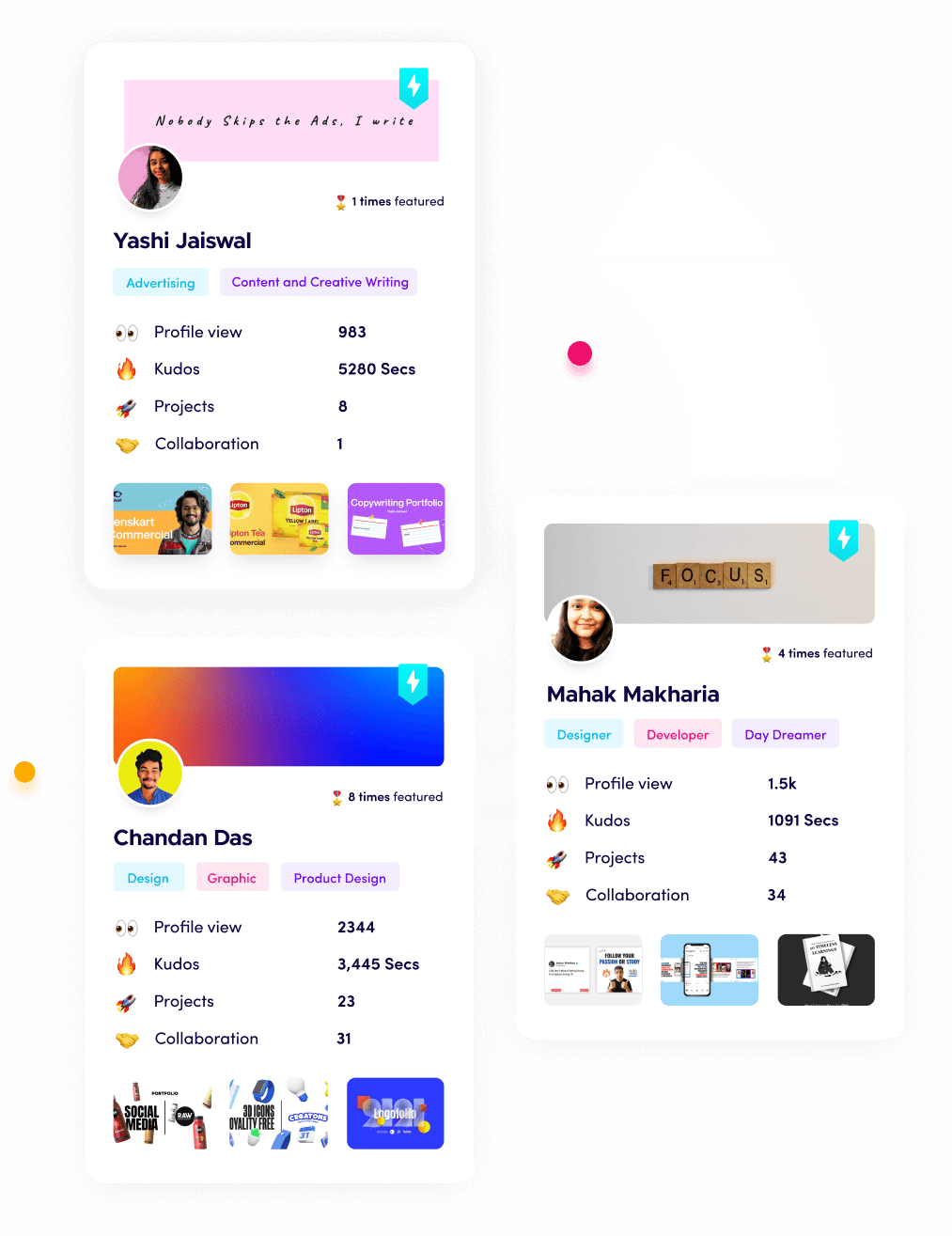
Fueler helps professionals showcase proof of work through projects, assignments, case studies, and achievements.
- Thousands of professionals use Fueler to create their digital portfolio
- Thousands of projects are published on Fueler. Check here
- Startups and Companies hire through proof of work on Fueler
- Used by freelancers, creators, marketers, video editors, writers, designers, and product managers
Our mission is to help the next 100 million professionals build a verified professional identity through proof of work

What should you do next?
You've read the article. Now turn your skills into proof of work and unlock more opportunities.
Build your proof of work portfolio
Create a clean portfolio with projects, assignments, resumes, and AI stack details that companies actually want to see.
Create your Fueler portfolio →Apply through assignments, not resumes
Stand out by solving real tasks from companies hiring on Fueler.
Explore assignments →Get discovered by companies
Make your work public and let recruiters discover your skills through actual projects instead of keywords.
Get discovered →