How to Find Freelance Design Clients in Kolkata in 2026

Riten Debnath
12 Sep, 2026
Kolkata has a growing market for freelance designers. The city has startups, IT companies, agencies, D2C brands, ecommerce businesses, media companies, restaurants, educational businesses, real estate firms, manufacturing companies, and local businesses that regularly need creative work.
For a freelance designer, this means you can build a client base without depending entirely on freelance marketplaces. You can identify businesses that need design, create relevant proof of work, approach founders and marketing teams, and turn successful projects into repeat business.
The key is to stop selling yourself as someone who can simply “make designs.” Clients pay for designers who can solve specific communication, branding, marketing, website, or product problems.
I’m Riten, founder of Fueler, a skills-first portfolio platform building the career infrastructure for 100 million creative professionals. Fueler connects talented individuals with companies through assignments, portfolios, and projects, not just resumes or CVs. Think of it as Dribbble/Behance for work samples combined with AngelList for hiring infrastructure.
If you are building your portfolio, start with how designers can build proof of work on Fueler. You can also learn how to build a proof-of-work portfolio with Fueler to present your skills through actual projects.
In this guide, I’ll explain how to find freelance design clients in Kolkata, which industries to target, how to build a portfolio that converts, how to approach agencies and startups, how to price your services, and how to build a 30-day system for finding clients consistently.
Why Kolkata Is a Strong Market for Freelance Designers
Kolkata has a diverse business ecosystem, which creates opportunities for different types of designers.
A startup may need a pitch deck and brand identity. An ecommerce company may need product creatives and website design. A restaurant may need menus and social media campaigns. A growing business may need a complete website redesign. An agency may need a freelance designer to support multiple client projects.
This variety means you can choose a niche based on your skills while still having multiple categories of potential clients.
The important thing is to understand what each business actually needs instead of sending the same portfolio to everyone.
1. Choose Your Freelance Design Specialisation
Before looking for clients, decide what type of design work you want to sell.
You can specialise in:
- Graphic design
- Brand identity
- UI/UX design
- Product design
- Website design
- Social media design
- Presentation design
- Pitch deck design
- Packaging design
- Advertising creatives
- Marketing design
- Illustration
You do not have to offer only one service. However, your positioning should have a clear centre.
For example, instead of saying:
“I am a freelance designer who does everything.”
You could say:
“I help Kolkata startups and growing businesses improve their brand and digital presence through visual design.”
This gives a potential client a much clearer reason to consider you.
2. Target Kolkata Startups
Startups can be good freelance clients because their design requirements change as they grow.
A new company may need:
- Logo and visual identity
- Pitch deck
- Website
- Landing page
- Social media creatives
- Product UI
- Marketing assets
- Presentation templates
Do not approach startups only when they publish a freelance opening.
Look for signals that they may need design support. A new product launch, new website, funding announcement, marketing campaign, or expansion can create design requirements.
Before contacting a startup, study its website and social media. Identify one specific design opportunity and connect your portfolio to it.
3. Work With IT and SaaS Companies
Kolkata has a growing technology and IT ecosystem, making SaaS and technology companies another useful client segment.
These businesses can need:
- Website design
- Landing pages
- Product UI
- UX improvements
- Product illustrations
- Case study visuals
- Pitch decks
- Social media creatives
- Marketing campaigns
- Presentation design
If you want to work with SaaS companies, your portfolio should demonstrate more than visual skills.
Show that you understand the user and business problem.
For example, if you redesigned a landing page, explain what was confusing in the original design and how your new structure improved the user journey.
4. Target D2C and Ecommerce Brands
D2C and ecommerce businesses are highly dependent on visual communication.
Customers see the brand through:
- Product packaging
- Product pages
- Advertisements
- Website banners
- Email campaigns
- Promotional campaigns
This creates regular opportunities for freelance designers.
You can offer:
- Product creatives
- Packaging design
- Social media templates
- Ad creatives
- Website banners
- Product page design
- Email graphics
- Campaign design
- Brand identity
When approaching these businesses, do not simply offer “graphic design.”
Explain how you can help make their brand more consistent across different customer touchpoints.
5. Approach Kolkata Agencies
Agencies can be valuable sources of recurring freelance work.
A digital marketing agency may need social media creatives. A branding agency may need additional design support. A web agency may need a designer for landing pages or websites.
Look for:
- Branding agencies
- Digital marketing agencies
- Advertising agencies
- Social media agencies
- Web agencies
- Creative agencies
- Product studios
Study the agency's existing work before contacting them.
If the agency mainly handles social media campaigns, show campaign design. If it builds websites, show your strongest website and landing page work.
Your objective is to make the agency understand exactly where you can fit into its workflow.
6. Explore Media, Entertainment and Creator Businesses
Kolkata has a strong creative and media culture. This can create opportunities for designers who understand visual storytelling.
You can work with:
- Media companies
- Production teams
- Independent creators
- Events
- Entertainment businesses
- Publications
- Cultural organisations
Possible projects include:
- Campaign graphics
- Social media creatives
- Event branding
- Posters
- Thumbnails
- Presentation design
- Promotional materials
- Brand identity
If you target this segment, make your portfolio visually strong and show variety without making it difficult to understand your core skill.
7. Build a Portfolio Before Starting Outreach
Your portfolio is your strongest sales asset.
You do not need 50 projects. Start with 8 to 12 strong projects that match the kind of work you want to get hired for.
Each case study should explain:
- What was the problem?
- Who was the target audience?
- What was your role?
- What did you create?
- Why did you make those design decisions?
- What was the result?
Do not only upload final images.
A client should understand your process and decision-making.
If you do not have enough client work, create self-initiated projects that resemble real business requirements.
8. Create Kolkata-Specific Self-Initiated Projects
Self-initiated projects can help you build relevant proof of work when you are starting out.
You could create:
- A Kolkata cafe brand identity
- A local restaurant campaign
- A D2C brand packaging system
- A SaaS landing page
- A startup pitch deck
- A real estate website
- An education brand identity
- A cultural event campaign
The objective is not to pretend that these are client projects.
Clearly label them as conceptual or self-initiated work.
They demonstrate what you can create for businesses in similar categories.
9. Turn Your Portfolio Into Proof of Work
A strong portfolio should provide evidence of your skills.
For example, a branding case study can show the logo, typography, colour system, applications, and reasoning behind the identity.
A UI/UX case study can show the user problem, information architecture, wireframes, interface, and prototype.
A social media project can show the campaign objective, creative direction, templates, and final content.
This approach makes your work easier to evaluate.
You can use Fueler's proof-of-work portfolio approach to organise your projects around skills and actual work.
10. Use LinkedIn to Find Kolkata Clients
LinkedIn can help you reach founders, marketing teams, product managers, and agency owners directly.
Build a prospect list containing:
- Startup founders
- Marketing heads
- Brand managers
- Product managers
- Agency founders
- Creative directors
- Business owners
Then look for signals that they may need design.
For example:
- New product launch
- New website
- Marketing campaign
- New funding
- Brand refresh
- Expansion
- New social media campaign
Do not send the same message to everyone.
Mention something specific about the company and share only the portfolio projects relevant to that business.
11. Use Instagram for Consumer-Focused Clients
Instagram is useful if you want to work with D2C brands, restaurants, fashion businesses, creators, fitness brands, cafes, and other consumer-facing businesses.
Treat your Instagram profile as an additional portfolio.
Post:
- Before-and-after redesigns
- Brand identity breakdowns
- Packaging concepts
- Social media campaigns
- Website redesigns
- Typography studies
- Design process
- Creative experiments
Your posts should show not only what you designed but why you designed it that way.
12. Offer a Small Design Audit
A design audit can help you start a conversation without immediately asking for a large project.
Pick a company and identify three to five areas where its design could improve.
For a website, review:
- Visual hierarchy
- Typography
- Navigation
- CTA placement
- Mobile experience
- Brand consistency
For social media, review:
- Visual consistency
- Typography
- Content templates
- Creative direction
- Campaign presentation
Keep the audit short.
The purpose is to demonstrate expertise and open a conversation, not to complete an entire redesign for free.
13. Use Small Paid Assignments
Some clients may want to evaluate your work before committing to a large project.
A small paid assignment can be a useful entry point.
Examples include:
- One landing page
- Three social media creatives
- One product screen
- A small brand concept
- A pitch deck
- One packaging concept
- A website redesign section
Define the scope, timeline, payment, and number of revisions before beginning.
If the client is satisfied, the assignment can become the starting point for a larger project.
14. What Recruiters Can Explore on Fueler
Recruiters should be able to evaluate designers based on actual work rather than only resumes and job titles.
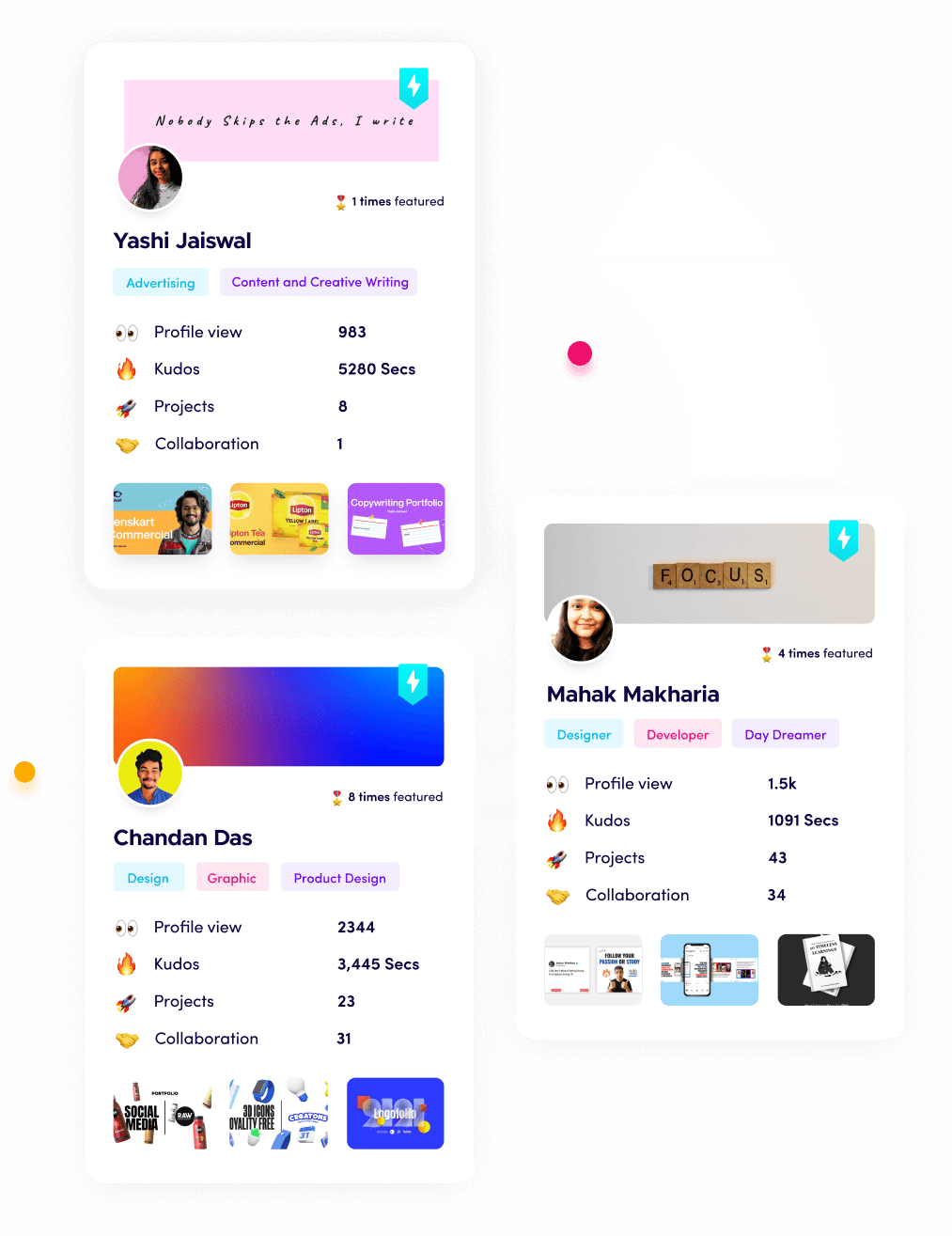
Here are several Fueler profiles that can help recruiters explore different design capabilities:
These profiles demonstrate the value of showing actual work. If you are building your own Fueler profile, make sure your strongest and most relevant projects are easy to discover.
15. Learn the Tools That Match Your Niche
Your tools should match the type of design work you want to sell.
For graphic design, focus on:
- Adobe Photoshop
- Adobe Illustrator
- InDesign
- Canva
For UI/UX and product design:
- Figma
- FigJam
- Prototyping tools
- Design systems
For presentation design:
- PowerPoint
- Google Slides
- Figma
However, tools are not the main reason clients hire designers.
You also need to understand typography, layout, hierarchy, colour, visual communication, user behaviour, brand systems, and business objectives.
16. Create Clear Freelance Design Packages
Simple packages make it easier for clients to understand your services.
Your pricing should depend on the project scope, complexity, timeline, experience, and value delivered. Avoid using one fixed price for every client.
17. Use a Client-Focused Outreach Message
Your first message should be short and relevant.
For example:
Hi [Name], I was looking at [Company] and noticed a few opportunities to improve the visual experience of your [website/product/social campaigns]. I’m a freelance designer and have worked on similar design problems. I thought a few of my projects might be relevant to what you are building. Would you be open to a quick conversation?
The important part is the research behind the message.
Do not send the same generic pitch to 100 companies.
A smaller number of highly relevant messages can be more effective because the prospect can immediately see why you contacted them.
18. Build Referral Partnerships
You can also find clients through professionals who already work with businesses.
Build relationships with:
- Web developers
- Copywriters
- SEO professionals
- Marketing consultants
- Video editors
- Photographers
- Social media managers
- Web agencies
- Brand consultants
A developer may have a client who needs branding. A copywriter may have a client that needs website design. A marketing consultant may need a designer for a campaign.
Strong professional relationships can create recurring referrals.
19. Turn One Project Into Repeat Work
Do not treat every completed project as the end of the relationship.
After delivering the work, look for the next problem you can solve.
For example:
Brand Identity → Social Media → Campaign Design → Website → Marketing Assets
Or:
Website → Landing Pages → Product Pages → Marketing Creatives → Ongoing Design
If a client has regular requirements, offer a monthly design retainer with a clearly defined scope.
This can make your freelance income more predictable.
20. Follow a 30-Day Client Acquisition Plan
If you want to actively find freelance design clients in Kolkata, follow a simple 30-day plan.
Track your numbers throughout the month.
Measure:
- Prospects contacted
- Replies received
- Calls booked
- Proposals sent
- Projects closed
- Revenue generated
- Repeat opportunities
This helps you identify which acquisition channels are actually producing results.
Final Thoughts
Finding freelance design clients in Kolkata is not about waiting for someone to post a freelance opportunity.
You need to build proof of work, choose a clear specialisation, understand the businesses around you, and approach companies with relevant solutions.
Kolkata gives designers opportunities across startups, technology companies, D2C brands, agencies, media businesses, ecommerce companies, local businesses, and other growing organisations.
Start small. Build a portfolio around the work you want to get hired for. Reach out consistently. Deliver high-quality work. Then use every successful project to create another opportunity through referrals, repeat work, or a retainer.
Your goal should not be to find one freelance client. Your goal should be to build a repeatable client acquisition system.
FAQs
1. How can I find freelance design clients in Kolkata?
Build a focused portfolio first, then target Kolkata startups, SaaS companies, D2C brands, agencies, media businesses, ecommerce companies and local businesses. Use LinkedIn, Instagram, referrals and direct outreach to connect with potential clients.
2. Which industries in Kolkata hire freelance designers?
Technology, SaaS, ecommerce, D2C, media, entertainment, education, healthcare, real estate, hospitality, agencies and local businesses can all require freelance design services. The best industry depends on your design specialisation.
3. How much should a freelance designer charge in Kolkata?
Your rate depends on your experience, design specialisation, project scope, complexity, timeline and client type. Project-based pricing can work well for defined deliverables, while monthly retainers can be useful for ongoing design support.
4. How can I get freelance design work without experience?
Create several strong self-initiated projects that represent the type of work you want to get hired for. Turn them into detailed case studies, publish your proof of work, and approach startups, small businesses and agencies with relevant examples.
5. How can I make my design portfolio attractive to recruiters?
Show actual projects and explain the problem, your role, process, design decisions and outcome. Avoid presenting your portfolio as only a gallery of final images. Recruiters should be able to quickly understand your skills and the kind of work you can handle.
Why 100,000+ professionals use Fueler
Fueler helps professionals showcase proof of work through projects, assignments, case studies, and achievements.
- Thousands of professionals use Fueler to create their digital portfolio
- Thousands of projects are published on Fueler. Check here
- Startups and Companies hire through proof of work on Fueler
- Used by freelancers, creators, marketers, video editors, writers, designers, and product managers
Our mission is to help the next 100 million professionals build a verified professional identity through proof of work

What should you do next?
You've read the article. Now turn your skills into proof of work and unlock more opportunities.
Build your proof of work portfolio
Create a clean portfolio with projects, assignments, resumes, and AI stack details that companies actually want to see.
Create your Fueler portfolio →Apply through assignments, not resumes
Stand out by solving real tasks from companies hiring on Fueler.
Explore assignments →Get discovered by companies
Make your work public and let recruiters discover your skills through actual projects instead of keywords.
Get discovered →