How to Find Freelance Developer Projects in Delhi NCR in 2026

Riten Debnath
12 Sep, 2026
Delhi NCR is one of the biggest markets in India for freelance developers. The region has startups, SaaS companies, agencies, ecommerce brands, fintech businesses, D2C companies, consulting firms, real estate businesses, education companies, and established enterprises that need developers for websites, web applications, mobile apps, internal tools, automation, integrations, and digital products.
For a freelance developer, this creates opportunities across different levels of technical work. A small business may need a website, while a startup may need an MVP or a new product feature. An agency may need a developer to handle overflow work, while an established company may need someone to build an internal dashboard or automate a repetitive process.
The important part is not simply searching for "freelance developer jobs in Delhi NCR." You need to identify businesses with actual technical requirements, understand their problems, show relevant proof of work, and approach the person who can make a decision.
I’m Riten, founder of Fueler, a skills-first portfolio platform building the career infrastructure for 100 million creative professionals. Fueler connects talented individuals with companies through assignments, portfolios, and projects, not just resumes or CVs. Think of it as Dribbble/Behance for work samples combined with AngelList for hiring infrastructure.
For developers, proof of work is especially useful because a live website, application, automation, API, open-source contribution, or technical case study gives clients something concrete to evaluate. You can learn more from Fueler's guide to creating proof of work as a developer and how to build a proof-of-work portfolio with Fueler.
In this guide, I’ll explain how to find freelance developer projects in Delhi NCR, where to find startups and agencies, which businesses to target, how to build a strong developer portfolio, how to approach clients, how to price your services, and how to turn individual projects into recurring work.
Why Delhi NCR Is a Strong Market for Freelance Developers
Delhi NCR has a wide range of businesses across technology, finance, ecommerce, education, real estate, consulting, media, hospitality, healthcare, and consumer services. This creates demand for different types of development work rather than one narrow category.
A startup may need an MVP or landing page, while an ecommerce company may need a custom storefront or payment integration. A consulting company may need an internal dashboard, while an agency may need frontend development for several client websites. This variety means developers can choose projects that match their technical strengths and gradually build a specialised freelance profile.
1. Choose Your Development Specialisation
Before searching for clients, decide what type of development work you want to sell. You can focus on frontend development, backend development, full-stack development, mobile development, ecommerce development, WordPress, automation, API integrations, cloud development, or software development for startups.
You can know several technologies without selling all of them equally. A client should quickly understand what you can build for them. Instead of saying, "I know React, Node.js, Python, MongoDB and AWS," you could position yourself as a developer who helps Delhi NCR startups build and improve web applications using a particular stack. This makes your offer easier to understand.
2. Map Delhi NCR Startups
Startups should be one of your first prospecting categories because early-stage companies often need development work at different stages of growth. They may need an MVP, website, dashboard, customer portal, API integration, automation, internal tool, or new product feature.
Look beyond companies that publicly advertise freelance positions. A startup that has recently launched a product, raised funding, expanded its team, or started building a new digital product may have technical requirements even if there is no freelance listing.
Before contacting a startup, understand what it is building and identify a specific technical problem you can help solve. Your outreach will be much stronger when you can connect your development experience directly to the company's product or business.
3. Find Digital and Development Agencies
Agencies can be excellent sources of freelance development projects because they already have a pipeline of client work. When several projects have overlapping deadlines, an agency may need additional developers without wanting to hire another permanent employee.
Look for web development agencies, digital marketing agencies, ecommerce agencies, creative agencies, software development companies, product studios, and branding agencies that offer digital services. When you approach an agency, explain what type of work you can independently handle and which technologies you use.
A strong agency pitch is not simply "I am available for freelance work." Explain that you can support their team with frontend development, backend work, website builds, integrations, bug fixes, or other specific services that match their projects.
4. Target SaaS and Technology Companies
Delhi NCR has a large technology ecosystem, which creates opportunities for developers working on SaaS and digital products. SaaS companies can require developers for frontend applications, backend APIs, dashboards, integrations, authentication, database work, performance improvements, and new product features.
If you want to target SaaS businesses, make your portfolio demonstrate production-style thinking. Explain the problem you solved, the technology stack, your role, important technical decisions, and challenges you encountered. Where appropriate, show architecture, API design, database decisions, testing, deployment, and performance considerations.
A screenshot of a finished website does not tell a client much about your development ability. Your case study should make the technical contribution visible.
5. Approach Fintech and Financial Businesses
Delhi NCR also has opportunities across fintech and financial services. These companies may need websites, dashboards, customer portals, internal systems, integrations, and data-driven applications.
If you target financial businesses, demonstrate that you understand important development practices such as authentication, validation, access control, error handling, logging, and careful handling of sensitive information. Do not claim security certifications, compliance experience, or financial-domain expertise unless you genuinely have that experience.
A personal finance dashboard or financial application can also become a useful portfolio project if you want to demonstrate relevant technical thinking before getting your first client in this segment.
6. Target D2C and Ecommerce Businesses
D2C and ecommerce companies depend heavily on their digital infrastructure. Their website is often directly connected to customer acquisition and revenue, which creates opportunities for developers.
You can help with ecommerce websites, custom storefronts, product pages, checkout experiences, payment integrations, inventory systems, CRM integrations, landing pages, analytics, performance improvements, and ongoing maintenance.
When approaching an ecommerce business, identify the actual problem instead of simply offering "website development." A slow website, confusing checkout, poor mobile experience, or disconnected inventory system gives you a much stronger reason to start a conversation.
7. Work With Education and EdTech Businesses
Delhi NCR has a large education and professional-training ecosystem, which can create development opportunities across websites, learning platforms, dashboards, student portals, booking systems, assessment tools, and internal applications.
If you target this segment, think about the complete user journey. Students, teachers, administrators, and customers may all have different requirements. A developer who can understand these workflows and build a clear digital experience can provide more value than someone who only focuses on writing code.
You can also create a self-initiated learning management dashboard or course platform as proof of work if you want to enter this market.
8. Find Businesses With Outdated Websites
Do not restrict your search to technology companies. Many established businesses in Delhi NCR have websites that are outdated, difficult to use, poorly maintained, or not optimised for mobile devices.
Potential prospects can include consultants, clinics, restaurants, hotels, real estate companies, educational businesses, professional-service firms, manufacturers, and local retailers. Review their websites and look for obvious issues such as broken pages, outdated content, poor responsiveness, confusing navigation, weak calls to action, or slow experiences.
Then approach the business owner with one or two useful observations. A specific technical observation is much more compelling than a generic message asking whether they need a developer.
9. Build a Developer Portfolio That Shows How You Solve Problems
A developer portfolio should explain more than the final interface. For each major project, explain the problem, your role, technology stack, important technical decisions, challenges, solution, and outcome.
For example, if you built an ecommerce application, explain how you handled product data, authentication, cart functionality, payment integration, database operations, APIs, and deployment. If you built an automation system, explain which manual process it replaced and how the new workflow operates.
Your portfolio should answer the question a client is really asking: "Can this person build what I need?"
10. Build Self-Initiated Projects Before You Have Clients
You do not have to wait for a client to start building proof of work. Create projects that represent the kind of freelance work you want to get.
If you want startup clients, build a small MVP. If you want ecommerce clients, build an ecommerce application. If you want SaaS projects, create a dashboard with authentication, APIs, database integration, and role-based functionality. If you want automation work, build a useful workflow that solves a repetitive business task.
Clearly label these projects as personal or self-initiated projects. Their purpose is to demonstrate your technical capability, not to create an artificial client history.
11. Show Live Projects and GitHub Work
A developer portfolio becomes stronger when clients can see evidence beyond screenshots. Where appropriate, include a live demo, GitHub repository, technical documentation, architecture explanation, or project walkthrough.
You should never publish private client code or confidential information without permission. For client projects, explain your technical contribution without exposing proprietary code. For personal and open-source projects, public repositories can provide additional evidence of how you structure code and document your work.
This makes the evaluation process easier for both clients and recruiters.
12. Use LinkedIn to Find Decision-Makers
LinkedIn can help you find founders, CTOs, product managers, agency owners, and business leaders who may need development support. Instead of searching only for freelance job posts, search for companies that are launching products, rebuilding websites, expanding their digital presence, or developing new technology.
Once you identify a relevant company, find the person responsible for the technical or business decision. A personalised message to a founder, CTO, product manager, or agency owner is more useful than sending a generic application to a company inbox.
13. Approach Agencies With a Specific Technical Offer
When contacting an agency, make it clear how you can reduce their workload. A frontend developer can offer React or Next.js development, responsive implementation, and frontend fixes. A backend developer can offer APIs, integrations, databases, and server-side functionality. A full-stack developer can take ownership of smaller applications from development through deployment.
You can also offer overflow support when an agency has more projects than its internal team can handle. This can be valuable because the agency may need additional capacity for a specific deadline rather than another permanent employee.
14. Offer a Small Technical Audit
A technical audit can be an effective way to start a conversation with a potential client. For a website, you could review performance, responsiveness, accessibility, broken links, technical usability, and obvious frontend issues. For a web application, you could identify areas that may benefit from performance improvements, better error handling, or cleaner implementation.
Keep the audit focused and useful. You are not expected to provide a complete technical consultation for free. The goal is to demonstrate that you understand the company's problem and can identify practical improvements.
15. Use Small Paid Assignments
Some companies may want to evaluate your development skills before committing to a larger project. A small paid assignment gives them a low-risk way to evaluate your technical ability while giving you an opportunity to demonstrate how you work.
The assignment could involve building a small feature, creating a landing page, integrating an API, fixing a frontend issue, creating a dashboard component, or automating a repetitive workflow. Define the requirements, scope, deadline, payment, and ownership of the resulting work before beginning.
16. What Recruiters Can Explore on Fueler
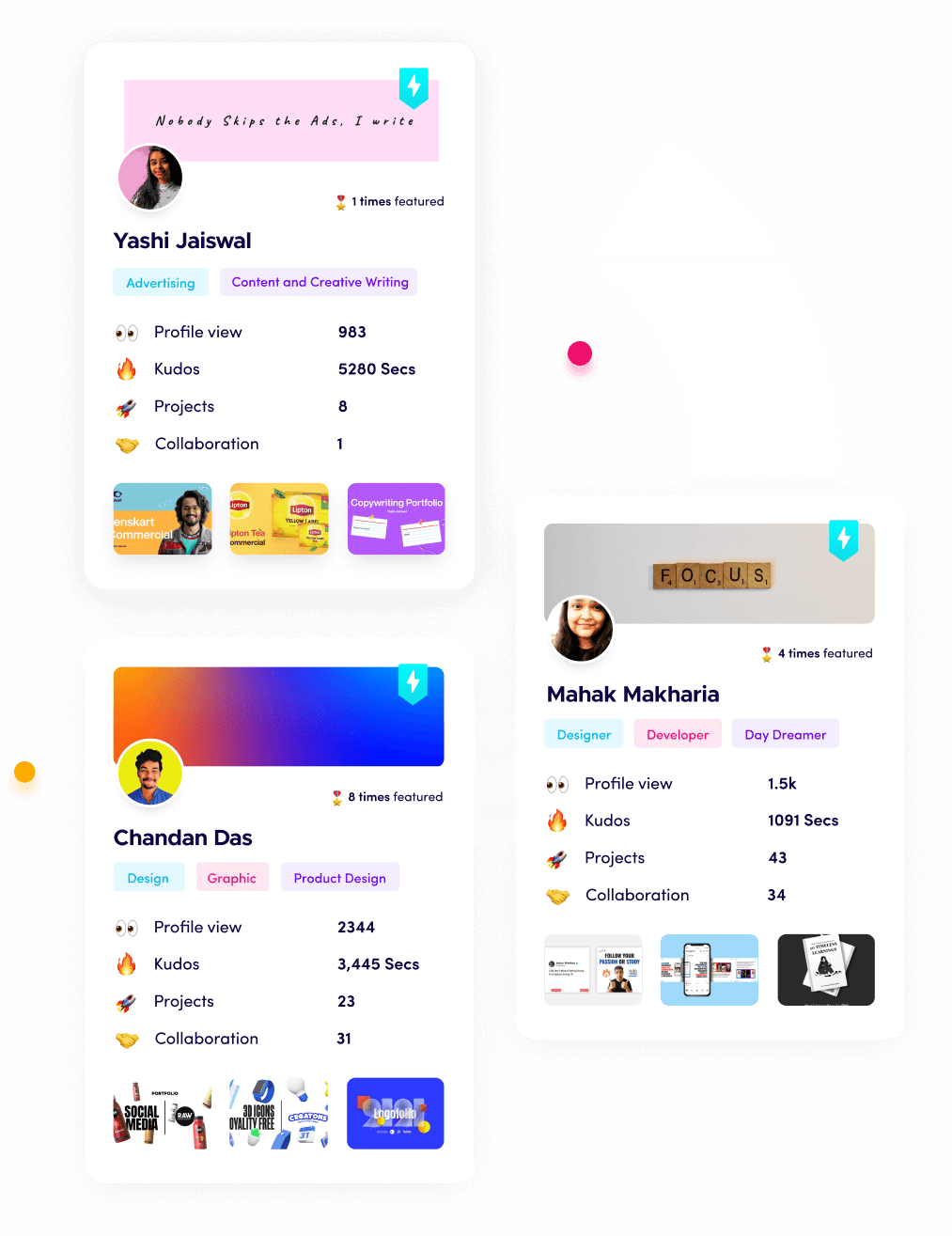
For developers, a portfolio should help recruiters evaluate actual technical work instead of relying only on resumes and lists of programming languages. Here are several Fueler profiles that can help recruiters explore different development capabilities:
These profiles are portfolio examples and should not be treated as claims that these developers are currently available for freelance projects in Delhi NCR. The important takeaway is how actual development work can be presented so that a recruiter can evaluate skills quickly.
17. Choose a Technology Stack That Matches Your Target Clients
You do not need to learn every programming language to become a successful freelance developer. Choose a stack that matches the type of projects you want to sell and become very good at using it.
For frontend development, you might focus on JavaScript, TypeScript, React, Next.js, HTML, CSS, and related tooling. For backend development, you might specialise in Node.js, Python, Java, PHP, databases, APIs, and cloud services. Full-stack developers can combine frontend and backend capabilities to deliver complete web applications.
Your goal should not be to make your profile contain the longest technology list. Your goal should be to demonstrate that you can use your chosen technologies to build reliable software.
18. Create Clear Development Packages
Non-technical clients may not understand a list of programming languages, but they understand business outcomes. Packaging your services around those outcomes can make your offer easier to understand.
Your pricing should depend on the scope, technical complexity, existing codebase, integrations, timeline, maintenance requirements, and business importance of the project. Avoid giving a final quote before understanding what actually needs to be built.
19. Use a Client-Focused Outreach Message
Your first message should demonstrate that you understand the business rather than simply announcing that you are available for freelance work. Mention something specific you noticed, connect it to the service you offer, share a relevant project, and ask whether the person is open to a short conversation.
For example:
Hi [Name], I was looking at [Company] and noticed that [specific technical observation]. I work on [relevant development service] and have built similar projects involving [relevant technology or functionality]. I thought this might be useful for what your team is working on. Would you be open to a short conversation?
The observation is what makes the message valuable. A generic "I am a full-stack developer looking for freelance work" message gives the prospect very little reason to respond.
20. Build Partnerships With Designers and Marketers
Developers can generate projects through professionals who already work with the same businesses. Designers, copywriters, SEO professionals, marketing consultants, video editors, and agencies often have clients who eventually need development work.
A designer may have a client who needs a website developed after the interface has been designed. A marketing consultant may need a landing page for a campaign. An SEO professional may work with a company that needs technical improvements to its website.
Build relationships with these professionals and make sure they understand exactly what type of development work you handle. Over time, a strong professional network can become an important source of referrals.
21. Turn One Project Into Recurring Work
A successful development project can create several additional opportunities. A website project can lead to maintenance, performance improvements, new landing pages, integrations, analytics, and new features. An ecommerce project can lead to additional functionality, integrations, conversion improvements, and ongoing technical support.
After completing a project, ask what the client plans to build or improve next. If they have regular technical requirements, you can propose a monthly development retainer with clearly defined deliverables and support boundaries.
This is often more sustainable than starting the client acquisition process from zero after every project.
22. Follow a 30-Day Client Acquisition Plan
If you want to find freelance developer projects in Delhi NCR, use a structured 30-day process instead of sending random proposals whenever you have free time. The first two weeks should establish your positioning and prospect list, while the second half should focus heavily on outreach and conversion.
Track the number of prospects contacted, replies received, calls booked, proposals sent, projects closed, revenue generated, and repeat opportunities. This will help you understand which types of clients and which acquisition channels are producing the best results.
Final Thoughts
Finding freelance developer projects in Delhi NCR is not simply about searching for job posts and applying to everything you find. The stronger approach is to identify businesses with real technical problems and make it easy for them to see that you can solve those problems.
Start by choosing a development specialisation and building strong proof-of-work projects. Your portfolio should explain what you built, your technology stack, your role, the technical challenges you solved, and the final outcome. Then map Delhi NCR startups, agencies, SaaS companies, fintech businesses, D2C brands, ecommerce companies, education businesses, and established local businesses that may need development support.
Do not overlook agencies and referral partnerships. An agency can send you multiple projects, while a strong relationship with a designer, marketer, or consultant can create recurring referrals.
Most importantly, do not wait for the perfect portfolio before starting. Build one useful project, document it properly, publish it as proof of work, and use it to start conversations. Your first strong project can become the evidence that helps you win the next one.
The goal is not to find one freelance development project. The goal is to build a repeatable system where technical proof of work creates conversations, conversations create projects, and successful projects create referrals and recurring development work.
FAQs
1. How can I find freelance developer projects in Delhi NCR?
Start by building a strong developer portfolio and then target Delhi NCR startups, SaaS companies, agencies, D2C brands, ecommerce businesses, fintech companies, education businesses, and local companies. Use LinkedIn, direct outreach, agency partnerships, referrals, developer communities, and portfolio platforms such as Fueler to find relevant opportunities.
2. Which companies hire freelance developers in Delhi NCR?
Startups, digital agencies, ecommerce companies, SaaS businesses, D2C brands, fintech companies, education businesses, professional-service firms, and established companies can all work with freelance developers. Your best prospects will depend on your technical specialisation and the type of project you want to build.
3. How much should a freelance developer charge in Delhi NCR?
There is no fixed freelance developer rate because pricing depends on your experience, technology stack, project scope, technical complexity, timeline, existing codebase, integrations, and maintenance requirements. Understand the requirements first and then create a project-based or hourly quote that reflects the actual work involved.
4. How can I get my first freelance development project without professional experience?
Build three to five self-initiated projects that demonstrate the type of development work you want to sell. Deploy them where possible and document the technology stack, your role, technical decisions, challenges, and solutions. Then approach startups, agencies, and local businesses with relevant examples instead of relying only on your resume.
5. What should a freelance developer portfolio include?
A strong developer portfolio should include the project objective, your role, technology stack, technical decisions, architecture where relevant, challenges, solutions, live demo or repository where appropriate, and genuine results. Screenshots alone are not enough. Clients and recruiters should be able to understand what you personally built and how you approached the technical problem.
Why 100,000+ professionals use Fueler
Fueler helps professionals showcase proof of work through projects, assignments, case studies, and achievements.
- Thousands of professionals use Fueler to create their digital portfolio
- Thousands of projects are published on Fueler. Check here
- Startups and Companies hire through proof of work on Fueler
- Used by freelancers, creators, marketers, video editors, writers, designers, and product managers
Our mission is to help the next 100 million professionals build a verified professional identity through proof of work
What should you do next?
You've read the article. Now turn your skills into proof of work and unlock more opportunities.
Build your proof of work portfolio
Create a clean portfolio with projects, assignments, resumes, and AI stack details that companies actually want to see.
Create your Fueler portfolio →Apply through assignments, not resumes
Stand out by solving real tasks from companies hiring on Fueler.
Explore assignments →Get discovered by companies
Make your work public and let recruiters discover your skills through actual projects instead of keywords.
Get discovered →