How to Find Freelance Developer Projects in Hyderabad in 2026

Riten Debnath
13 Sep, 2026

Hyderabad is one of India's strongest technology and startup markets, making it a promising city for developers looking for freelance projects. The city has a large presence of SaaS companies, startups, fintech businesses, healthcare companies, ecommerce brands, IT services firms, agencies, and established enterprises. These businesses need developers for websites, web applications, dashboards, APIs, automation, integrations, and product development.
The opportunity is not limited to experienced developers. Beginners can also find projects if they can demonstrate what they are capable of building. The important difference is that clients usually care more about your ability to solve a problem than the number of programming languages listed on your resume.
I’m Riten, founder of Fueler, a skills-first portfolio platform building the career infrastructure for 100 million creative professionals. Fueler connects talented individuals with companies through assignments, portfolios, and projects, not just resumes or CVs. Think of it as Dribbble/Behance for work samples combined with AngelList for hiring infrastructure.
If you want to become a freelance developer in Hyderabad, start by building a strong proof-of-work portfolio. Your portfolio should make it easy for a client to understand what you built, how you built it, and what business problem you solved.
In this guide, I will explain how developers can find freelance projects in Hyderabad, which industries to target, how to build relevant projects, how to approach companies and agencies, how to price freelance development work, and how to turn individual projects into long-term client relationships.
Why Hyderabad Is a Strong Market for Freelance Developers
Hyderabad has a broad technology ecosystem, which means developers can target different types of businesses depending on their specialization. A SaaS company may need product development, a healthcare company may need a dashboard, an ecommerce brand may need website improvements, and an agency may need a developer to execute a client's website.
The city also has businesses at different stages of growth. Startups may need MVP development while established companies may require specific technical support or additional development capacity.
This creates opportunities for frontend developers, backend developers, full-stack developers, mobile developers, automation specialists, and developers who specialize in ecommerce or CMS platforms.
1. Target Hyderabad Startups
Startups should be one of the first segments you research when looking for freelance development projects.
An early-stage startup may need an MVP, landing page, authentication system, admin dashboard, payment integration, API integration, or other core product functionality. It may not have the resources to immediately build a large internal engineering team.
Instead of approaching startups with a generic "I am a freelance developer" message, identify a specific problem you can solve. If you are a frontend developer, show how you can build responsive product interfaces. If you are a full-stack developer, show complete applications with working backend functionality.
Your pitch becomes much stronger when it is connected to the startup's actual product.
2. Work With SaaS Companies
Hyderabad has a strong technology and SaaS ecosystem, creating opportunities for developers who understand web applications and product development.
SaaS companies can need frontend development, backend development, API integrations, dashboards, automation, database work, performance improvements, and new product features.
If you specialize in React, Next.js, Node.js, Python, Laravel, PHP, or another technology stack, build projects that demonstrate how you use those technologies to solve practical problems.
A working SaaS dashboard or application can communicate your skills more effectively than a long list of technologies.
3. Target Fintech Businesses
Fintech companies can require developers for customer-facing applications, dashboards, payment flows, APIs, internal tools, and automation.
If you want to work in this segment, build proof of work around relevant problems. You could create an expense management application, financial dashboard, payment interface, or API-driven application.
Do not claim professional fintech experience if you do not have it. Instead, use self-initiated projects to demonstrate that you understand the type of technical work involved.
4. Explore Healthtech Opportunities
Healthcare technology businesses can also need freelance developers for websites, patient portals, appointment systems, dashboards, internal tools, and integrations.
A developer targeting this segment should focus on reliability, usability, responsive design, data handling, and clean implementation.
You can create a healthcare appointment platform or patient-management dashboard as a self-initiated project to demonstrate your skills. Clearly label the project as self-initiated when presenting it to potential clients.
5. Target D2C and Ecommerce Brands
Ecommerce and D2C companies frequently need technical help with their online stores.
Potential projects can include ecommerce websites, landing pages, custom storefront functionality, payment integrations, product pages, tracking implementations, and ongoing website maintenance.
You can make your offer more attractive by specializing in a particular outcome. For example, instead of saying that you build websites, position yourself as a developer who builds fast, responsive ecommerce experiences or conversion-focused landing pages.
6. Partner With Digital Agencies
Digital agencies can be an excellent source of recurring freelance development work.
A marketing, branding, SEO, or advertising agency may win a website project but not have enough development capacity internally. You can become the technical partner who handles development while the agency manages strategy, design, marketing, and client communication.
Approach agencies with a clear offer. Explain what type of development work you can handle and show relevant proof of work.
One successful agency relationship can lead to several projects over time.
7. Target IT and Software Companies
IT companies can also require additional developers when they have multiple projects running simultaneously.
Rather than contacting only company founders, look for project managers, engineering leads, technology heads, and agency owners. Explain your specialization and the type of work you can take off their team's workload.
For example, a company may need a developer for frontend implementation while its internal team focuses on backend development. Another company may need temporary support for a website migration or product release.
Specific positioning makes these conversations easier.
8. Build Your Portfolio Before Looking for Clients
Your portfolio should demonstrate your ability to solve real problems.
Do not make it a list of programming languages. Instead, showcase projects and explain what you actually contributed.
For each project, explain the objective, your role, technologies used, development process, challenges, solutions, and outcome. Fueler's guide to creating proof of work as a developer provides a useful framework for presenting this information.
If you do not have client projects yet, build your own projects around realistic business requirements.
9. Build Hyderabad-Specific Self-Initiated Projects
Self-initiated projects can help you create a relevant portfolio before you have freelance clients.
Think about the types of businesses you want to work with and build projects around their problems. You could create a SaaS dashboard, restaurant ordering system, property management platform, appointment-booking application, ecommerce storefront, or internal business dashboard.
The project does not need to be large. It needs to demonstrate your ability to take an idea from requirements to implementation.
This is particularly useful for beginners because it gives them something concrete to discuss during client conversations.
10. Show Your Development Process
A final screenshot does not tell a potential client enough about your capabilities.
Explain how you approached the project. Show the original problem, technical decisions, architecture where relevant, technologies used, challenges, and solutions.
If you improved performance, automated a manual process, simplified a workflow, or integrated multiple systems, explain the technical work behind it.
This helps recruiters and clients understand your problem-solving ability instead of evaluating only the visual result.
11. Use LinkedIn to Find Hyderabad Clients
LinkedIn can help you identify founders, CTOs, engineering managers, agency owners, marketing heads, and recruiters.
Research a company before contacting it. Look at its website, product, recent launches, and digital presence. Then identify a specific area where you could contribute.
For example, you might notice a poor mobile experience, an outdated website, a complicated user flow, or a landing page that needs technical improvements.
Mention the observation in your message instead of sending a generic list of skills.
12. Use Proof of Work Instead of Only a Resume
A resume tells a client about your background. Proof of work gives them something they can actually evaluate.
If you say that you are a React developer, show a React project. If you say that you build APIs, show an application where you implemented API functionality.
Fueler's article on why proof of work matters explains why showing actual work can be more useful than relying only on credentials.
For freelance developers, this approach can reduce the client's uncertainty about your ability to deliver.
13. Offer a Technical Audit
A technical audit can help you start a conversation without immediately asking for a large project.
Choose a company and review its website or product. Look at areas such as mobile responsiveness, frontend performance, page speed, forms, technical implementation, or user experience.
Share a few useful observations and explain how they could be improved.
The objective is not to provide an entire solution for free. You are demonstrating that you understand the company's technical problems and can think about practical solutions.
14. Use Paid Assignments to Demonstrate Your Skills
Some companies may want to evaluate your development skills before giving you a large project.
A small paid assignment can give both sides confidence. Keep the assignment clearly scoped and related to the actual work the company needs.
Avoid spending several days on unpaid assignments. A well-defined paid task is a better way to demonstrate your ability while respecting your time.
Assignments can also become valuable proof of work for developers who are still building their client history.
15. What Recruiters Can Explore on Fueler
Recruiters looking for developers can evaluate portfolios based on actual projects, technical specialization, implementation experience, and the problems a developer has solved.
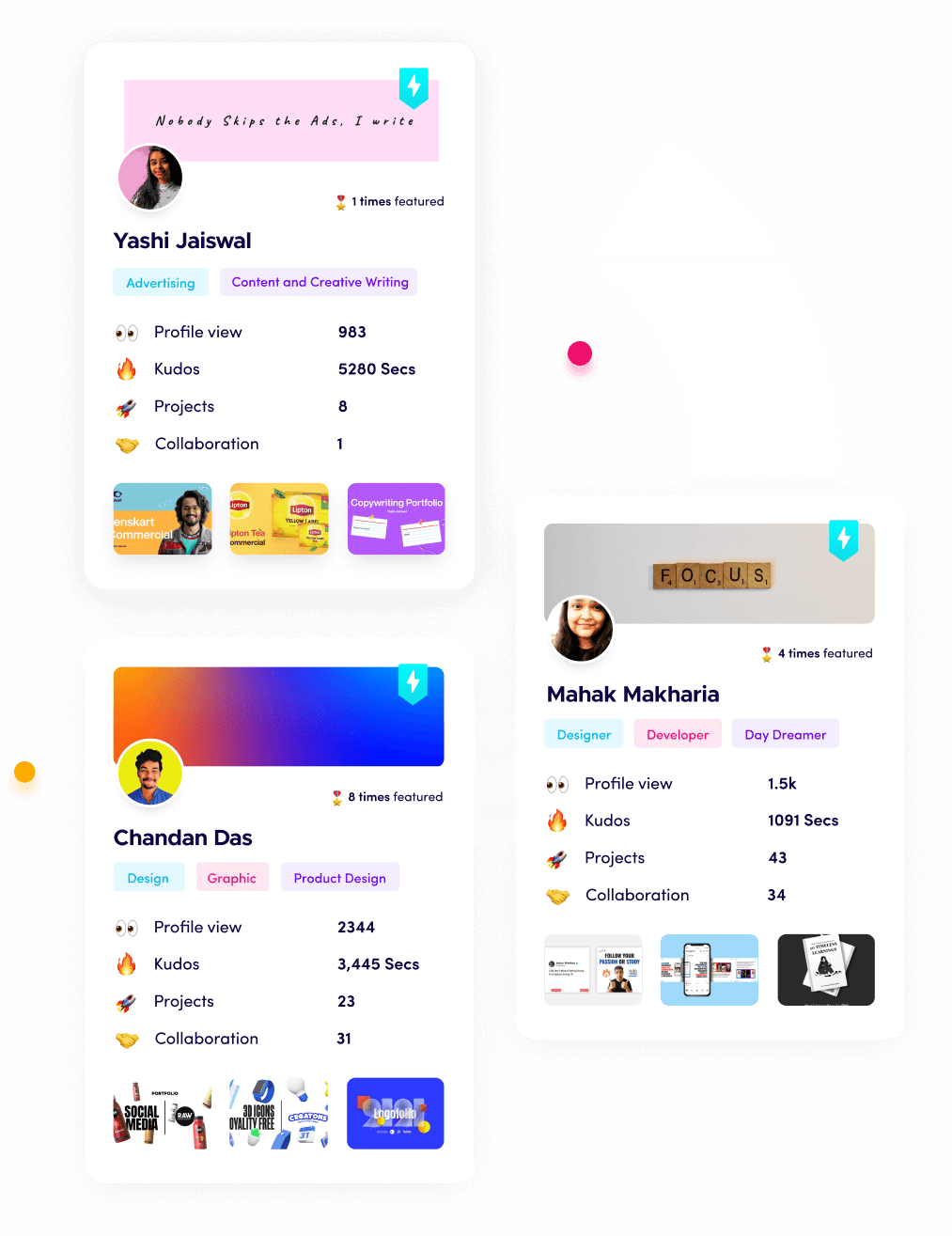
Here are some Fueler profiles that demonstrate different areas of development work:
These profiles demonstrate the value of making individual projects visible. Recruiters can explore actual work instead of depending entirely on job titles and resumes.
16. Learn Skills That Increase Your Freelance Value
Technical knowledge is only one part of successful freelance development.
Depending on your specialization, useful skills include frontend development, backend development, API integration, databases, cloud deployment, automation, ecommerce development, CMS development, performance optimization, and responsive design.
You should also improve your ability to understand business requirements. Learn how to define scope, estimate timelines, communicate technical decisions, document requirements, and manage client expectations.
A developer who understands the business objective behind a technical requirement can often provide more value than someone who only focuses on writing code.
17. Create Clear Development Packages
Make your services easy for potential clients to understand.
You can create packages around specific outcomes, such as:
- Business website development
- Startup MVP development
- SaaS product development
- Landing page development
- Ecommerce development
- Web application development
- API integrations
- Website maintenance
- Performance optimization
You do not need to publish a fixed price for every package. Clearly define the scope and expected outcome so that a potential client knows what they are hiring you to do.
18. How Much Should a Freelance Developer Charge in Hyderabad?
Freelance developer pricing in Hyderabad depends on your experience, specialization, technical complexity, project scope, timeline, and responsibility.
A beginner can start with smaller development projects while building a portfolio and client history. Experienced developers can focus on more complex applications, integrations, product development, and long-term retainers.
Do not quote a price before understanding the scope. Authentication, payment systems, databases, APIs, dashboards, third-party integrations, deployment, and ongoing support can significantly increase the amount of development work required.
19. Use a Simple Outreach Strategy
Your outreach does not need to be complicated. It needs to be relevant.
A simple structure is:
Hi [Name], I came across [Company] and noticed [specific observation]. I’m a freelance developer working on [relevant skill]. I had a few ideas for improving [specific area]. I can share a short technical audit if useful.
Keep the message short and specific. Your goal is to start a conversation and demonstrate that you have researched the business.
20. Build Partnerships With Designers and Marketers
Developers often work alongside designers, copywriters, SEO professionals, performance marketers, and social media managers.
These professionals may already have relationships with businesses that need development support. A designer may need someone to implement a website. An SEO professional may need technical changes. A marketing agency may need campaign landing pages.
Build relationships with professionals whose services complement yours. Referral partnerships can become an important source of freelance projects.
21. Turn Your First Project Into Repeat Work
Your first freelance project should not be treated as the final goal.
Once you successfully deliver a project, look for additional ways to help the client. They may need maintenance, new features, integrations, performance improvements, analytics implementation, or ongoing technical support.
A small website project can become a monthly retainer. An MVP can become ongoing product development. A landing page can lead to additional campaign pages.
Keep your portfolio updated with strong completed work and use Fueler's guide to using proof of work to get freelance clients to make your work part of your client acquisition process.
22. Follow a 30-Day Client Acquisition Plan
If you are starting from zero, give yourself a clear process for the first month.
Do not focus only on the number of messages you send. Track whether your portfolio is improving, whether the right companies are responding, which services generate interest, and whether conversations are turning into genuine project opportunities.
Final Thoughts
Finding freelance developer projects in Hyderabad is not simply about applying to more opportunities. It is about identifying businesses with technical problems and showing them that you can solve those problems.
Start with a clear specialization and build proof of work around realistic business requirements. Target Hyderabad startups, SaaS companies, fintech businesses, healthtech companies, ecommerce brands, IT firms, agencies, and local businesses.
Use LinkedIn and direct outreach to start conversations, but make every message relevant to the company. Build relationships with designers, marketers, and agencies that can refer development work to you.
Most importantly, make your work easy to evaluate. A strong portfolio can help you compete even when you do not have years of experience. Show what you built, explain how you solved the problem, and make it clear how your skills can help a business.
Your first freelance project may be small, but a successful project can become the foundation for repeat work, referrals, retainers, and larger development opportunities.
FAQs
1. How can I find freelance developer projects in Hyderabad?
Research Hyderabad startups, SaaS companies, fintech and healthtech businesses, IT firms, digital agencies, ecommerce brands, and local businesses. Build a strong proof-of-work portfolio and use LinkedIn, direct outreach, referrals, agency partnerships, and freelance networks to find relevant opportunities.
2. Is Hyderabad a good city for freelance developers?
Yes. Hyderabad has a large technology and startup ecosystem with SaaS companies, IT firms, fintech businesses, healthtech companies, ecommerce brands, agencies, and established enterprises. These businesses can require websites, web applications, integrations, automation, and ongoing development support.
3. How can a beginner developer get freelance clients in Hyderabad?
Start by building two or three strong self-initiated projects around realistic business problems. Then approach startups, agencies, ecommerce companies, and local businesses with a specific development offer. Strong proof of work can help demonstrate your ability even when you have limited client experience.
4. What should a freelance developer include in their portfolio?
Include the project objective, your role, technologies used, development approach, challenges, solutions, and outcome. Screenshots, demos, and technical explanations can make your proof of work easier for clients and recruiters to evaluate.
5. How much should a freelance developer charge in Hyderabad?
There is no fixed rate for every freelance development project. Your pricing should depend on your experience, specialization, technical complexity, project scope, timeline, and responsibility. Start with projects that match your current ability and increase your pricing as your proof of work and client experience become stronger.
Why 100,000+ professionals use Fueler
Fueler helps professionals showcase proof of work through projects, assignments, case studies, and achievements.
- Thousands of professionals use Fueler to create their digital portfolio
- Thousands of projects are published on Fueler. Check here
- Startups and Companies hire through proof of work on Fueler
- Used by freelancers, creators, marketers, video editors, writers, designers, and product managers
Our mission is to help the next 100 million professionals build a verified professional identity through proof of work

What should you do next?
You've read the article. Now turn your skills into proof of work and unlock more opportunities.
Build your proof of work portfolio
Create a clean portfolio with projects, assignments, resumes, and AI stack details that companies actually want to see.
Create your Fueler portfolio →Apply through assignments, not resumes
Stand out by solving real tasks from companies hiring on Fueler.
Explore assignments →Get discovered by companies
Make your work public and let recruiters discover your skills through actual projects instead of keywords.
Get discovered →