How to Find Freelance Developer Projects in Mumbai in 2026

Riten Debnath
12 Sep, 2026
Mumbai is one of India's largest business and startup markets, which makes it a strong city for freelance developers looking for project-based work. The opportunities are not limited to technology companies. Startups, agencies, D2C brands, media companies, financial businesses, ecommerce companies, professional-service firms, restaurants, and established businesses all need developers for websites, web applications, internal tools, ecommerce systems, automation, and digital products.
For a developer, this means you do not have to wait for a company to publish a listing that says "freelance developer required." A better approach is to identify businesses that have a technical problem, understand what they need, build proof that you can solve it, and approach the right person with relevant examples of your work.
I’m Riten, founder of Fueler, a skills-first portfolio platform building the career infrastructure for 100 million creative professionals. Fueler connects talented individuals with companies through assignments, portfolios, and projects, not just resumes or CVs. Think of it as Dribbble/Behance for work samples combined with AngelList for hiring infrastructure.
For developers, proof of work can be especially powerful because a working application, deployed website, GitHub project, automation, API, or technical case study gives a client something concrete to evaluate. Fueler's Proof of Work guide for developers explains how developers can document their projects, technologies, role, challenges, and contributions.
You can also use Fueler's guide to building a proof-of-work portfolio to organise your projects so that recruiters and clients can understand what you can actually build.
In this guide, I’ll explain how to find freelance developer projects in Mumbai, where to find local agencies and startups, which businesses you should target, how to build a developer portfolio, how to approach clients, what to charge, and how to turn one project into recurring work.
Why Mumbai Is a Strong Market for Freelance Developers
Mumbai has businesses across finance, media, entertainment, ecommerce, consumer brands, technology, professional services, hospitality, real estate, and startups. Almost every modern business needs some form of digital infrastructure, whether that means a website, ecommerce store, customer portal, internal dashboard, automation system, mobile application, or integration between different tools.
This creates different opportunities for developers with different skill sets. A frontend developer can work on websites and dashboards, while a backend developer can build APIs and integrations. A full-stack developer can take ownership of an entire web application, while developers with automation skills can help businesses reduce repetitive manual work.
The opportunity is therefore not simply about finding companies that are "hiring developers." It is about finding companies that have a technical requirement they need solved.
Mumbai Freelance Developer Opportunity Map
Mumbai is particularly useful for freelance developers because its business ecosystem spans technology, financial services, consumer brands, ecommerce, media, entertainment, professional services and startups.
StartupBlink's 2026 ecosystem data ranks Mumbai as the #3 startup ecosystem in India and #19 globally. Its Mumbai ecosystem listing currently tracks more than 2,000 startups.
Mumbai also has a dedicated government-backed fintech ecosystem. The Maharashtra government's Mumbai Fintech Hub reports 500+ fintech companies engaged, 45+ partner programs, 2,500+ jobs enabled and ₹1,100+ crore in funding raised by program startups.
For freelance developers, this creates several practical prospecting categories:
The key is to match your technical specialization with a business category rather than approaching every company as a generic “freelance developer.”
1. Choose the Type of Development Work You Want to Sell
Before looking for projects, decide what kind of development work you want to be known for. You can specialise in frontend development, backend development, full-stack development, mobile development, WordPress, ecommerce development, automation, API integrations, cloud development, or software development for startups.
You can have multiple technical skills, but your freelance positioning should still be clear. A client should be able to understand whether you can help them build a website, develop a web application, automate a process, create an ecommerce store, or improve an existing product.
For example, instead of saying, "I am a developer who knows JavaScript, Python, React and Node.js," you could say, "I help Mumbai startups build and improve web applications using React and Node.js." The second statement is easier for a potential client to connect with a business requirement.
2. Map Mumbai Startups
Startups should be one of your first prospecting categories because many early-stage companies need development work but may not have enough technical resources to handle every project internally.
A startup may need an MVP, landing page, customer dashboard, internal tool, API integration, ecommerce system, analytics dashboard, or automation. Some startups may also need short-term developers to help their existing team complete a product milestone.
When you find a startup, do not immediately send a generic freelance pitch. First understand what the company is building. Look at its website, product, customer journey, technology requirements, and recent announcements. If you can identify a specific technical opportunity, your outreach becomes much stronger.
3. Find Mumbai Digital and Development Agencies
Agencies can become some of the most useful sources of recurring freelance development projects because they already have clients and project pipelines.
Look for web development agencies, digital marketing agencies, creative agencies, ecommerce agencies, software development companies, product studios, and branding agencies that also offer digital services. These businesses may need freelance developers when their internal team is busy or when a project requires a specific technical skill.
When approaching an agency, position yourself as someone who can make their delivery process easier. Show the technologies you work with, explain the types of projects you can independently handle, and make it clear that you can communicate with their existing team.
4. Target SaaS and Technology Companies
Mumbai has a strong technology ecosystem, and SaaS businesses can create valuable freelance opportunities for developers.
A SaaS company may need help with frontend development, backend APIs, dashboards, authentication systems, integrations, performance improvements, internal tools, or new product features.
If you want to work with SaaS companies, your portfolio should contain projects that demonstrate production-style thinking. Show the architecture where appropriate, explain the technologies you used, document important technical decisions, and explain how you handled problems such as authentication, database design, API integration, performance, testing, or deployment.
A screenshot of a website is not enough to demonstrate development ability. Your portfolio should make the technical work visible.
5. Approach Fintech and Financial Businesses
Mumbai's financial ecosystem creates another potential market for developers. Financial businesses and related companies can need websites, customer portals, dashboards, internal systems, data interfaces, integrations, and automation.
If you target this category, focus on reliability, security awareness, usability, and clean implementation. You should never claim security certifications or compliance experience unless you actually have them, but you can demonstrate that you understand important development practices such as authentication, validation, access control, error handling, logging, and secure handling of sensitive information.
A portfolio project involving a financial dashboard or personal finance application can also demonstrate relevant problem-solving ability when you are building experience.
6. Target D2C and Ecommerce Businesses
D2C and ecommerce companies are another useful client segment because their digital storefront is directly connected to their business.
You can help these businesses with:
- Ecommerce websites
- Custom storefronts
- Product pages
- Checkout experiences
- Payment integrations
- Inventory integrations
- CRM integrations
- Landing pages
- Conversion-focused improvements
- Analytics implementation
- Website maintenance
Instead of simply pitching "web development," identify the business problem. A D2C company with a slow or confusing website may need performance and UX improvements, while a growing brand may need a better ecommerce system or integration between its storefront and internal operations.
7. Work With Media and Entertainment Businesses
Mumbai's media and entertainment ecosystem can create opportunities for developers who understand digital products and content platforms.
Media companies, creators, production businesses, publications, and entertainment brands may need websites, content platforms, membership systems, booking systems, campaign landing pages, internal dashboards, or custom digital experiences.
If you target this category, build portfolio projects that show how you can handle content-heavy interfaces, responsive websites, search, filtering, media presentation, and performance.
A developer does not always need to build a complex application to demonstrate capability. A well-executed project with a clear problem and thoughtful technical implementation can be enough.
8. Find Local Businesses With Outdated Websites
Do not focus only on startups.
Many established businesses have websites that are outdated, slow, difficult to use, or poorly maintained. These businesses can include restaurants, clinics, consultants, real estate firms, educational businesses, hotels, professional-service companies, and local retailers.
Search for businesses in Mumbai and review their websites manually. Look for problems such as poor mobile responsiveness, broken pages, outdated information, slow loading, confusing navigation, weak calls to action, or missing functionality.
You can then approach the business owner with one or two specific observations rather than a generic message asking whether they need a developer.
9. Build a Developer Portfolio That Shows Technical Ability
A developer portfolio should not look like a design gallery. It should show what you built, why you built it, how you built it, and what you learned.
For each important project, explain the business or user problem, your role, the technology stack, the architecture where useful, important technical decisions, challenges, final implementation, and genuine results.
For example, if you built an ecommerce application, explain how you handled authentication, product data, cart functionality, payments, database operations, APIs, and deployment. If you built an automation tool, explain the manual process you replaced and how the new workflow works.
Fueler's developer portfolio guidance recommends including the project description, technologies used, your role, open-source links when applicable, and challenges and solutions.
10. Build Projects Even Before You Have Clients
You do not need to wait for a client before creating proof of your development ability.
Build projects that represent the type of freelance work you want to get. If you want to work with startups, build an MVP. If you want ecommerce clients, create an ecommerce application. If you want SaaS work, build a dashboard with authentication, APIs, database integration, and role-based functionality.
These projects should be clearly presented as personal or self-initiated projects. Do not present them as client work.
The purpose is to give potential clients something concrete to evaluate when you do not yet have a large freelance track record.
11. Use GitHub and Your Live Projects as Evidence
A developer's portfolio becomes much stronger when a client can see more than screenshots.
Where appropriate, provide a live demo, GitHub repository, technical documentation, architecture explanation, or short walkthrough video. You do not need to expose private or confidential client code. For client work, you can explain the technical contribution without publishing code that belongs to the client.
For personal and open-source projects, however, a public repository can provide strong evidence of how you structure code, write documentation, manage dependencies, and build features.
Your goal is to make the evaluation process easier.
12. Use LinkedIn to Find Decision-Makers
LinkedIn can help you identify founders, CTOs, product managers, agency owners, marketing heads, and business owners who may need development support.
Instead of searching only for "freelance developer jobs," search for companies that are launching products, rebuilding websites, expanding their digital presence, hiring technical teams, or announcing new initiatives.
Once you identify a relevant business, find the person who can actually make a decision about development work. A personalised message to a founder or technical decision-maker is usually more useful than sending a generic application to a company inbox.
13. Approach Agencies With a Specific Offer
When approaching an agency, tell them exactly what you can take off their team's workload.
For example, a frontend developer can offer support with React and responsive web applications. A backend developer can offer API development and integrations. A full-stack developer can take ownership of smaller web applications from development through deployment.
You can also offer overflow support during busy periods. This is useful for agencies because they may not need another permanent employee, but they may need additional development capacity for a specific project or deadline.
14. Offer a Small Technical Audit
A small technical audit can be an effective way to start a conversation with a business.
For a website, you could review performance, responsiveness, broken links, technical usability, accessibility issues, or obvious frontend problems. For a web application, you could identify areas that may benefit from better error handling, performance improvements, or a cleaner user flow.
Keep the audit focused. You are not expected to perform a complete technical review for free. The goal is to demonstrate that you understand the business's problem and can identify practical improvements.
15. Use Paid Technical Assignments
A small paid assignment can be a good way for a new client to evaluate your development ability.
The assignment could involve building a small feature, creating a landing page, integrating an API, fixing a frontend issue, creating a dashboard component, or automating a repetitive process.
Agree on the requirements before starting. Define the expected functionality, technology constraints, deadline, payment, and ownership of the resulting work.
This also gives newer developers an opportunity to demonstrate their ability without needing years of professional experience.
16. What Recruiters Can Explore on Fueler
For developers, a portfolio should help recruiters evaluate actual technical work rather than relying only on a list of programming languages.
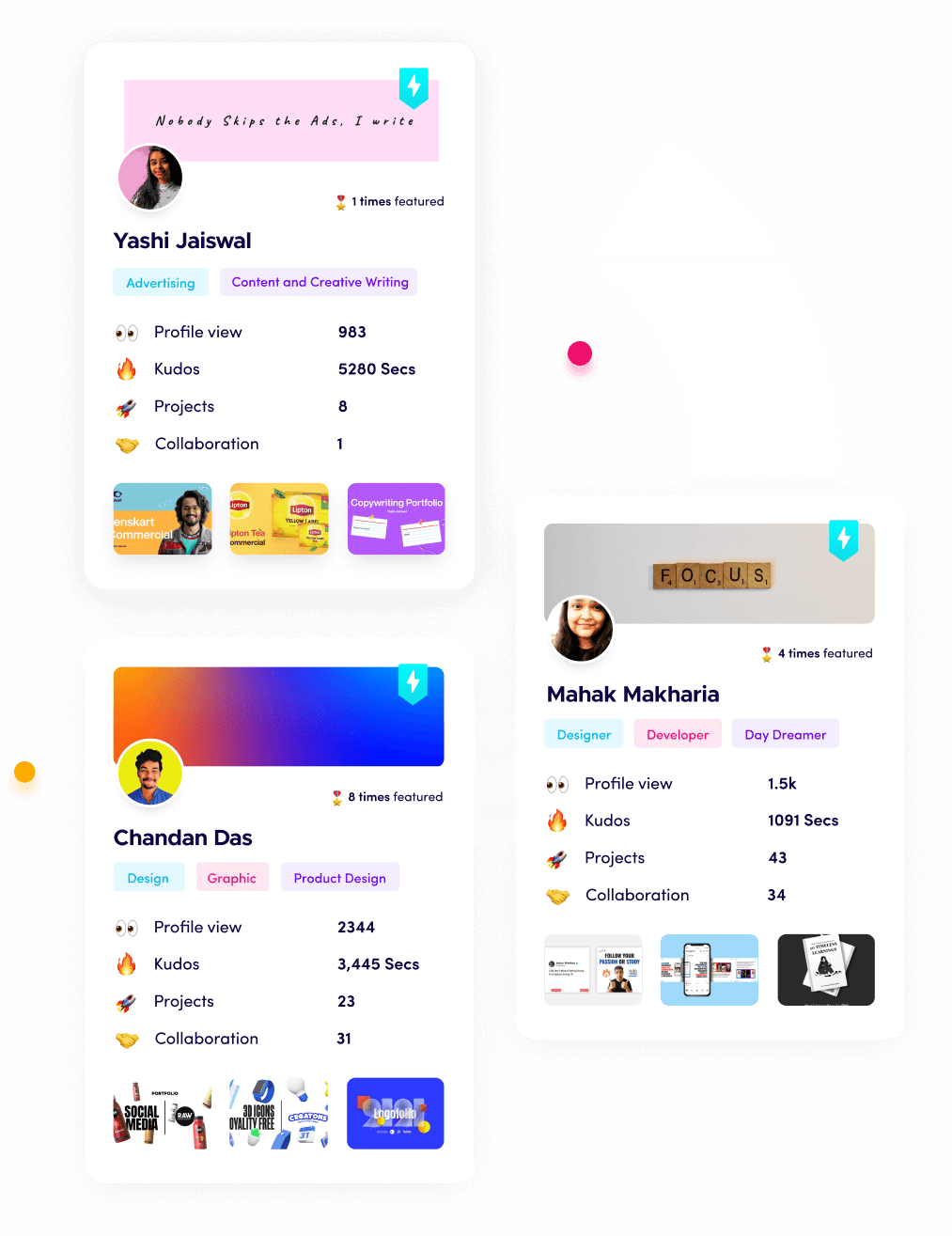
Here are some Fueler developer profiles and project examples that demonstrate different development capabilities:
These are portfolio examples rather than claims that these developers are currently available for freelance projects in Mumbai. The important lesson for freelancers is how the work is presented. A client should be able to understand your technical skills by looking at what you have built.
17. Choose a Technology Stack That Matches Your Market
You do not need to learn every programming language to become a successful freelancer. Choose a stack that matches the type of projects you want to sell.
For frontend development, you might focus on JavaScript, TypeScript, React, Next.js, HTML, CSS, and related frontend tooling. For backend development, you might specialise in Node.js, Python, Java, PHP, databases, APIs, and cloud services. Full-stack developers can combine frontend and backend skills to deliver complete web applications.
The important part is not the number of technologies listed on your profile. It is whether you can use the technologies effectively to build and maintain real software.
How Much Do Freelance Developers Charge in Mumbai?
There is no single freelance developer rate in Mumbai. Pricing depends on experience, technical specialization, project complexity, deadline, existing codebase, integrations and the business value of the work.
As a 2026 India benchmark, freelance developer rates can range from approximately ₹300–₹800 per hour for beginner work, ₹800–₹2,000 for mid-level development, and ₹2,000–₹5,000+ for senior or specialist work. Project-based work can range from roughly ₹20,000 for smaller websites or landing pages to ₹3,00,000–₹10,00,000+ for complex applications and SaaS projects. These are market benchmarks rather than fixed Mumbai rates.
Do not quote these ranges blindly. First define the scope, number of pages or features, integrations, technology requirements, timeline, revisions, deployment requirements and post-launch support.
For larger projects, use milestones rather than accepting the entire project as one undifferentiated fixed fee.
18. Create Clear Development Packages
Packaging your services can make it easier for non-technical clients to understand what they are buying. Instead of presenting a list of programming languages, present your services around business outcomes.
Your pricing should depend on the scope, technical complexity, timeline, existing codebase, integrations, maintenance requirements, and business importance of the project. Avoid giving a fixed quote before understanding what needs to be built.
19. Use a Client-Focused Outreach Message
Your outreach should demonstrate that you understand the business problem rather than simply announcing that you are available for freelance work.
For example:
Hi [Name], I was looking at [Company] and noticed that [specific technical observation]. I work on [relevant development service] and have built similar projects involving [relevant technology or functionality]. I thought this might be useful for what your team is working on. Would you be open to a short conversation?
The observation is important because it shows that you actually looked at the company. A generic message such as "Hi, I am a full-stack developer looking for freelance work" gives the prospect very little reason to respond.
20. Build Partnerships With Designers, Marketers and Agencies
Developers do not have to find every project alone. Designers, marketers, copywriters, SEO professionals, photographers, and consultants often work with businesses that eventually need development support.
A designer may have a client that needs the website built after the interface has been designed. A marketing consultant may have a company that needs a landing page. An SEO professional may work with a business that needs technical website improvements.
Build genuine relationships with professionals who serve the same customer base. Over time, these relationships can create a referral network that brings projects without requiring cold outreach for every opportunity.
21. Turn One Development Project Into Recurring Work
A successful development project can create several additional opportunities.
A website project can lead to maintenance, performance improvements, new landing pages, analytics, integrations, and feature development. An ecommerce project can lead to new functionality, integrations, conversion improvements, and ongoing technical support. A web application can lead to additional features, bug fixes, monitoring, and infrastructure improvements.
After completing a project, ask what the client expects to build or improve next. This turns the relationship from a one-time transaction into an ongoing technical partnership.
22. Follow a 30-Day Client Acquisition Plan
If you want to find freelance developer projects in Mumbai, give yourself a structured 30-day plan rather than sending random proposals whenever you have time.
Track the number of prospects you contact, replies you receive, calls you book, proposals you send, projects you close, and repeat opportunities you create. This will help you identify which type of client and which outreach channel produces the best results.
Final Thoughts
Finding freelance developer projects in Mumbai is not simply about searching for the phrase "freelance developer Mumbai" and applying to every opportunity you see. The stronger approach is to identify businesses with real technical problems and make it easy for them to see that you can solve those problems.
Start by choosing a clear development specialisation and building three to five strong proof-of-work projects. Your portfolio should show what you built, which technologies you used, what your role was, how you solved technical problems, and what the result was. Then map Mumbai startups, agencies, SaaS businesses, D2C companies, media businesses, financial companies, and established local businesses that may need development support.
Do not underestimate agencies and referrals. A single agency relationship can lead to several projects, while a strong relationship with a designer, marketer, or consultant can create a steady stream of referrals.
Most importantly, do not wait until you have the perfect portfolio before starting. Build one useful project, document it properly, publish it as proof of work, and use it to start conversations. Your first project can become the evidence that helps you win the next one.
FAQs
1. How can I find freelance developer projects in Mumbai?
Start by building a focused developer portfolio and then target Mumbai startups, SaaS companies, agencies, D2C brands, financial businesses, media companies, and local businesses. Use LinkedIn, direct outreach, referrals, agency partnerships, developer communities, and portfolio platforms such as Fueler to find relevant opportunities.
2. Which companies hire freelance developers in Mumbai?
Startups, digital agencies, ecommerce businesses, SaaS companies, D2C brands, media companies, professional-service firms, financial businesses, and established companies can all work with freelance developers. The best prospects depend on your technical specialisation and the type of project you want to build.
3. How much should a freelance developer charge in Mumbai?
There is no fixed freelance developer rate because pricing depends on your experience, technology stack, project complexity, scope, timeline, existing codebase, integrations, and maintenance requirements. Define the requirements first and then price the project based on the actual work involved.
4. How can I get my first freelance development project without professional experience?
Build three to five self-initiated projects that demonstrate the type of development work you want to sell. Deploy them where possible, document the technology stack and your technical decisions, and use them as proof of work when approaching startups, agencies, and local businesses. Personal projects should be clearly presented as personal projects rather than professional client work.
5. What should a freelance developer portfolio include?
A strong developer portfolio should include the project objective, your role, technology stack, key technical decisions, architecture where relevant, challenges, solutions, live demo or repository where appropriate, and genuine results. Screenshots alone are not enough. Clients and recruiters should be able to understand what you personally built and how you approached the problem.
Why 100,000+ professionals use Fueler
Fueler helps professionals showcase proof of work through projects, assignments, case studies, and achievements.
- Thousands of professionals use Fueler to create their digital portfolio
- Thousands of projects are published on Fueler. Check here
- Startups and Companies hire through proof of work on Fueler
- Used by freelancers, creators, marketers, video editors, writers, designers, and product managers
Our mission is to help the next 100 million professionals build a verified professional identity through proof of work

What should you do next?
You've read the article. Now turn your skills into proof of work and unlock more opportunities.
Build your proof of work portfolio
Create a clean portfolio with projects, assignments, resumes, and AI stack details that companies actually want to see.
Create your Fueler portfolio →Apply through assignments, not resumes
Stand out by solving real tasks from companies hiring on Fueler.
Explore assignments →Get discovered by companies
Make your work public and let recruiters discover your skills through actual projects instead of keywords.
Get discovered →