How to Learn YouTube Scriptwriting in 2026 (Complete Beginner Roadmap)

Riten Debnath
11 Mar, 2026
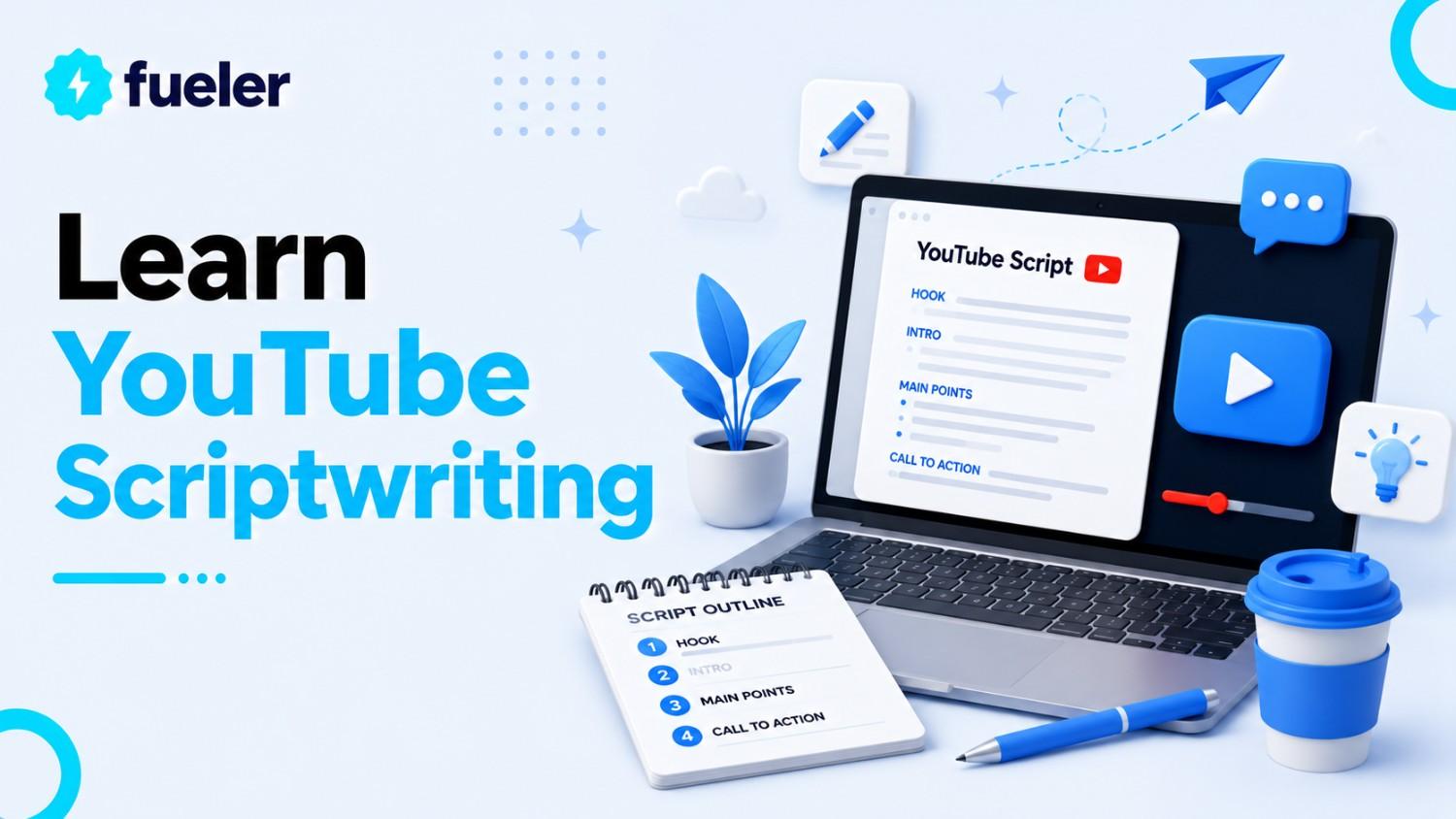
Every viral YouTube video starts with one thing: a great script. When people watch a MrBeast challenge, a documentary by Johnny Harris, or a productivity video by Ali Abdaal, they see the creator on screen. But behind the scenes, there is often a scriptwriter who designs the story, pacing, and hooks that keep millions of viewers watching.
The demand for YouTube scriptwriting jobs is growing faster than ever in 2026. Thousands of creators are building YouTube channels, personal brands, podcast channels, AI explainers, and documentary-style videos. Many of them are looking for writers who can turn ideas into engaging scripts that hold audience attention.
This demand is coming from multiple places:
- YouTube creators with large audiences
- Content agencies producing videos for brands
- Personal brands building authority online
- Faceless YouTube channels publishing daily videos
- AI and tech channels explaining complex ideas
Educational creators, documentary channels, and storytelling channels rely heavily on strong narrative scripts. Without good storytelling, even the best video editing cannot save a boring video.
I’m Riten, founder of Fueler — a platform that helps freelancers and professionals get hired through their work samples. In this article, I’ll walk you through how to learn YouTube scriptwriting in 2026 step by step. But learning alone is not enough. The real advantage comes when you show your scripts as proof of your skill through a portfolio so that creators and companies can see your work before hiring you.
If you are someone who enjoys writing, storytelling, researching ideas, and explaining concepts clearly, YouTube scriptwriting can become a powerful career path.
What Does a YouTube Scriptwriter Actually Do?
A YouTube scriptwriter does much more than simply writing lines for a video. The role combines research, storytelling, psychology, and audience retention techniques.
A good script determines whether a viewer watches for 10 seconds or stays until the end.
Core Responsibilities of a YouTube Scriptwriter
A scriptwriter typically works on several parts of the video creation process.
- Research the topic deeply
- Scriptwriters study the subject before writing. This includes reading articles, watching other videos, gathering statistics, and understanding audience expectations.
- Writing a strong hook
- The first 5 to 15 seconds of a video are critical. A scriptwriter creates curiosity or tension that makes viewers stay.
- Building a narrative structure
- Videos need a beginning, middle, and end. Scriptwriters organize information so it flows naturally.
- Maintaining viewer retention
- Scripts include storytelling techniques, pattern interruptions, and curiosity loops that keep viewers engaged.
- Writing for voice and visuals
- Unlike blog writing, YouTube scripts are written for listening. They include instructions for visuals, b-roll, animations, and cuts.
Basic Structure of a YouTube Script
Most successful YouTube videos follow a structure similar to this.
Hook: Start with a surprising statement, question, or promise.
Introduction: Explain what the video will deliver and why it matters.
Context: Provide background or explain the problem.
Story Build: Break the topic into engaging sections.
Insights or Lessons: Deliver the main value of the video.
Conclusion and Call To Action: Summarise the idea and guide viewers toward the next step.
Example Mini Script
Hook:
“What if I told you that the first 15 seconds of a YouTube video decide whether it goes viral or disappears?”
Intro:
“In this video, we will break down the exact structure used by top creators to keep viewers watching.”
Story Build:
“We will analyze three viral videos and identify the storytelling pattern behind them.”
Conclusion:
“If you want to write scripts that keep viewers hooked, focus on curiosity, structure, and pacing.”
This structure may look simple, but mastering it takes practice.
Types of YouTube Scripts
Not all YouTube videos follow the same style. Different channels use different script formats and storytelling approaches.
Understanding these categories helps you specialize as a writer.
Educational Scripts
Educational creators explain complex ideas in a simple and engaging way. These scripts focus on clarity and step-by-step explanations.
Channels like productivity educators and learning creators often use this format.
Key characteristics:
- Clear explanations
- Structured sections
- Simple language
- Practical examples
Why it matters for scriptwriters:
Educational content performs well on YouTube because people search for solutions. Writers who can explain complex ideas simply are highly valuable.
Documentary Style Scripts
Documentary channels tell stories about history, geopolitics, culture, or technology.
Creators like Johnny Harris and Vox use narrative storytelling mixed with visuals and research.
Key characteristics:
- Deep research
- Visual storytelling
- Story arcs and plot structure
- Emotional engagement
Why it matters for scriptwriters:
Documentary videos can reach millions of views because they combine information with storytelling.
Faceless Channel Scripts
Faceless YouTube channels rely completely on scriptwriters because the creator never appears on camera.
These channels often cover:
- Finance topics
- AI tools
- History stories
- Celebrity biographies
- Tech explainers
Key characteristics:
- Voiceover storytelling
- Clear narrative flow
- High engagement pacing
Why it matters for scriptwriters:
This is one of the fastest growing categories in YouTube automation.
Story Based Entertainment Scripts
Channels inspired by MrBeast or storytelling creators focus on high-energy scripts.
Key characteristics:
- Fast pacing
- Emotional moments
- Unexpected twists
- Strong hooks
Why it matters for scriptwriters:
These scripts require understanding audience psychology and entertainment value.
Skills Required to Become a YouTube Scriptwriter
To succeed in YouTube scriptwriting, you need a mix of creative writing and analytical thinking.
Below are six essential skills.
1. Storytelling
Storytelling is the backbone of every successful YouTube video.
Even informational videos perform better when they follow a story arc. The viewer should feel like they are going through a journey instead of just listening to information.
Important storytelling elements include:
- Conflict and resolution
- Curiosity gaps
- Emotional moments
- Structured narrative
Why it matters for YouTube scriptwriting:
Stories keep people engaged longer, which improves watch time and video performance.
2. Research Skills
A strong script begins with strong research.
Scriptwriters often analyze multiple sources before writing. They gather statistics, examples, expert opinions, and interesting facts.
Good research helps scripts become:
- More credible
- More engaging
- More informative
Why it matters for YouTube scriptwriting: Well-researched scripts help creators build authority and trust with their audience.
3. Writing Attention Hooks
The hook determines whether a viewer keeps watching.
Scriptwriters experiment with different opening lines such as:
- Surprising statistics
- Questions
- Contrarian statements
- Promises of value
Why it matters for YouTube scriptwriting:
Videos with strong hooks have better viewer retention in the first 30 seconds.
4. Audience Psychology
Understanding the audience is essential.
Scriptwriters need to ask questions like:
- What problem does the viewer have?
- What curiosity does the viewer feel?
- What emotional response will keep them watching?
Why it matters for YouTube scriptwriting: When scripts align with viewer psychology, engagement increases significantly.
5. Editing for Retention
Scriptwriting and editing are closely connected.
Great scripts include moments that guide editing decisions such as:
- Pattern interruptions
- Visual examples
- Quick transitions
Why it matters for YouTube scriptwriting: Retention is one of the most important YouTube ranking signals.
6. Writing for Listening
YouTube scripts are written for listening, not reading.
This means sentences must be shorter and conversational.
Instead of writing: “This phenomenon significantly affects audience engagement.”
Write: “This one thing can completely change how viewers watch your video.”
Why it matters for YouTube scriptwriting: Conversational writing improves viewer comprehension and engagement.
Best Free Resources to Learn YouTube Scriptwriting
Learning YouTube scriptwriting has become easier thanks to online resources.
Here are some of the most valuable learning platforms.
YouTube Channels for Scriptwriting
Channel Makers
Channel Makers explains how YouTube creators structure their content and optimize videos for growth.
Key features:
- Video storytelling breakdowns
- Content strategy insights
- Audience retention techniques
- Creator case studies
Why it matters for learning scriptwriting: The channel helps beginners understand how successful YouTube videos are structured.
Paddy Galloway
Paddy Galloway is one of the most respected YouTube strategists.
Key features:
- Viral video analysis
- MrBeast storytelling breakdowns
- Creator growth strategy
- Script and retention insights
Why it matters for learning scriptwriting: His breakdowns show how top creators design scripts for engagement.
Film Booth
Film Booth focuses on helping creators improve storytelling and audience retention.
Key features:
- Video storytelling lessons
- Hook creation strategies
- Editing techniques
- Audience psychology
Why it matters for learning scriptwriting: It teaches how story structure impacts video performance.
Online Courses
YouTube Creator Academy
YouTube Creator Academy offers official lessons from the platform itself.
Key features:
- Video production tutorials
- Audience growth strategies
- Creator monetisation tips
- Content planning frameworks
Why it matters for learning scriptwriting: It helps writers understand how the YouTube ecosystem works.
Skillshare and Udemy
These platforms offer affordable courses on storytelling and scriptwriting.
Key features:
- Structured lessons
- Writing exercises
- Storytelling frameworks
- Industry examples
Why it matters for learning scriptwriting: Courses help beginners build structured learning paths.
Books That Improve Scriptwriting
Some storytelling books are extremely helpful for YouTube writers.
Made to Stick
Why ideas survive and spread.
Key takeaways:
- Simplicity in communication
- Memorable storytelling
- Emotional engagement
Why it matters for YouTube scriptwriting: Helps writers craft memorable narratives.
Building a StoryBrand
Focuses on storytelling in marketing.
Key takeaways:
- Clear messaging
- Audience focused storytelling
- Structured narratives
Why it matters for YouTube scriptwriting: Helps writers connect ideas with audience needs.
Save the Cat
A famous screenwriting book.
Key takeaways:
- Story structure frameworks
- Plot development
- Emotional pacing
Why it matters for YouTube scriptwriting: Helps create structured narrative arcs.
How to Practice YouTube Scriptwriting
Learning scriptwriting is useless without practice. The best way to improve is to write consistently and experiment with ideas.
Here are simple practice exercises.
Exercise 1: Explain ChatGPT in 3 Minutes
Try writing a short educational script explaining how ChatGPT works.
Focus on:
- simple language
- examples
- storytelling
Exercise 2: Why Netflix Documentaries Are Addictive
Write a documentary style script exploring why Netflix documentaries are engaging.
Focus on:
- storytelling
- pacing
- curiosity
Exercise 3: 5 Lessons from Elon Musk
Write a motivational YouTube script.
Focus on:
- story-based narrative
- examples
- emotional connection
Exercise 4: History of YouTube in 5 Minutes
Write an educational documentary-style script explaining how YouTube evolved.
Focus on:
- structure
- timeline storytelling
- insights
Exercise 5: Why People Procrastinate
Write a psychology-focused script explaining procrastination.
Focus on:
- relatable storytelling
- simple explanations
- strong hook
The 5 Scripts in 30 Days Challenge
A powerful exercise is the 5 scripts in 30 days challenge.
Write at least five scripts covering different topics and styles.
By the end of the challenge, you will have:
- practical experience
- improved storytelling ability
- real writing samples
Why You Should Build a Scriptwriting Portfolio
One of the biggest mistakes beginners make is saying: “I can write YouTube scripts.”
But when someone asks for proof, there is nothing to show. Companies and creators hire writers who can demonstrate their skills with real work. The real proof that you can write scripts is the scripts you have already written.
This is the idea behind Proof of Work.Instead of telling people what you can do, you show them what you have created.
This philosophy is exactly why we built Fueler.
Fueler is a portfolio platform where creators, freelancers, and professionals publish their projects so companies can evaluate their skills through assignments and real work instead of traditional resumes.
Why should you upload your scriptwriting projects on Fueler?
When a creator or agency wants to hire a YouTube scriptwriter, they would want to examples.
Your portfolio can include:
- Educational scripts
- Documentary scripts
- Viral video concepts
- AI topic scripts
- Story based scripts
When someone reads your scripts, they instantly understand your writing style and thinking ability. They can understand your process of working, how you think, how you work
Real Project References To Make Your Portfolio
- Creative Script Writing (Finance) for FZK Media: https://fueler.io/aryakapoor/creative-script-writing-finance
- YouTube Script (Hinglish): https://fueler.io/karishmasharma/youtube-script-hinglish
- Growth Rocket Media - Ayushman Pandita - Video Scriptwriting: https://fueler.io/sharvin/growth-rocket-media-hiring-assignment-ayushman-pandita-video-scriptwriting
- YouTube Script Writing For Mint: https://fueler.io/salonithakkar/creative-youtube-script-writing-for-mint
Here are some Portfolio References
- Vikra Vardhan: https://fueler.io/vikravardhan
- Sharvin Shitole: https://fueler.io/sharvin
- Neha Mahato: https://fueler.io/nehaa_48
- Anshu Shandilya: https://fueler.io/ashandilya64
- Aakanksha Umath: https://fueler.io/aakankshaumath
Start Building Your YouTube Scriptwriting Portfolio
If you want to stand out as a YouTube scriptwriter in 2026, start building a writing portfolio today.
Here is a simple portfolio structure.
Add Different Script Types
Include multiple styles to show versatility.
Examples:
- Educational script
- Storytelling script
- Documentary script
- Productivity script
Publish Script Projects
Each project should include:
- The topic
- The full script
- Explanation of your idea
- Possible visuals
Share Your Work Online
Once you publish scripts, share them with:
- YouTube creators
- Content agencies
- Startup founders
- Personal brand builders
Your portfolio becomes your career asset.
Final Thoughts
YouTube is no longer just a platform for creators. It has become a massive ecosystem where writers, editors, researchers, and strategists collaborate to produce content.Scriptwriters are becoming one of the most valuable roles in the creator economy. If you want to learn YouTube scriptwriting in 2026, focus on three things. First, study storytelling and understand how great videos are structured. Second, practice writing scripts regularly so you develop your voice and pacing. Third, build a portfolio of scripts so people can see your work.
Frequently Asked Questions
1. How do beginners learn YouTube scriptwriting?
Beginners can learn YouTube scriptwriting by studying successful videos and understanding how they structure their storytelling. A good starting point is to analyze videos from educational creators, documentary channels, and storytelling creators to see how they write hooks, build curiosity, and deliver insights. Watching channels that break down YouTube strategy, reading storytelling books, and practicing writing scripts regularly can help beginners improve quickly. The most important step is writing scripts consistently and getting feedback so you can refine your storytelling style over time.
2. How long should a YouTube script be?
The length of a YouTube script usually depends on the video duration and speaking pace. On average, 150 to 160 words translate to about one minute of spoken content in a video. This means a 5 minute video might require around 750 to 800 words, while a 10 minute video may need about 1500 to 1600 words. However, script length is not the only factor that matters. The pacing, storytelling flow, and clarity of ideas also determine how engaging the final video will be.
3. Can you get paid for writing YouTube scripts?
Yes, YouTube scriptwriting has become a growing freelance career as more creators and brands invest in video content. Many YouTubers hire writers to help them research topics, structure stories, and improve audience retention in their videos. Beginners may start by writing scripts for small creators or agencies and earn modest amounts per script, but experienced writers working with larger channels can earn significantly more. As the creator economy continues to grow, skilled scriptwriters who understand storytelling and audience psychology are increasingly in demand.
4. Do YouTubers hire scriptwriters?
Yes, many YouTubers hire scriptwriters to improve the quality and consistency of their videos. Large creators often have full teams that include researchers, writers, editors, and designers who work together to produce content. Scriptwriters help creators save time by researching topics, structuring stories, and writing engaging scripts that keep viewers watching longer. Channels focused on education, finance, documentaries, tech explainers, and storytelling are especially likely to work with dedicated scriptwriters.
5. How do I build a YouTube scriptwriting portfolio?
To build a strong YouTube scriptwriting portfolio, start by writing scripts for different types of video formats such as educational videos, documentary style content, storytelling videos, and viral concept videos. Each script should clearly show your research ability, storytelling structure, and writing style. Organizing these scripts as projects in an online portfolio allows creators and agencies to review your work easily. A portfolio helps demonstrate your capability as a scriptwriter and increases your chances of getting freelance opportunities or long term writing roles.
What is Fueler Portfolio?
Fueler is a career portfolio platform that helps companies find the best talent for their organization based on their proof of work. You can create your portfolio on Fueler. Thousands of freelancers around the world use Fueler to create their professional-looking portfolios and become financially independent. Discover inspiration for your portfolio
Sign up for free on Fueler or get in touch to learn more.

What should you do next?
You've read the article. Now turn your skills into proof of work and unlock more opportunities.
Build your proof of work portfolio
Create a clean portfolio with projects, assignments, resumes, and AI stack details that companies actually want to see.
Create your Fueler portfolio →Apply through assignments, not resumes
Stand out by solving real tasks from companies hiring on Fueler.
Explore assignments →Get discovered by companies
Make your work public and let recruiters discover your skills through actual projects instead of keywords.
Get discovered →