How to Transition from Freelancing to Building an Agency in 2026

Riten Debnath
04 Dec, 2025
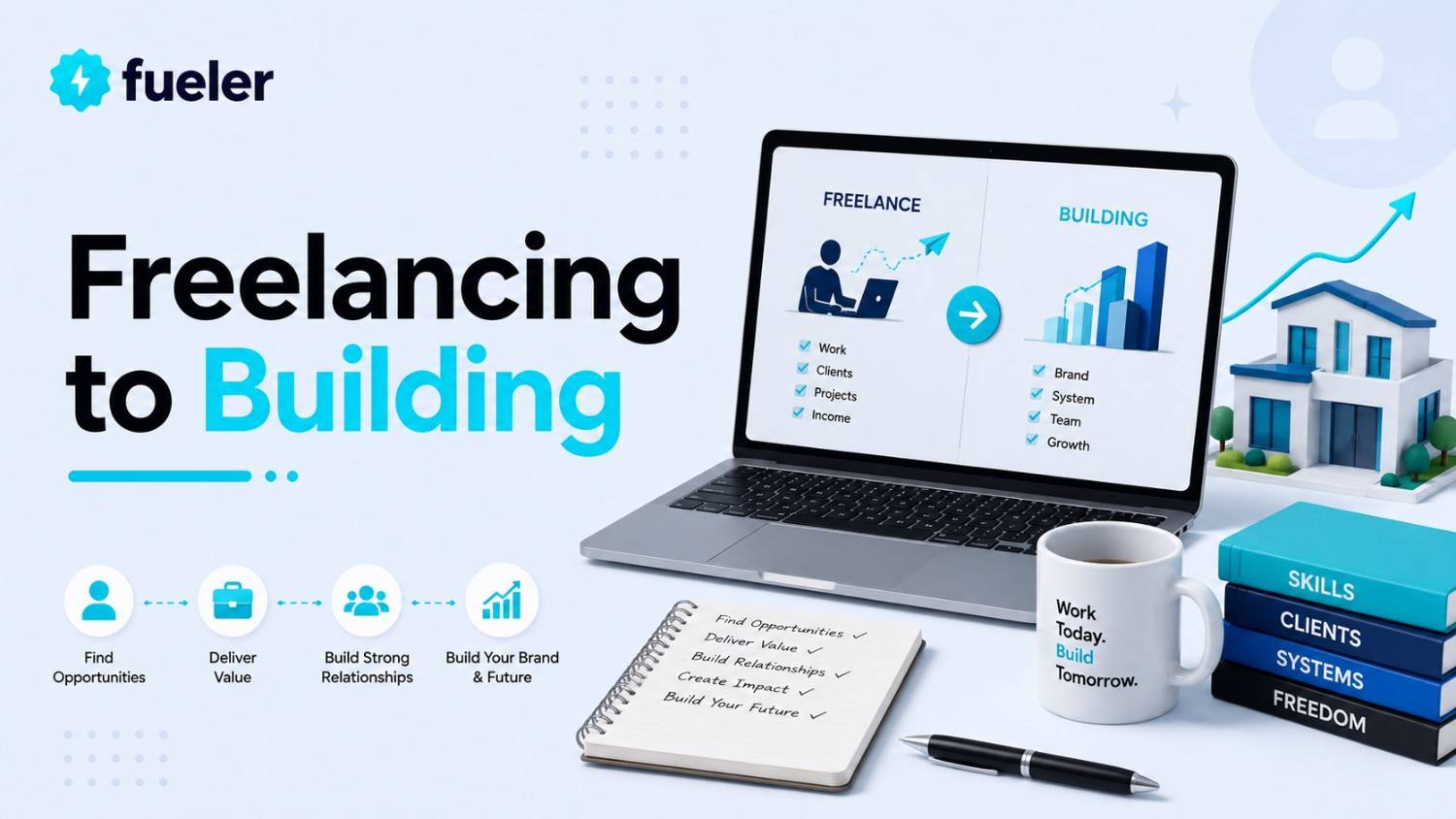
Moving from solo freelancer to agency leader opens the door to greater impact, bigger projects, and sustainable growth.
Transitioning from freelancing to running an agency is a major step that involves much more than simply adding team members. It’s about laying down a foundation for scale, creating systems, and evolving your mindset to lead a collective of professionals instead of just handling projects yourself. In 2026, clients expect agencies to be well-organized, specialized, and able to deliver results consistently across many projects. To meet these expectations and grow successfully, freelancers must plan carefully and execute strategically every step of the way.
I’m Riten, founder of Fueler - a skills-first portfolio platform that connects talented individuals with companies through assignments, portfolios, and projects, not just resumes/CVs. Think Dribbble/Behance for work samples + AngelList for hiring infrastructure
1. Define Your Agency’s Vision and Niche in Detail
The shift from freelancing to agency work requires a clear understanding of what your agency stands for and who you serve.
- Start by crafting a detailed vision statement for your agency that describes not just what you do, but the impact you want to create for clients and your team. This vision will guide all your decisions and motivate your future hires.
- Conduct thorough market research on your chosen niche to identify gaps in service, competition, and client pain points. Use this insight to tailor your services and establish your unique selling points.
- Narrow down your service offerings to areas where you excel and which have strong, consistent demand. Offering too many services early on can dilute focus and make scaling difficult.
- Design clear service packages that communicate value, reduce client decision fatigue, and streamline your delivery process. For example, a marketing agency might focus on digital ad campaigns, social media management, and content marketing packages.
- Revisit your freelance client experiences to gather testimonials or case studies that reinforce the niche focus and build credibility during your agency launch.
Why it matters: Having a precise vision and niche allows you to position your agency as a trusted expert in specific fields, making marketing and client acquisition easier and more effective.
2. Build a Complementary and Efficient Team
No agency can grow sustainably without the right people supporting your goals.
- Identify the roles essential to your agency such as project managers, designers, developers, and client managers, focusing first on the highest-impact areas where you need the most support.
- Recruit team members whose skills complement yours and who align with your work culture and vision. Compatibility reduces conflicts and ensures smoother collaboration.
- Consider a mix of full-time employees and freelance specialists to keep initial overhead costs manageable while maintaining flexibility in scaling.
- Develop a structured onboarding program that clearly communicates your agency’s processes, client expectations, and quality standards to new team members.
- Foster a culture of openness, learning, and accountability where feedback is encouraged, enabling continuous improvement and alignment as the team grows.
Why it matters: A well-rounded, cohesive team expands your capacity to handle larger projects with consistent quality, while inspiring confidence in clients and prospects.
3. Implement Systems and Tools Tailored for Agency Scale
Scaling up requires robust systems to handle complexity without bottlenecks.
- Choose comprehensive project management tools like Asana, Monday.com, or ClickUp that help you assign tasks, track progress, set deadlines, and maintain transparency across multiple projects and teams.
- Set up clear financial systems for budgeting, invoicing, expense tracking, and forecasting to keep your agency’s cash flow healthy and streamline tax preparation.
- Standardize client onboarding by creating templates for proposals, contracts, and project briefs that save time and ensure all necessary information is captured upfront.
- Create repeatable workflows for common tasks such as content approvals, design iterations, and client communication to improve efficiency and reduce errors.
- Automate routine tasks wherever possible using tools like Zapier or HubSpot, freeing up your team to focus on high-value activities.
Why it matters: Streamlined systems minimize administrative chaos and enable your agency to deliver high quality while scaling smoothly.
4. Develop Strong Client Relationships with Transparent Communication
Client trust is a cornerstone for agency growth and long-term success.
- Emphasize clear, proactive communication by keeping clients regularly updated on project milestones, challenges, and results using project dashboards or regular check-ins.
- Build trust by setting realistic expectations upfront and delivering on promises consistently, avoiding over-commitment.
- Create detailed reports showcasing metrics, progress, and the impact of your work, helping clients appreciate the value and ROI your agency provides.
- Handle client feedback constructively by listening carefully, addressing concerns promptly, and integrating suggestions to improve satisfaction.
- Nurture ongoing relationships through personalized service, seasonal reviews, and offering insights or opportunities tailored to each client’s business goals.
Why it matters: Strong relationships lead to repeat business, referrals, and a positive reputation that attracts new clients to your agency.
5. Invest in Branding and Marketing to Attract Ideal Clients
An agency’s brand shapes perception and influences client acquisition.
- Build a professional website that clearly showcases your agency’s portfolio, services, team expertise, and client testimonials to create credibility and trust.
- Utilize content marketing by publishing insightful articles, case studies, and client success stories to demonstrate expertise and attract relevant clients organically.
- Leverage social media platforms like LinkedIn and Twitter to engage with industry communities, share updates, and build brand awareness.
- Attend industry events, webinars, and networking groups either virtually or offline to establish connections and position your agency as a thought leader.
- Invest in paid advertising campaigns targeted at your ideal client demographics on platforms like Google Ads or LinkedIn to quickly generate leads.
Why it matters: A strong, visible brand presence makes your agency the obvious choice for clients seeking specialized services aligned with your niche.
6. Prepare Financially and Legally for Agency Growth
Growing an agency comes with added responsibilities and risks.
- Establish a separate business bank account and accounting system to clearly separate agency finances from personal funds, ensuring transparency and easier management.
- Budget for expenses including salaries, software subscriptions, marketing, and contingency funds to cushion cash flow fluctuations common during growth phases.
- Consult legal experts to set up your agency as an LLC, corporation, or other entity suitable for your goals, minimizing personal liability and enabling contracts.
- Draft clear, professional contracts for clients and team members that define scope, payments, intellectual property, and confidentiality to avoid disputes.
- Consider insurance options such as professional liability or business interruption insurance to protect your agency from unforeseen risks.
Why it matters: Sound financial and legal foundations reduce risks, protect your assets, and provide peace of mind as your agency scales.
7. Scale Gradually While Maintaining Quality and Culture
Sustainable growth is about quality, culture, and incremental expansion.
- Monitor client capacity carefully to avoid overcommitting your team, ensuring every project receives the attention it deserves.
- Invest in training and development to keep skills sharp and aligned with evolving client needs and technologies.
- Encourage open dialogue within your team to resolve issues early and maintain morale during busy periods.
- Seek client feedback regularly to measure satisfaction and adapt services or processes to improve experiences.
- Expand your service offerings or target markets based on data-driven decisions informed by client demand and agency strengths.
Why it matters: Gradual, thoughtful scaling preserves your agency’s reputation for quality work and a positive workplace, increasing client retention and team loyalty.
How Fueler Supports Your Transition from Freelancer to Agency Owner
Fueler is uniquely designed for professionals aiming to grow beyond freelancing by showcasing proven skills through work samples and projects. It helps you build a credible portfolio that demonstrates your agency’s capabilities, making it easier to win client trust and larger contracts. By providing a platform focused on real work, Fueler supports your journey from solo contributor to agency founder in 2026.
Final Thoughts
Transitioning from freelancing to owning an agency is complex but rewarding. It requires clear vision, strong teams, efficient systems, and committed client relationships. With focused effort and strategic planning, freelancers can build agencies that deliver high-impact work consistently, attract top-tier US clients, and thrive long term in 2026’s dynamic market.
FAQs
1. What’s the first step in building an agency from freelancing?
Define your agency’s vision and niche to focus your services and branding clearly.
2. How do I build the right team for my agency?
Hire complementary-skilled professionals who share your agency’s culture and goals, balancing full-time and freelance talent.
3. Which systems are essential for agency operations?
Project management, financial tracking, client onboarding templates, and automation tools are crucial.
4. How important is client communication during transition?
Transparent, proactive communication builds trust and drives repeat business.
5. Can Fueler help freelancers grow into agencies?
Yes, Fueler helps professionals showcase real work and projects that attract larger clients, facilitating agency growth.
What is Fueler Portfolio?
Fueler is a career portfolio platform that helps companies find the best talent for their organization based on their proof of work. You can create your portfolio on Fueler, thousands of freelancers around the world use Fueler to create their professional-looking portfolios and become financially independent. Discover inspiration for your portfolio
Sign up for free on Fueler or get in touch to learn more.

What should you do next?
You've read the article. Now turn your skills into proof of work and unlock more opportunities.
Build your proof of work portfolio
Create a clean portfolio with projects, assignments, resumes, and AI stack details that companies actually want to see.
Create your Fueler portfolio →Apply through assignments, not resumes
Stand out by solving real tasks from companies hiring on Fueler.
Explore assignments →Get discovered by companies
Make your work public and let recruiters discover your skills through actual projects instead of keywords.
Get discovered →