Inside Plaksha University's Interdisciplinary Learning Model

Riten Debnath
29 Aug, 2026

Last updated: August 2026
Imagine stepping into an engineering college where nobody asks you to copy lab manuals, memorize 15-year-old theoretical notes, or cram definitions that are standardly tested in written semester exams. Instead, picture a setup where your very first semester pushes you to build a physical prototype, write production-ready code, run computational models, and understand how human psychology and economics shape technology adoption.
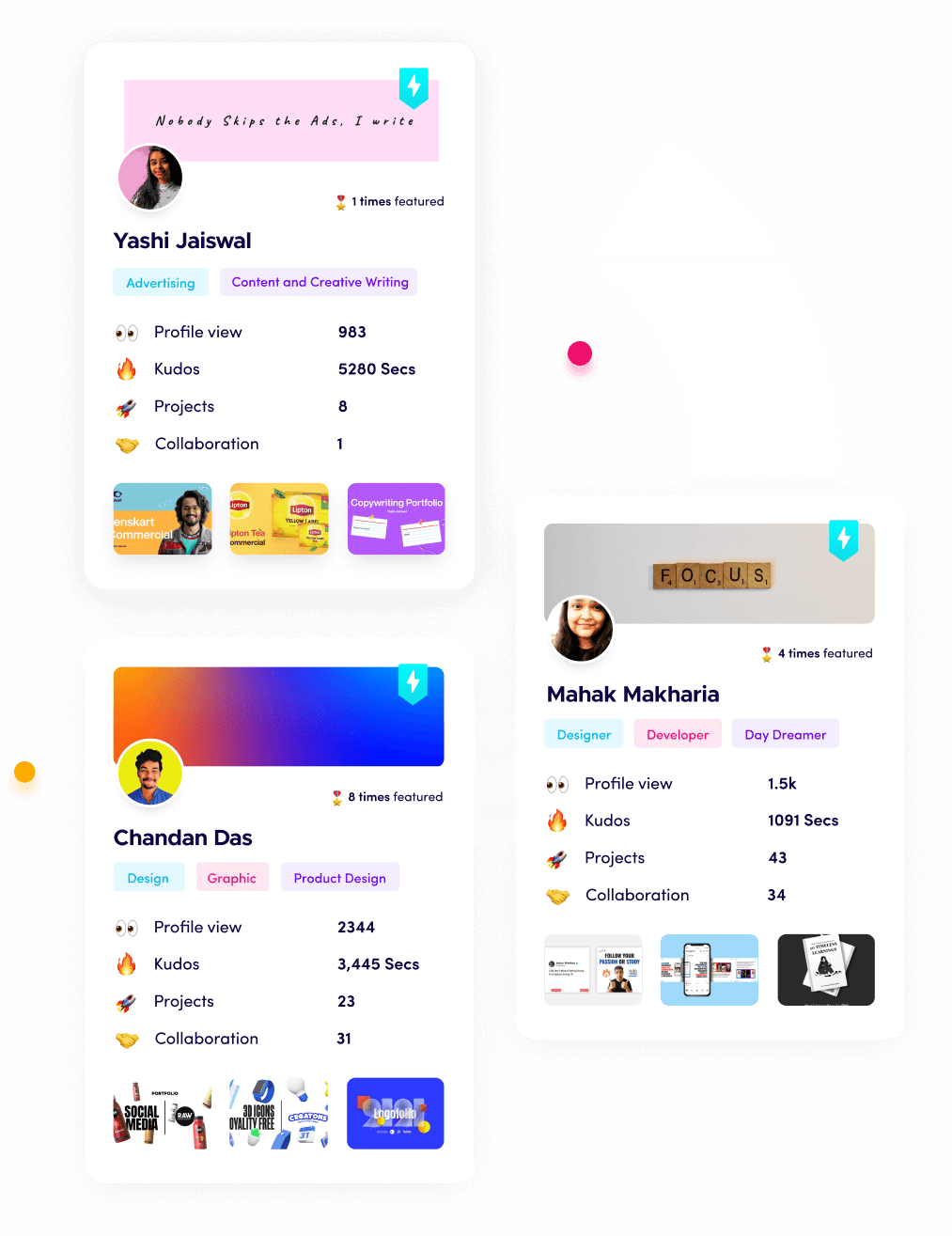
I’m Riten, founder of Fueler, a skills-first portfolio platform building the career infrastructure for 100 million creative professionals. Fueler connects talented individuals with companies through assignments, portfolios, and projects, not just resumes or CVs. Think of it as Dribbble/Behance for work samples combined with AngelList for hiring infrastructure.
Day in and day out, I review portfolios of young tech candidates trying to crack high-growth roles. The biggest issue I see is simple: standard academic tracks teach students how to pass written exams, but modern companies only care about what you can ship.
That fundamental disconnect is why Plaksha University caught my attention. Located in Mohali near the Chandigarh tech hub, Plaksha isn't just tweaking an existing B.Tech syllabus. It is backed by a collective network of 60+ global founders, CEOs, and academic pioneers from universities like UC Berkeley and UPenn who are actively dismantling traditional silos. They have built a Pi-shaped interdisciplinary model designed to create product creators and technology leaders instead of passive coders.
In this deep dive, we will unpack how Plaksha University’s Interdisciplinary Learning Model works under the hood, why it shifts the focus from paper credentials to real-world execution, and what it means for your long-term career trajectory.
Quick Answer Summary
- Who It Is For: Self-driven builders, product-minded engineers, and future tech leaders who want to master multi-disciplinary problem-solving.
- Cost: B.Tech tuition starts at ₹7.80 Lakhs per year (Category A), with total 4-year academic and residential expenses coming to roughly ₹33–36 Lakhs before financial aid.
- Key Takeaway: Shifts learning from memorizing textbook theory to creating a verifiable proof of work portfolio through hands-on labs.
- Best Suited For: Students looking to enter specialized high-growth tech roles, join founders' offices, launch startups, or pursue advanced research degrees.
What is Plaksha's Interdisciplinary Learning Model?
At its core, Plaksha University’s Interdisciplinary Learning Model is a complete restructuring of how engineering, technology, and human context are taught. Traditional colleges force students into strict, isolated majors right from day one, such as Computer Science, Mechanical Engineering, or Biotechnology. Plaksha removes these rigid boundaries to treat technology as an interconnected ecosystem.
Instead of following a legacy single-track approach, Plaksha uses a multi-layered framework often called a Pi-shaped model. Rather than having surface knowledge in everything or deep expertise in only one narrow topic, students build deep technical competence across multiple intersecting domains while learning to connect them with real-world human needs.
Plaksha’s majors like Computer Science and Artificial Intelligence, Robotics and Autonomous Systems, Data Science, Business and Economics, and Biological Systems Engineering are designed from scratch around current technological shifts. Students spending their first three semesters in an open "Freshmore" core can test various domains before committing to a major. This structure ensures that engineers learn coding alongside hardware design, business dynamics, microeconomics, and human-centric design thinking.
Key Facts Table
Detailed Explanation: Inside the Interdisciplinary Architecture
To understand how Plaksha’s model differs from a traditional college, we must look at how it breaks down structural learning into distinct, integrated components.
1. The "Freshmore" Foundational Core: Dismantling Early Silos
In a typical engineering college, if you join Civil or Mechanical Engineering, you might barely touch software engineering or data science. If you enter Computer Science, you will rarely interact with physical mechanics, biological hardware, or business economics.
Plaksha fixes this by having all undergraduate students complete a common 3-semester "Freshmore" foundation. During this phase, every student works with:
- Computational Thinking & Data: Learning paradigms to break down real-world systems into code and algorithmic logic.
- Foundations of the Physical World & Life Sciences: Courses like Nature's Machines and Engines of Life bridge physics and biology with modern engineering principles.
- Design & Human Context: Modules like Design and Innovation and Reimagining Technology and Society force students to analyze the socio-economic impact of what they build.
Why it matters: Technology does not live in a vacuum. If an engineer designs a medical device, they need to understand biology, mechanical sensors, cloud data pipelines, microeconomics, and patient behavior simultaneously. Giving students broad context before deep specialization prevents narrow thinking.
2. Makerspace Culture & Grand Challenge Studios
Instead of passive lectures, Plaksha puts project-based execution at the center of its curriculum. The campus centers around a signature Makerspace equipped with 3D printers, CNC machining tools, advanced instrumentation, and rapid prototyping gear.
Alongside standard technical classes, students participate in Grand Challenge Studios. These are vertically integrated, multi-semester team projects focused on solving real problems in smart mobility, clean energy, healthcare diagnostics, and agricultural tech.
Why it matters: At Fueler, we notice a clear trend when reviewing young talent: candidates who stand out are those who can show deployed applications, functional hardware, and tangible prototypes. Plaksha’s structure pushes students to build a verifiable proof of work portfolio directly as part of their academic evaluation, rather than leaving project work as an optional weekend hobby.
3. Merging Microeconomics, Business, and Technology
Standard engineering degrees treat business administration as something to worry about later in an MBA. Plaksha bakes economic systems directly into its technology tracks. Courses like Fundamentals of Microeconomics and majors like Data Science, Business, and Economics ensure that technical systems are designed with financial viability and market dynamics in mind.
Why it matters: Founders and venture-backed startups do not just need engineers who can code an algorithm; they need product engineers who understand user acquisition, unit economics, infrastructure costs, and system optimization. When engineering graduates understand market dynamics, they transition into growth, product management, and founder's office roles much faster.
How It Works: The 4-Year Student Journey
Plaksha translates its interdisciplinary philosophy into a practical four-year progression.
- Semesters 1 to 3 (Exploration & Core Foundations): You build computational skills, master linear algebra, work in Makerspaces, and explore different major options before finalizing your path.
- Semesters 4 & 5 (Major Specialization & Systems Deep Dive): You declare your major, such as Robotics and Autonomous Systems or CS & AIand focus on core technical subjects like machine learning, sensing and actuation, or bioprocess systems.
- Semesters 6 & 7 (Advanced Electives & Industry Immersion): You undertake specialized electives, engage in micro-internships, and collaborate with industry mentors or research labs.
- Semester 8 (Capstone & Portfolio Launch): You complete an extensive year-long capstone project, building a complex tech solution or startup prototype that serves as your ultimate proof of work.
Benefits of the Interdisciplinary Model
- Built-in Proof of Work: You graduate with a portfolio of live software, hardware projects, and research samples that can be displayed on platforms like Fueler to stand out to modern hiring managers.
- Adaptability Across Industries: Because you understand computing, hardware, and business systems, you are not locked into a single narrow job role.
- Ecosystem Networking: Direct mentorship from 60+ founder-trustees gives you early access to high-growth startup ecosystems, venture capital, and internship placements.
- Stronger Preparation for Global Higher Ed: Top international graduate programs heavily favor applicants who have conducted interdisciplinary research and built real-world prototypes.
Challenges / Limitations
- Demands Strong Self-Drive: The absence of spoon-fed textbook instruction means students who rely purely on memorization may feel overwhelmed by open-ended project briefs.
- Higher Financial Investment: The cost of tuition, residential housing, and state-of-the-art lab access is significantly higher than conventional state universities.
- Newer Alumni Network: While supported by top corporate leaders, Plaksha’s undergraduate alumni network is still young compared to multi-decade-old public institutions.
Comparison Table
Fees and Cost Breakdown
Investing in a modern, lab-intensive interdisciplinary education involves clear financial planning.
- Annual Tuition Fee: ₹7,80,000 per year (Category A).
- Hostel Accommodation: ₹1,44,000 per year.
- Meal Plan: ₹66,000 per year.
- One-time Deposits: Admission Fee (₹50,000) and Refundable Security Deposit (₹50,000).
- Financial Aid: Plaksha offers substantial need-based aid covering 25% to 100% of tuition for families with annual incomes below ₹50 Lakhs. Over 35% of students receive full tuition waivers.
Career Opportunities
Graduates trained in an interdisciplinary environment can pursue non-traditional, high-impact career paths:
- AI & Product Engineering: Machine Learning Engineer, Full-Stack AI Developer, Data Systems Architect.
- Robotics & Hardware Systems: Autonomous Vehicles Engineer, Mechatronics Lead, IoT Solutions Architect.
- Product & Startup Roles: Technical Product Manager, Growth Engineer, Founder’s Office Lead, Chief of Staff.
- Venture & Interdisciplinary Research: Biotech Analyst, Venture Capital Technical Associate, Research Fellow.
Who Should Choose This?
- Students who learn best by doing, building, and solving real-world challenges.
- Aspiring tech entrepreneurs who want seed funding, mentorship, and incubator access.
- Learners who want to build a rich proof of work profile to showcase on Fueler instead of relying on paper resumes.
- Candidates targeting cutting-edge fields like Robotics, AI, Data Science, and Bio-Engineering.
Who Should Avoid This?
- Students looking for a low-cost, traditional degree without dynamic project demands.
- Individuals who prefer predictable exam-oriented memorization over open-ended problem solving.
- Candidates whose sole focus is securing entry-level service jobs via standard mass recruitment drives.
Final Thoughts
The modern tech industry does not reward people who simply remember information; it rewards people who can synthesize ideas across fields and ship working solutions. Plaksha University’s Interdisciplinary Learning Model is built around this exact reality. By pairing technical depth with business context, design principles, and hands-on Makerspace projects, it turns students into real-world builders. As we continuously highlight at Fueler, when you have a strong, verifiable proof of work portfolio, high-growth companies will always find you.
Key Takeaways
- Plaksha’s model replaces isolated engineering silos with integrated, cross-disciplinary majors.
- All B. Tech students spend three semesters exploring foundational core fields before picking a major.
- Learning centers around physical Makerspaces, Grand Challenge Studios, and project-based execution.
- Graduates build a live proof of work portfolio containing functional software and hardware solutions.
- Need-based financial aid is available, covering up to 100% of tuition for eligible students.
FAQs
What does interdisciplinary learning mean at Plaksha University?
It means combining core engineering disciplines with AI, design, microeconomics, and human values to train engineers capable of solving complex, real-world problems.
How long do students have before choosing their B.Tech major?
Students spend their first three semesters in a common Freshmore foundational core, exploring different fields before declaring their specialized major.
What majors are offered under this learning model?
Plaksha offers B.Tech majors in CS & AI, Robotics & Autonomous Systems, Data Science/Business/Economics, and Biological Systems Engineering.
How are students evaluated in an interdisciplinary setup?
Evaluation relies heavily on real-world projects, Makerspace prototypes, working code repositories, continuous lab work, and capstone demonstrations alongside traditional assessments.
Is financial assistance available for Plaksha's B.Tech programs?
Yes, Plaksha provides need-based financial aid ranging from 25% to 100% of tuition based on family income, with over 35% of students receiving full tuition aid.
Why 100,000+ professionals use Fueler
Fueler helps professionals showcase proof of work through projects, assignments, case studies, and achievements.
- Thousands of professionals use Fueler to create their digital portfolio
- Thousands of projects are published on Fueler. Check here
- Startups and Companies hire through proof of work on Fueler
- Used by freelancers, creators, marketers, video editors, writers, designers, and product managers
Our mission is to help the next 100 million professionals build a verified professional identity through proof of work
What should you do next?
You've read the article. Now turn your skills into proof of work and unlock more opportunities.
Build your proof of work portfolio
Create a clean portfolio with projects, assignments, resumes, and AI stack details that companies actually want to see.
Create your Fueler portfolio →Apply through assignments, not resumes
Stand out by solving real tasks from companies hiring on Fueler.
Explore assignments →Get discovered by companies
Make your work public and let recruiters discover your skills through actual projects instead of keywords.
Get discovered →