Plaksha University's BTech Programs Explained: Which Major Should You Choose?

Riten Debnath
29 Aug, 2026

Last updated: August 2026
If you are standing at the crossroads of picking an engineering program today, you already know the brutal truth: traditional college counseling is a gamble. Most engineering institutes force 17-year-olds to lock into a rigid branch Mechanical, Civil, or Electrical before they even know what modern product engineering or machine learning systems actually look like in the real world. You end up spending four years cramming 20-year-old theory for written exams, only to realize the market moved on without you.
Before we dissect the curriculum, major options, and decision frameworks for Plaksha University's undergraduate degrees, let me introduce myself.
I’m Riten, founder of Fueler, a skills-first portfolio platform building the career infrastructure for 100 million creative professionals. Fueler connects talented individuals with companies through assignments, portfolios, and projects, not just resumes or CVs. Think of it as Dribbble/Behance for work samples combined with AngelList for hiring infrastructure.
In my daily work with founders, hiring managers, and product leaders, I see firsthand that traditional degree marksheets are rapidly losing their signal. High-growth tech companies and venture-backed startups do not care about your class attendance; they care about what you can build.
Plaksha University in Mohali was founded to address this exact gap. But choosing the right BTech major at Plaksha is not as simple as picking "Computer Science" because everyone else is doing it. Each of their four interdisciplinary majors is built for a completely different career trajectory, builder mindset, and mental model.
This comprehensive guide breaks down all four BTech majors at Plaksha University: what you actually learn, who each major is for, what kind of proof of work you will create, and how to choose the right path for your future.
Quick Answer Summary
- Who It Is For: High school graduates, tech aspirants, future startup founders, and parents evaluating interdisciplinary engineering options.
- Cost: BTech tuition sits at ₹7,80,000 (Category A) to ₹9,36,000 (Category B) annually, plus room and mess fees, with need-based aid covering up to 100% of tuition.
- Key Takeaway: You do not choose a major based on traditional branch prestige; you choose based on whether you want to build core software algorithms, run data-driven business products, build physical autonomous hardware, or engineer biological technology.
- Best Suited For: Students who want project-heavy, interdisciplinary education that results in a verified public portfolio of work over static paper credentials.
What are Plaksha University’s BTech Programs?
Plaksha University offers a 4-year undergraduate BTech program designed around an interdisciplinary, project-first model. Unlike standard engineering institutions where departments operate in isolated silos, Plaksha combines computer science, hardware engineering, data economics, and biological science from the first year onward.
The structural difference begins with the Freshmore Year (Year 1). Every single undergraduate student, regardless of their intended major, goes through a shared foundational curriculum. You take modules in Computational Thinking, Data Structures, Engineering Math in Action, Design & Innovation, Microeconomics, and Nature's Machines.
This setup allows you to test your hands-on interests across different domains before officially finalizing your major choice. Instead of committing blindly at age 17, you build small-scale prototypes, program basic data structures, and work in team labs before locking in one of their four specialized BTech majors:
- BTech in Computer Science & Artificial Intelligence (CS & AI)
- BTech in Data Science, Economics & Business (DSEB)
- BTech in Robotics & Autonomous Systems (RAS)
- BTech in Biological Systems Engineering (BSE)
By replacing static mid-term/end-term exam reliance with continuous lab work and Grand Challenge Studios, Plaksha turns traditional learning into project outputs. By graduation, every student builds a tangible trail of execution code repositories, hardware prototypes, data analysis models, and research papers.
Key Facts Table
Plaksha University's BTech Programs Explained: Which Major Should You Choose?
To select the right major, you must look past the degree titles and examine what you will actually be doing week after week in the lab, what kind of problems you will solve, and what your final output looks like to a recruiter or founder.
1. BTech in Computer Science & Artificial Intelligence (CS & AI)
What It Is
The CS & AI program is designed for students who want to master the foundational mechanics of computation while building modern artificial intelligence systems. It goes significantly deeper than standard computer science degrees that stop at basic web development or simple database management.
What You Actually Learn
- Core Foundations: Programming Language Principles & Design, Design & Analysis of Algorithms, Theory of Computation, and Foundations of Computer Systems.
- AI & Machine Learning: Deep Learning, Machine Learning & Pattern Recognition, Search Methods in AI, Reinforcement Learning Fundamentals, and Machine Learning in Dynamic Environments.
- Advanced Systems: Cryptography & Blockchain, Connected Systems & IoT, Knowledge Representation, and Human-Tech Interaction.
Ideal Builder Mindset
You are obsessed with logic, algorithms, abstraction, and scalability. You want to understand how neural networks operate under the hood, how large language models are optimized, or how high-throughput software architectures handle millions of operations per second.
Real-World Output & Proof of Work
Students in this track produce production-ready codebases, custom neural network implementations, optimized database engines, and public open-source contributions. Documenting these repositories as proof of work on platforms like Fueler gives candidates a distinct advantage over applicants who only show a list of college courses on a resume.
Who Should Pick CS & AI
Choose this major if your goal is to become a core Software Development Engineer (SDE), Machine Learning Engineer, Systems Architect, or AI Infrastructure Researcher.
2. BTech in Data Science, Economics & Business (DSEB)
What It Is
The DSEB major bridges the massive gap between pure technology and commercial business strategy. Most traditional engineering graduates do not understand business P&Ls or economic incentives, while traditional business graduates lack the technical ability to query databases or train predictive models. DSEB combines both sides.
What You Actually Learn
- Quantitative Data Analysis: Introduction to Data Science, Data Mining, Advanced Statistics, and Computational Methods & Optimization.
- Economic Theory & Markets: Fundamentals of Microeconomics, Game Theory, Econometrics, and Market Design.
- Business Operations: Product Management foundations, Tech Entrepreneurship, Growth Analytics, and Financial Systems.
Ideal Builder Mindset
You are fascinated by how markets function, how consumer products scale, and how data drives business decisions. You prefer analyzing user trends, optimizing pricing algorithms, or building growth funnels over writing low-level operating system drivers.
Real-World Output & Proof of Work
DSEB students build market simulation models, data-driven pricing engines, consumer behavior dashboards, and product teardowns. Showcasing these analytical case studies as public proof of work on Fueler positions graduates perfectly for fast-track product and business operations roles.
Who Should Pick DSEB
Choose this major if you want to become an Associate Product Manager (APM), Data Scientist, Founder’s Office Operator, Quantitative Business Analyst, or Venture Capital Tech Analyst.
3. BTech in Robotics & Autonomous Systems (RAS)
What It Is
The RAS major is tailored for students who want to bridge the software and physical worlds. Unlike pure computer science or traditional mechanical engineering, RAS focuses on smart physical machines that can sense their environment, make autonomous decisions, and execute mechanical actions in real-time.
What You Actually Learn
- Physical Systems & Hardware: Engineering Mechanics, Sensing & Actuation, Electronic System Engineering, and Embedded Systems.
- Control & Autonomous Intelligence: Signals & Systems, System Dynamics & Control, Drones & Precision Agriculture, and Connected Systems & IoT.
- AI Integration: Machine Learning & Pattern Recognition, Deep Learning, Computer Vision, and Reinforcement Learning.
Ideal Builder Mindset
You love tinkering with physical hardware, microcontrollers, motors, sensors, and autonomous motion. You get excited by autonomous vehicles, drone delivery networks, industrial automation, and robotic manipulation.
Real-World Output & Proof of Work
RAS students build physical autonomous robots, self-navigating drone prototypes, sensor-actuator hardware loops, and IoT edge devices. Documenting the complete build process from CAD designs and schematics to working hardware video demonstrations provides clear proof of execution.
Who Should Pick RAS
Choose this major if you want to work as a Robotics Software Engineer, Autonomous Systems Developer, Embedded Systems Specialist, or Mechatronics Hardware Lead.
4. BTech in Biological Systems Engineering (BSE)
What It Is
The BSE major reimagines biology through an engineering lens. Instead of treating biology purely as a memorization subject, BSE applies mathematical modeling, computer science, data analytics, and engineering principles to biological networks, healthcare technology, and living systems.
What You Actually Learn
- Biological Foundations & Molecular Science: Biochemistry & Molecular Biology, Cell Biology, Genetics & Genetic Engineering, and Nucleic Acids & Protein Biosensors.
- Computational Biology & Data: Bioinformatics & Computational Biology, Stochastic Modeling in Biology, Machine Learning in Dynamic Environments, and Biomaterials.
- Applied Engineering: Bioprocess Engineering, Diagnostic Technologies, Neuroscience, and Health Economics.
Ideal Builder Mindset
You are fascinated by life sciences, synthetic biology, genomic sequencing, and medical technology. You want to use computational tools, machine learning, and hardware to solve major challenges in human healthcare, diagnostics, bio-manufacturing, and environmental sustainability.
Real-World Output & Proof of Work
BSE students develop computational biology algorithms, DNA sequencing analysis tools, biosensor prototypes, and research papers on bioprocess optimization. Presenting these technical projects as proof of work on platforms like Fueler opens doors across global biotech labs, health-tech startups, and research institutions.
Who Should Pick BSE
Choose this major if your target career lies in Computational Biology, Health-Tech Product Engineering, Bioinformatics, Synthetic Biology Research, or Pharmaceutical Tech.
How It Works: The Decision Roadmap
If you are unsure which major aligns best with your profile, follow this simple 3-step decision roadmap during your first year at Plaksha.
- Test Each Domain in the Innovation Lab: During Year 1, pay attention to which lab assignments energize you. If you love writing pure code, lean toward CS & AI. If you enjoy plotting business trends or economic models, lean toward DSEB.
- Evaluate Your Desired Daily Work Environment: Ask yourself whether you want to sit behind a terminal (CS & AI / DSEB), work in a hardware makerspace with motors and circuits (RAS), or conduct computational biological experiments in a bio-lab (BSE).
- Build Your First Minor Project: Before declaring your major at the end of Year 1, complete at least one small project in your top choice area. Upload your project workflow to Fueler to get feedback from peers and industry mentors.
Benefits
Choosing the right interdisciplinary major at Plaksha offers distinct advantages over traditional degree structures:
- No Blind Branch Locking: The common Freshmore Year prevents you from getting stuck in a major you dislike before experiencing college-level coursework.
- Targeted Industry Alignment: Every major combines technical fundamentals with modern tools like Python, Deep Learning, microeconomics, or CAD design instead of outdated syllabi.
- Flexibility via Minors: You can major in one domain (e.g., CS & AI) and take an official Minor in another (e.g., Tech Entrepreneurship or Economics).
- Tangible Portfolio Creation: Instead of leaving university with only a numerical CGPA marksheet, you leave with a comprehensive public proof of work that recruiters can review instantly on platforms like Fueler.
- Global Higher Studies Pathways: The interdisciplinary design aligns with top global master's programs at institutions like UPenn, UC Berkeley, and Purdue.
Challenges and Limitations
It is equally important to stay realistic about the structural challenges of this educational approach:
- High Academic Pace: Because learning is driven by continuous projects, capstone deliverables, and lab reports, students face a steady workload throughout the semester.
- Self-Direction Required: Unlike traditional colleges that spoon-feed static exam notes, Plaksha requires students to take ownership of their learning, project selection, and research.
- Significant Financial Commitment: Full annual fees (tuition, hostel, mess) range between ₹10 Lakhs to ₹11.5 Lakhs per year without financial aid, requiring careful financial planning.
- Niche Focus of Certain Majors: Programs like BSE and RAS prepare you for specific high-growth fields. If you are completely uncertain about your long-term direction, extremely specialized majors require deliberate commitment.
Program Comparison Matrix
Fees and Cost of Attendance
Below is the official fee structure for the BTech programs at Plaksha University for the academic year:
- Tuition Fee (Category A): ₹7,80,000 per year
- Tuition Fee (Category B): ₹9,36,000 per year
- Hostel Accommodation: ₹1,44,000 per year
- Mess & Food Charges: ₹66,000 per year
- One-Time Security Deposit (Refundable): ₹50,000
- One-Time Admission Fee: ₹50,000 (Category A) / ₹1,00,000 (Category B)
Need-Based Financial Aid Structure
Plaksha operates a need-based financial aid program to ensure admitted candidates are not barred by financial constraints:
- Family Income < ₹18 Lakhs: Up to 100% Tuition Waiver
- Family Income ₹18 L – ₹28 Lakhs: Up to 75% Tuition Waiver
- Family Income ₹28 L – ₹38 Lakhs: Up to 50% Tuition Waiver
- Family Income ₹38 L – ₹50 Lakhs: Up to 25% Tuition Waiver
Career Opportunities Across Majors
Plaksha's BTech programs prepare graduates for roles in the technology and startup ecosystems.
- CS & AI Graduates: SDE 1, AI Research Assistant, Machine Learning Engineer, NLP Developer.
- DSEB Graduates: Associate Product Manager (APM), Data Scientist, Growth Lead, Founder's Office Specialist, Strategy Analyst.
- RAS Graduates: Robotics Software Engineer, Autonomous Flight Systems Developer, Embedded Systems Specialist, Hardware Mechatronics Engineer.
- BSE Graduates: Computational Biologist, Bio-data Analyst, Health-Tech Product Specialist, Medical Device Hardware Engineer.
Placement metrics across undergraduate and flagship cohorts show average compensation packages ranging between ₹16 LPA and ₹20 LPA, with top offers reaching up to ₹50 LPA for specialized tech roles.
Who Should Choose Which Major?
- Choose CS & AI if: You love coding, logic puzzles, algorithm design, and software architecture.
- Choose DSEB if: You want to work at the intersection of product management, business strategy, data analytics, and tech entrepreneurship.
- Choose RAS if: You are passionate about physical hardware, robotics, drones, electronics, and autonomous machinery.
- Choose BSE if: You want to solve problems in healthcare, genetics, computational biology, and bio-manufacturing using data and engineering.
Who Should Avoid These Programs?
- Students Seeking Passive Learning: Anyone looking for traditional lecture-only classes where cramming notes before exams yields top grades.
- Pure Government Exam Focus: Candidates who want to focus exclusively on standard GATE, UPSC, or legacy PSU exams where traditional branch syllabi take preference.
- Full-Fee Applicants Facing Severe Budget Constraints: Candidates who do not qualify for need-based aid and cannot comfortably afford the non-aided overall cost structure.
Final Thoughts
Picking your engineering major is one of the most important decisions of your early career. The modern tech market has made one thing clear: generic degrees without practical output are rapidly declining in value.
Whether you choose CS & AI, Data Science & Economics, Robotics, or Biological Systems Engineering at Plaksha, success comes down to your execution. Focus on building real projects, solving tangible problems, and publishing your output. When you showcase a strong proof of work on platforms like Fueler, your degree becomes much more than a piece of paper; it becomes proof of what you can build.
Key Takeaways
- Four Interdisciplinary Majors: Plaksha offers BTech degrees in CS & AI, Data Science & Economics, Robotics, and Biological Systems Engineering.
- Exploratory Year 1: The shared Freshmore year lets you experience foundational coding, data, and design courses before confirming your major.
- Project-Driven Model: Evaluation centers around lab work, Grand Challenge Studios, and real-world capstone builds.
- Robust Need-Based Aid: Financial aid covers up to 100% of tuition fees for eligible families earning below ₹50 Lakhs per year.
- Portfolio-First Outcome: Showcasing project deliverables as public proof of work on platforms like Fueler helps graduates land competitive roles in tech and product ecosystems.
FAQs
What BTech majors are offered at Plaksha University?
Plaksha offers four 4-year BTech majors: Computer Science & Artificial Intelligence, Data Science, Economics & Business, Robotics & Autonomous Systems, and Biological Systems Engineering.
Can I change or choose my major after joining Plaksha University?
Yes. All undergraduate students complete a common Freshmore Year (Year 1) covering foundational courses, allowing them to explore fields before finalizing their major.
Which Plaksha major is best for becoming a Product Manager?
The Data Science, Economics & Business (DSEB) major is best suited for aspiring Product Managers, combining quantitative data analysis, economics, and business product design.
What is the fee structure for BTech majors at Plaksha?
Annual tuition is ₹7,80,000 (Category A) or ₹9,36,000 (Category B), plus hostel fees of ₹1,44,000 and mess fees of ₹66,000 per year. Need-based financial aid is available.
How does proof of work help when applying for tech roles?
Showcasing completed code repositories, data models, or hardware prototypes as verified proof of work on platforms like Fueler demonstrates real execution ability to recruiters over static resume claims.
Why 100,000+ professionals use Fueler
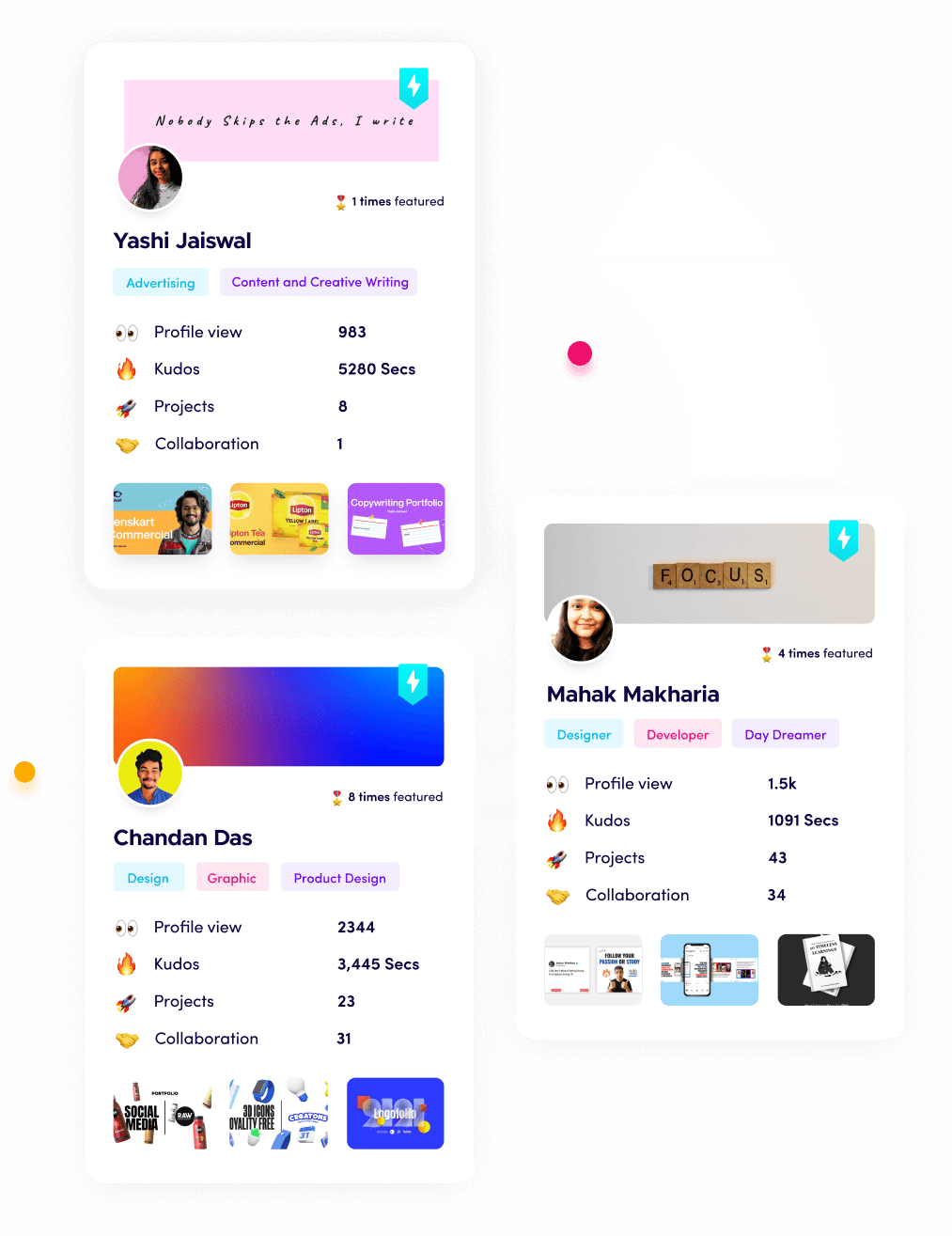
Fueler helps professionals showcase proof of work through projects, assignments, case studies, and achievements.
- Thousands of professionals use Fueler to create their digital portfolio
- Thousands of projects are published on Fueler. Check here
- Startups and Companies hire through proof of work on Fueler
- Used by freelancers, creators, marketers, video editors, writers, designers, and product managers
Our mission is to help the next 100 million professionals build a verified professional identity through proof of work
What should you do next?
You've read the article. Now turn your skills into proof of work and unlock more opportunities.
Build your proof of work portfolio
Create a clean portfolio with projects, assignments, resumes, and AI stack details that companies actually want to see.
Create your Fueler portfolio →Apply through assignments, not resumes
Stand out by solving real tasks from companies hiring on Fueler.
Explore assignments →Get discovered by companies
Make your work public and let recruiters discover your skills through actual projects instead of keywords.
Get discovered →