Top Remote Work Trends Reshaping US Businesses in 2026

Riten Debnath
05 Dec, 2025
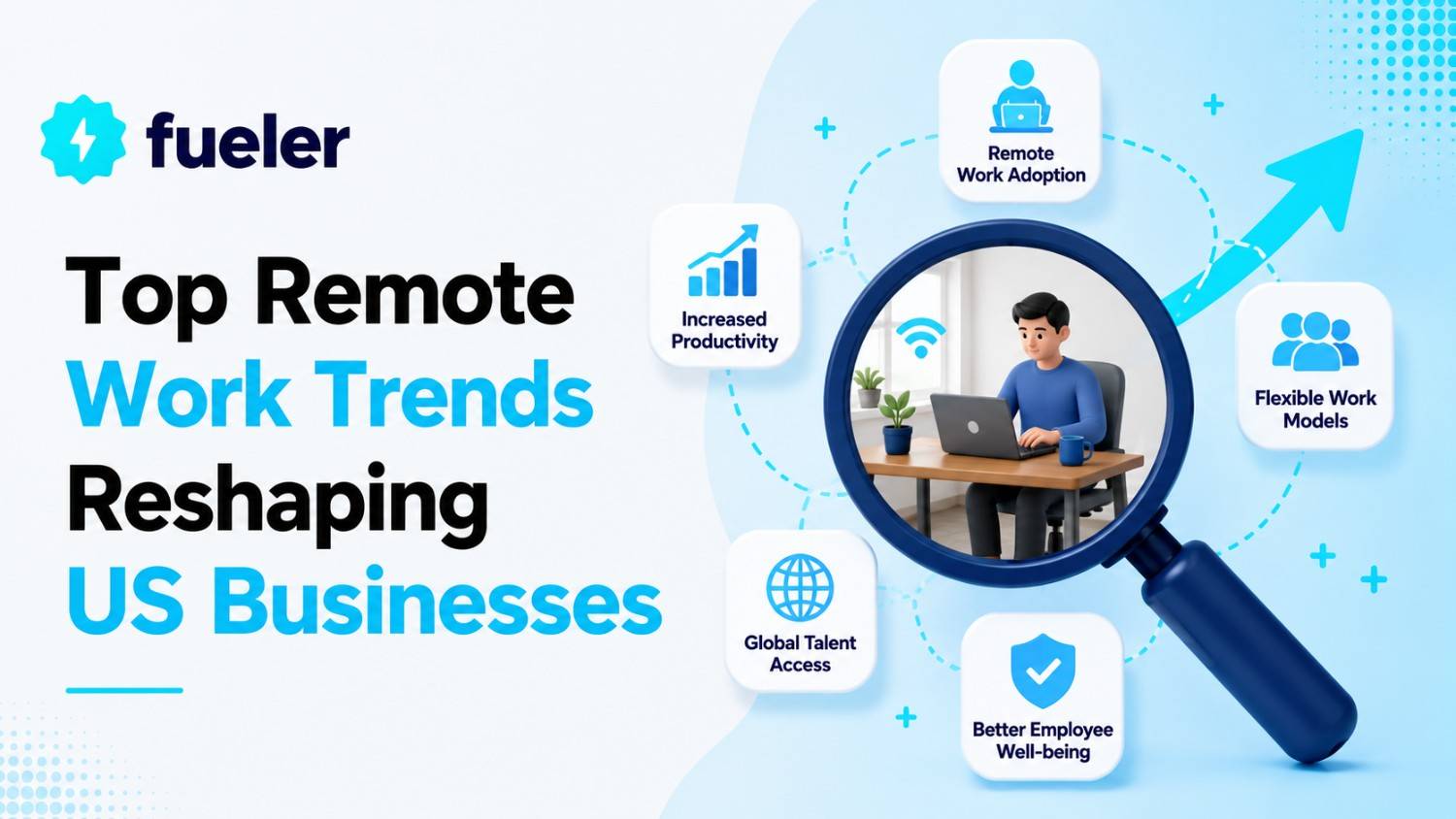
Remote work has evolved beyond a temporary fix into a permanent and transformative force reshaping US businesses. In 2026, the way companies operate, collaborate, and recruit is vastly different from just a few years ago. Hybrid models, asynchronous communication, digital collaboration, and global talent pools have become the new normal. These trends are driving not only productivity but also employee satisfaction and business growth in unprecedented ways. Understanding these shifts helps business leaders stay competitive and create thriving remote-friendly cultures and operations.
I’m Riten, founder of Fueler - a skills-first portfolio platform that connects talented individuals with companies through assignments, portfolios, and projects, not just resumes/CVs. Think Dribbble/Behance for work samples + AngelList for hiring infrastructure
Hybrid Work Models Deliver Flexibility and Inclusion
As companies realize that one size doesn’t fit all, hybrid work models have surged. This model blends in-office and remote work, offering employees autonomy over when and where they work, while maintaining crucial in-person collaboration.
- Hybrid work supports diverse working styles and personal needs, helping companies attract and retain talent who value work-life balance and flexibility. It fosters inclusivity by accommodating various time zones, life stages, and accessibility needs.
- Employers enable hybrid success through flexible schedules, booking systems for shared office spaces, and hybrid meeting technologies that ensure remote and in-office staff participate equally.
- This model reduces real estate costs and carbon footprints by optimizing office space use while maintaining culture and team cohesion through scheduled in-person touchpoints.
- Best practices include clear communication protocols, equitable access to information regardless of location, and training managers to lead hybrid teams effectively.
Why it matters:
Hybrid work is here to stay because it delivers the agility employees want without sacrificing collaboration, making businesses more resilient, attractive as employers, and capable of agile innovation.
Asynchronous Collaboration Breaks Time Zone Barriers
With teams scattered across states or continents, asynchronous collaboration is vital. It means enabling work to progress independently of everyone being online at the same time.
- Tools like Notion, Loom, and Slack facilitate rich asynchronous updates through documents, recorded videos, and threaded conversations, allowing team members to absorb and contribute on their own schedules.
- Written documentation becomes pivotal, shifting from meetings to comprehensive notes, project plans, and clear handoffs that reduce dependency on real-time replies.
- Asynchronous workflows reduce meeting fatigue and respect employees’ focused work time while maintaining transparency and accountability.
- It empowers global teams to collaborate smoothly, tapping into diverse talents without forcing inconvenient meeting hours.
Why it matters:
Asynchronous work enhances productivity, employee well-being, and inclusivity, enabling companies to leverage the full potential of remote teams worldwide.
Remote-First Hiring Unlocks Global Talent Pools
Traditional geographic hiring boundaries have dissolved. Remote-first businesses recruit talent based on skills and cultural fit rather than location, dramatically expanding candidate pipelines.
- Companies embrace flexible contracts full-time, part-time, freelance to access specialized skills and scale teams dynamically.
- Hiring processes adapt to remote realities with virtual interviews, skills assessments, and proof of work portfolios like those powered by Fueler, ensuring objective candidate evaluation through real projects.
- Onboarding focuses on digital immersion through structured guides, virtual meetups, and mentorship to integrate new hires smoothly regardless of location.
- Legal and payroll platforms automate compliance across jurisdictions, making global hiring feasible and cost-effective for startups.
Why it matters:
Remote-first hiring democratizes access to opportunity, boosts innovation through diverse perspectives, and enables businesses to build high-performing teams unconstrained by geography.
Wellness and Mental Health Focus Rise as Priorities
Remote work blurs boundaries between home and work, increasing risks of burnout and isolation. Leading companies are prioritizing employee wellness to maintain engagement and productivity.
- Wellness programs include virtual mindfulness sessions, mental health days, ergonomic home office equipment stipends, and online counseling services tailored for remote workers.
- Managers proactively check in on employees’ well-being, encouraging open dialogue around challenges and work-life integration.
- Platforms like Headspace and Calm remain integrated into benefits offerings, supporting stress management and focus.
- Building community through virtual social events, interest groups, and peer support mitigates remote isolation and fosters belonging.
Why it matters:
Investing in wellness is essential for sustaining a healthy, motivated remote workforce in 2026, reducing turnover and boosting overall business performance.
Leveraging Technology for Seamless Remote Operations
Technology forms the backbone that holds remote work ecosystems together. In 2026, businesses deploy integrated tools enhancing collaboration, security, and productivity.
- Cloud-based platforms like Google Workspace and Microsoft 365 enable real-time document collaboration accessible anytime, anywhere, ensuring work continuity.
- Security solutions including two-factor authentication, VPNs, and endpoint protection prevent cyberthreats in decentralized environments.
- Virtual whiteboards and brainstorming apps such as Miro foster creativity and ideation beyond physical spaces.
- AI-powered tools automate scheduling, insights generation, and task prioritization, reducing cognitive loads on employees and managers.
Why it matters:
Cutting-edge technologies empower businesses to operate with agility, security, and innovation in a remote-first world.
Fueler: Supporting Remote Talent Visibility
Fueler helps remote professionals highlight their real skills and project accomplishments through a portfolio platform trusted by companies for vetted hiring. This skills-first approach fits perfectly into remote hiring trends by showcasing verified work and reducing reliance on outdated CVs or resumes.
Final Thoughts
Remote work trends in 2026 center on flexibility, inclusivity, and technology integration. Hybrid models, asynchronous workflows, remote-first hiring, employee wellness, and advanced digital tools form the foundation of thriving modern US businesses. By embracing these trends, organizations can build engaged teams, optimize performance, and unlock new opportunities beyond borders.
FAQs
1. What are the most popular remote work models in US business in 2026?
Hybrid work and fully remote models dominate, supported by flexible scheduling and remote collaboration tools.
2. How does asynchronous collaboration improve productivity?
It allows employees to work uninterrupted on their own schedules, reducing meeting overload and accommodating global time zones.
3. What skills are key for remote hiring success?
Self-discipline, communication clarity, tech-savviness, and adaptability are crucial for remote work effectiveness.
4. How can businesses support remote employee wellness?
Offering mental health resources, ergonomic support, regular check-ins, and virtual social activities fosters wellbeing.
5. What technologies are essential for remote operations?
Cloud collaboration suites, cybersecurity tools, virtual whiteboards, and AI scheduling assistants are foundational technologies in remote-first workplaces.
What is Fueler Portfolio?
Fueler is a career portfolio platform that helps companies find the best talent for their organization based on their proof of work. You can create your portfolio on Fueler, thousands of freelancers around the world use Fueler to create their professional-looking portfolios and become financially independent. Discover inspiration for your portfolio
Sign up for free on Fueler or get in touch to learn more.

What should you do next?
You've read the article. Now turn your skills into proof of work and unlock more opportunities.
Build your proof of work portfolio
Create a clean portfolio with projects, assignments, resumes, and AI stack details that companies actually want to see.
Create your Fueler portfolio →Apply through assignments, not resumes
Stand out by solving real tasks from companies hiring on Fueler.
Explore assignments →Get discovered by companies
Make your work public and let recruiters discover your skills through actual projects instead of keywords.
Get discovered →