Utopai Studios Statistics 2026: Users, Revenue, Market Share, Growth & Valuation

Riten Debnath
18 Jun, 2026
The entertainment industry is changing fast. AI is no longer just a tool for editing photos or writing text. It is now becoming part of how movies, shows, animation, and digital content are created.
One company leading this shift is Utopai Studios.
As someone building Fueler, a portfolio platform focused on proof of work and real skills, I closely follow companies that are changing creative industries with technology. Utopai Studios stands out because it is not only building AI tools. It is building an entire AI-powered entertainment studio system.
In this article, I’ll break down the latest Utopai Studios statistics for 2026, including revenue, growth, market position, partnerships, AI adoption, and valuation signals using publicly available information.
What is Utopai Studios?
Utopai Studios is an AI-native entertainment company focused on entertainment production, creator infrastructure, and long-form AI model.
The company combines Hollywood-style production systems with AI-powered workflows. Instead of treating AI as a side tool, Utopai integrates AI into the entire production pipeline.
Its core AI system is called PAI.
PAI helps with:
- Storytelling
- Long-form content generation
- Development
- Visualization
- Scene planning
- Continuity
- Production
- Localization
- Distribution workflows
The company is becoming a next-generation global entertainment studio.
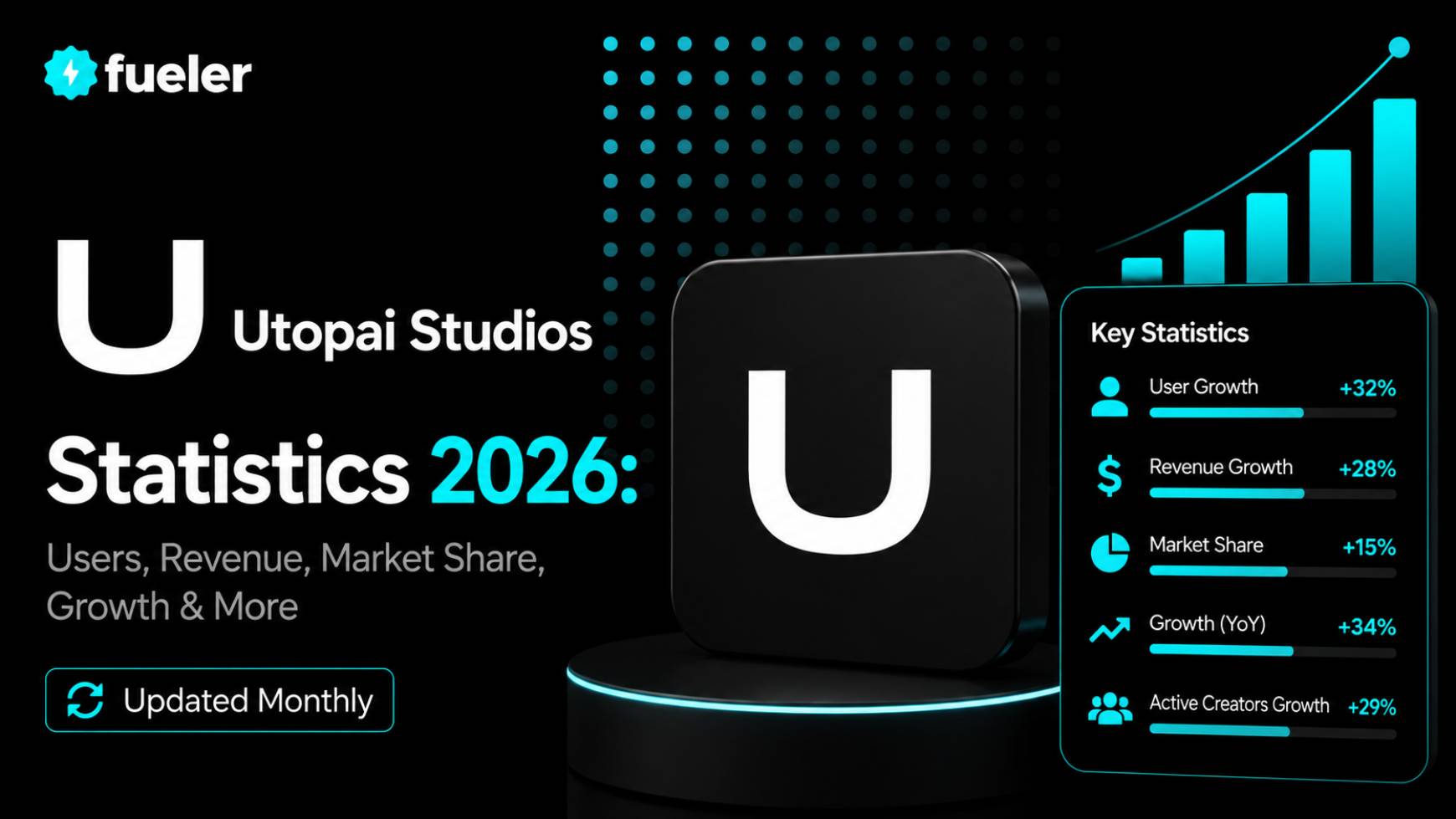
Utopai Studios Key Statistics 2026
Utopai Studios Revenue Statistics 2026
One of the biggest reasons people are searching for Utopai Studios is its business model.
This is important because most AI entertainment startups are still experimenting with business models. Utopai appears to be building actual commercial infrastructure.
The company’s revenue model includes:
- AI production software
- Studio infrastructure
- Content partnerships
- Distribution deals
- Creator collaborations
- Production support systems
What I personally find interesting is the dual business model.
Most startups pick one side:
- SaaS software
- Or content production
Utopai is trying to combine both.
That means:
- AI adoption increases production output
- More productions increase software usage
- More software usage improves infrastructure scale
This creates a strong business flywheel.
The company's co-production project announced a partnership with traditional players like Global TV. Huace has become one of PAI's customers.
That matters because it shows AI-assisted productions are entering traditional distribution systems instead of staying inside experimental internet content.
Utopai Revenue Growth Statistics
The biggest growth story around Utopai in 2026 is PAI.
PAI officially launched on March 5, 2026.
By April 30th, the company reported around $11 million in ARR from entertainment studios, excluding any revenue-sharing income.
That growth speed is extremely fast for a new AI infrastructure product.
These numbers suggest strong early demand from:
- Film studios
- Production companies
- Localize media partner
- Media ecosystems
The AI creator economy is still very early. But infrastructure companies usually become the biggest winners.
We saw this happen in:
- Cloud computing
- Payments
- Creator tools
- Developer platforms
Infrastructure often scales faster than individual content businesses.
Utopai Studios Growth Statistics
Flagship IP & Co-Production Pipeline
Utopai’s growth is anchored by a heavyweight project pipeline that bridges original IP ownership with massive global co-productions:
- Space Nation (Co-Production): A massive-scale, multi-platform entertainment ecosystem. Traditional media giants like Global TV have officially entered the arena as co-production partners, validating Utopai’s ability to merge legacy distribution with next-gen entertainment.
- Cortez (Owned IP): The studio’s proprietary flagship IP, serving as a prime example of how Utopai controls high-value, cross-media franchises with global appeal.
Financial Milestone: Fueled by these premier titles and rapid scaling, Forbes estimates Utopai’s projected revenue to reach $110M, highlighting the massive market demand for this operational model.
Strategic Global Footprint & Partnerships
Entertainment is no longer local. Utopai has strategically positioned itself in the world’s most dynamic content ecosystems through major cross-border alliances:
- Indonesia: Tapping into Southeast Asia's fastest-growing digital entertainment market through a strategic alliance.
- Europe & Latin America: Active expansion plans and partnerships are underway to secure localized talent and distribution networks. Notably, ZDF, Germany's largest television broadcaster, previously acquired the European rights for Space Nation.
- Korea (Strategic Acquisition): Utopai has officially expanded its business footprint into East Asia through the acquisition of Alquimista Media (connected to Hyun Park). Korea boasts one of the most powerful entertainment ecosystems globally—driven by the massive worldwide success of K-dramas, K-pop, and streaming content. This acquisition immediately injects a robust slate of premium Korean projects into the Utopai ecosystem, highlighted by Utopai Studios' newly announced AI-driven sci-fi feature film, Half Moon, written and directed by Hyo-joo Yang (as reported by Deadline).
- China: A major public partnership with Huace, unlocking unprecedented distribution and production scale in the region.
The AI-Native Advantage
The rapid scaling of projects like Space Nation and Cortez across these global markets is made possible because Utopai is built on an AI-native foundation. The studio achieves outsized market impact due to specific structural advantages:
- Faster Production: Slashing the timeline from concept to global release.
- Cost-Effective Localization: Seamlessly adapting the Cortez franchise and the newly acquired Korean slate for global audiences at a fraction of traditional costs.
- Streamlined Distribution: Standardizing assets to fit global streaming and broadcast requirements simultaneously.
- Asymmetric Output: Allowing lean, hyper-efficient teams to manage a $110M revenue-scale pipeline.
Utopai Studios Valuation Insights
As of now, there is no officially confirmed public valuation available for Utopai Studios.
So I won’t speculate or invent numbers.
But we can look at valuation signals.
Investors usually value companies based on:
- Revenue growth
- Market opportunity
- Infrastructure advantages
- Distribution strength
- Team quality
- Commercial adoption
Utopai appears strong across several of these areas.
The company also has talent connected to:
- Warner Bros.
- Apple TV
- Meta
- Google Research
- Adobe Firefly
According to company descriptions, the team combines entertainment talent with frontier AI researchers.
That combination is valuable because AI entertainment requires:
- Creative understanding
- Technical infrastructure
- Production knowledge
- Distribution networks
Very few companies currently have all four.
Utopai Studios Becomes One of the First AI Entertainment Unicorns

Utopai Studios Becomes One of the First AI Entertainment Unicorns
In May 2026, Utopai Studios reached a major milestone when Forbes reported that the company achieved a valuation of approximately $1 billion, making it one of the first AI-native entertainment studios to reach unicorn status.
The $1 billion valuation is particularly notable because Utopai operates in a relatively new category: AI-powered film and television production. While many AI startups focus on software tools, Utopai is building both production infrastructure and original entertainment properties. This combination of technology, content creation, and distribution has helped position the company as a leading player in the emerging AI entertainment market.
Forbes described Utopai as a serious competitor in the growing Hollywood AI race, highlighting its expanding production slate, growing revenue base, and rapid adoption of its PAI platform. The publication also noted that Utopai's founders believe the future opportunity is much larger than software alone. Their goal is to build a full-scale studio powered by AI rather than simply becoming another technology provider.
The valuation milestone signals increasing investor confidence in AI-native entertainment companies. It also demonstrates that the market is beginning to see AI production infrastructure as a potentially transformative force in film, television, and digital content creation. For Utopai Studios, reaching a reported valuation of $1 billion in just a few short years stands as one of the fastest growth cases in the AI entertainment sector.
Utopai Studios Users and Adoption
Exact user numbers have not been publicly disclosed.
However, public information shows adoption from:
- Studios
- Creators
- Media ecosystems
- Production companies
The company stated that PAI gained strong adoption shortly after launch.
The interesting part is that Utopai seems to be targeting both:
- Enterprise entertainment systems
- Independent creators
That is a smart strategy.
Enterprise customers bring:
- Large contracts
- Stability
- Long-term revenue
Creators bring:
- Viral growth
- Internet culture
- New IP creation
- Faster adoption cycles
The companies that successfully combine both often grow faster.
Hollywood Interest in Utopai Studios
One of the strongest validation signals for Utopai is Hollywood interest.
This is important because Hollywood historically moves slowly when adopting new technology.
But AI changes production economics dramatically.
AI can:
- Reduce production timelines
- Lower costs
- Improve localization
- Expand creative possibilities
- Help smaller teams compete globally
That does not mean AI replaces creators.
The better approach is augmentation.
And that seems to be the direction Utopai is taking.
Why Utopai Studios Plays a Vital Role in the AI Economy
I think many people misunderstand AI.
They think the winners will only be chatbot companies.
But the bigger opportunity is AI infrastructure for specific industries.
That includes:
- Healthcare
- Finance
- Education
- Entertainment
Entertainment is especially interesting because storytelling is global.
The companies that own production infrastructure may shape how future content gets made.
Utopai is trying to become that infrastructure layer.
In many ways, this reminds me of what happened with:
- Cloud infrastructure companies
- Creator economy platforms
- Developer ecosystems
The companies enabling creation often become more valuable than the creators themselves.
Lessons Startups Can Learn from Utopai Studios
As a founder, I always pay close attention to companies that are creating new categories rather than competing in existing ones. Utopai Studios is one of those companies. Whether it ultimately becomes the dominant AI entertainment company or not, there are several valuable lessons startups can learn from its approach.
1. Infrastructure Creates More Leverage Than Individual Products
One of the biggest lessons from Utopai is the power of infrastructure.
Many startups focus on building a single product, feature, or tool. Utopai took a different path. Instead of only creating AI-generated content, it built the underlying system that helps others create content.
Its PAI platform powers workflows across development, visualization, editing, localization, and production. That means every new creator, studio, or production company using the platform strengthens the ecosystem.
History shows that infrastructure businesses often create the most long-term value.
Companies like AWS, Stripe, Shopify, and Nvidia became industry leaders because they built systems that enabled thousands of other businesses to grow.
The same principle applies to entertainment. While individual movies and shows come and go, production infrastructure can become deeply embedded into how an entire industry operates.
2. AI Works Best When Combined With Deep Industry Knowledge
One mistake many AI startups make is building generic tools that could serve everyone.
The problem is that tools designed for everyone rarely become essential to anyone.
Utopai focused specifically on entertainment and storytelling. It understands the challenges filmmakers, creators, studios, and production teams face every day. Instead of building a generic AI platform, it built workflows tailored to the entertainment industry.
This creates a stronger competitive advantage because industry expertise is much harder to replicate than technology alone.
The future winners in AI may not be the companies with the biggest models. They may be the companies that understand specific industries the best and build solutions around real-world workflows.
3. Global-First Thinking Creates Bigger Opportunities
Beyond building underlying technology, startups must learn how to take control of their own content assets. In Utopai Studios' business logic, building an AI production system goes hand-in-hand with producing its own original content.
By launching proprietary and co-produced film and television projects, Utopai secures core copyrights and intellectual property. When a startup can consistently and efficiently generate premium original content, it naturally builds the leverage required to establish its own distribution channels in the future. This closed-loop flywheel of "content + distribution" allows the company to reach global audiences directly, bypassing the gatekeeping of traditional media giants.
4. Revenue Matters More Than Hype
The AI industry has seen thousands of startups emerge over the past few years.
Many generated headlines.
Many raised funding.
Very few generated meaningful revenue.
What stands out about Utopai is its focus on commercial adoption. The company talks about customers, partnerships, licensing, production deals, and revenue growth rather than just technology.
That distinction is important.
Technology is valuable only when someone is willing to pay for it.
The startups that survive long-term are usually not the ones with the most media attention. They are the ones solving real problems for real customers and building sustainable revenue streams.
Revenue is the strongest form of validation because it proves that a product creates enough value for people to spend money on it.
5. Category Creation Is More Powerful Than Competition
Most startups enter crowded markets and compete for a small share of existing demand.
Utopai is attempting something different. It is helping define an entirely new category: AI-native entertainment studios.
Category creators often face more uncertainty in the beginning, but they also have the opportunity to become synonymous with the space they create.
Think about companies like Airbnb, Uber, Stripe, or Notion. They didn't just build products. They helped define new ways of thinking about existing industries.
By positioning itself as an AI-native studio rather than simply an AI tool provider, Utopai is creating a narrative that is much larger than software alone.
6. Technology Alone Is Not Enough
One of the most interesting aspects of Utopai's strategy is that it understands a simple truth: people care about outcomes, not technology.
Most audiences do not watch a movie because it uses AI.
They watch because the story is interesting.
Studios do not adopt technology because it sounds futuristic.
They adopt it because it helps them save time, reduce costs, or create better content.
Successful startups focus on the value they create, not the technology they use.
Utopai's vision is not centered on AI itself. It is centered on helping creators produce and distribute stories more efficiently. AI is simply the engine that makes that possible.
The Future of Utopai Studios
The next 12 to 24 months could be the most important period in Utopai Studios' journey. The company has already gained attention through its AI-powered production platform, growing global partnerships, and reported revenue momentum. However, the real test will be whether it can turn this early traction into long-term industry leadership.
Several important questions will shape Utopai's future:
- Can PAI continue growing at the same pace after its strong launch?
- Can Utopai successfully expand across global entertainment markets?
- Will major film studios and production companies adopt AI-powered workflows at scale?
- Can PAI create viral content?
- Can AI-native movies and television shows become mainstream entertainment?
- Will creators, brands, and media companies embrace AI production infrastructure as part of their everyday workflow?
One factor working in Utopai's favor is the growing demand for content worldwide. Streaming platforms, broadcasters, creators, and brands are all producing more content than ever before. Traditional production methods are often expensive, time-consuming, and difficult to scale. AI-powered production systems could help solve these challenges.
The company is also betting that entertainment will become increasingly global. Through partnerships in regions such as China, Indonesia, Korea, Latin America, and Europe, Utopai is positioning itself to benefit from international demand for localized content. If its PAI platform becomes a standard production tool across multiple markets, the company's growth potential could be significant.
Ultimately, Utopai's success will depend on whether it can prove that AI is not just useful for creating content faster, but also for helping creators tell better stories. If AI-native production becomes a standard part of entertainment over the next decade, companies like Utopai could become essential infrastructure providers for the entire industry.
Final Thoughts
Utopai Studios is one of the most interesting companies operating at the intersection of artificial intelligence and entertainment in 2026.
The company stands out because it is building more than a single AI product. It is creating an ecosystem that combines:
- AI production infrastructure
- Entertainment technology
- Original content development
- Global distribution partnerships
- Creator-focused workflows
- Studio-scale operations
Many AI companies focus only on software. Many entertainment companies focus only on content. Utopai is attempting to combine both. This dual approach creates opportunities for technology adoption and content monetization to grow together.
What I personally find most interesting is the company's focus on infrastructure. Throughout technology history, some of the most valuable businesses have been the ones enabling others to create. Cloud providers enabled software companies. Payment infrastructure enabled online commerce. Creator platforms enabled the creator economy.
Utopai appears to be following a similar path by building infrastructure for AI-powered entertainment production.
The company still has challenges ahead. The AI entertainment industry is young, competition is increasing, and mainstream adoption is not guaranteed. However, its reported revenue growth, global partnerships, Hollywood relationships, and expanding PAI platform suggest that it has established a strong early position.
As AI continues to reshape how movies, television shows, digital content, and intellectual property are created, Utopai Studios is a company worth watching closely. Whether it ultimately becomes a dominant entertainment studio or a foundational technology provider, it is already helping define what the future of AI-powered storytelling may look like.
What is Fueler Portfolio?
Fueler is a career portfolio platform that helps companies find the best talent for their organization based on their proof of work. You can create your portfolio on Fueler. Thousands of freelancers around the world use Fueler to create their professional-looking portfolios and become financially independent. Discover inspiration for your portfolio
Sign up for free on Fueler or get in touch to learn more.

What should you do next?
You've read the article. Now turn your skills into proof of work and unlock more opportunities.
Build your proof of work portfolio
Create a clean portfolio with projects, assignments, resumes, and AI stack details that companies actually want to see.
Create your Fueler portfolio →Apply through assignments, not resumes
Stand out by solving real tasks from companies hiring on Fueler.
Explore assignments →Get discovered by companies
Make your work public and let recruiters discover your skills through actual projects instead of keywords.
Get discovered →