What Do Startup Founders Actually Look for When Hiring?

Riten Debnath
23 Jul, 2026
Last updated: July 2026
Hiring mistakes can easily destroy an early-stage company. When seed and Series A startups operate with limited capital, tight timelines, and lean teams, founders cannot afford team members who only follow instructions. They need operators who generate immediate momentum, reduce founder workload, and drive measurable revenue or product progress from day one.
I’m Riten, founder of Fueler, a skills-first portfolio platform building the career infrastructure for 100 million creative professionals. Fueler connects talented individuals with companies through assignments, portfolios, and projects, not just resumes or CVs. Think of it as Dribbble/Behance for work samples combined with AngelList for hiring infrastructure.
Startup hiring has changed fundamentally. Candidates who rely on keyword-stuffed resumes and prestigious previous employer names are losing out to those who showcase tangible work samples. In this guide, you will learn the eight core traits founders actually evaluate, how talent decisions are made behind closed doors, and how to position yourself as an indispensable team member.

1. High Execution Leverage Over Predefined Job Titles
Early startups operate without rigid department silos or static job descriptions. Founders look for high-leverage team members who can adapt quickly, step outside narrow job functions, and take on multi-disciplinary responsibilities as company priorities shift.
When capital is tight, hiring someone who can handle product design, customer feedback, and landing page copy creates massive operational efficiency. Founders value candidates who multiply overall output rather than those who wait for narrow task assignments.
- Demonstrate multi-disciplinary execution capabilities across technical and growth functions: Show evidence of managing end-to-end projects independently without needing handoffs to other departments. High-leverage talent handles initial scoping, execution, and debugging, which significantly speeds up company execution cycles and lowers total headcount costs.
- Focus on driving business velocity rather than maintaining rigid professional boundaries: Explain how you took on tasks outside your main expertise to clear operational bottlenecks. Startup founders prefer candidates who prioritize team progress over title preservation or strict workplace role definitions.
- Highlight ability to translate high-level founder vision into actionable projects: Prove you can take vague strategic goals and convert them into concrete weekly deliverables. Self-directed operators who build immediate execution plans save founders dozens of hours in project management and oversight.
- Showcase track record of managing complete project lifecycles from start to finish: Present completed work where you handled problem identification, build execution, testing, and distribution. End-to-end ownership demonstrates that you can deliver finished assets without requiring constant management supervision or external guidance.
- Apply cross-functional skills to reduce internal communication friction and delays: Detail how your broad skill set prevented project handoff delays between design, engineering, and marketing. Minimizing inter-departmental friction keeps startup operations nimble and accelerates overall product iteration speed.
Why It Matters
Startup survival depends on iteration speed and operational efficiency. Founders seek high-leverage team members because one versatile operator can replace complex multi-person approval chains. Showing you can execute across functions directly reduces company burn rate while accelerating product delivery.
2. Verifiable Proof of Work and Tangible Output
Founders rarely trust self-reported skills listed on traditional PDF resumes. Instead, they look for verifiable work samples, public repositories, written case studies, and live product demonstrations that prove your capability before an offer is made.
Showing inspectable assets completely removes hiring risk for the founder. When a candidate presents real deliverables alongside clear performance metrics, formal credentials and university degrees become secondary considerations during candidate evaluation.
- Present documented case studies detailing actual problem-solving frameworks and results: Share written breakdowns that explain the original business problem, your chosen strategy, execution hurdles, and final outcomes. Detailed case studies provide clear visibility into your strategic thinking and daily execution standards.
- Maintain active public archives containing your best projects and codebases: Keep your online project showcases updated with clear code repositories, design files, or published articles. Public proof allows founders to inspect your actual work quality before scheduling initial interview conversations.
- Quantify historical contributions using concrete business and performance metrics: Frame past project accomplishments around measurable financial or operational outcomes like customer acquisition costs or system efficiency gains. Hard metrics offer undeniable proof that your daily work creates commercial value.
- Provide inspectable side projects or open-source contributions that highlight initiative: Showcase independent applications, technical scripts, or community projects built outside formal employment. Self-motivated projects signal genuine passion for building and continuous skill development without needing corporate supervision.
- Break down complex project workflows into clear step-by-step documentation: Include background notes, architectural choices, and design rationale alongside your final deliverables. Documenting your methodology demonstrates intellectual clarity, self-awareness, and strong technical communication skills to hiring managers.
Why It Matters
Verification eliminates hiring friction and candidate selection risk for busy startup leaders. When you provide inspectable proof of work, founders can instantly evaluate your actual skill level instead of guessing through interview answers. Tangible output establishes immediate professional credibility and accelerates the hiring process.
3. Extreme Ownership Mindset and Comfort with Ambiguity
Early-stage companies operate in highly uncertain environments with shifting product requirements and incomplete market data. Founders actively search for candidates who thrive in chaos, take complete accountability for outcomes, and build structure where none exists.
An ownership mindset means taking responsibility when systems break or goals are missed. Employees who proactively fix problems without blaming external circumstances or waiting for permission become core leaders inside growing teams.
- Take personal responsibility for diagnosing and fixing operational errors quickly: Detail past experiences where you identified critical system bugs or process failures and resolved them immediately. Taking direct accountability builds deep trust with founders who need reliable team members during high-pressure situations.
- Build functional operational processes when formal guidelines or instructions are missing: Describe how you created documentation, onboarding flows, or internal tracking sheets from scratch. Establishing order in unstructured environments keeps growing teams aligned and prevents operational drop-offs during rapid expansion.
- Make sound execution decisions using incomplete information and limited resources: Demonstrate how you evaluated trade-offs and moved projects forward despite uncertain market conditions or missing data. Founders value decisive team members who maintain momentum rather than paralyzing progress through over-analysis.
- Proactively identify unassigned company challenges and implement practical solutions: Show instances where you noticed an unaddressed customer issue or workflow bottleneck and solved it without prompting. Independent problem-solving proves you treat the company's success as your personal responsibility.
- Maintain composure and focus during sudden strategic pivots or market changes: Explain how you adapted your daily workflow when business priorities changed abruptly. Resilient operators help stabilize startup teams during difficult transitions, maintaining high execution quality across shifting product roadmaps.
Why It Matters
Ambiguity is the default state of early-stage startups. Founders cannot spend time micro-managing daily tasks or providing step-by-step instructions. Candidates with an extreme ownership mindset provide operational stability, allowing leadership to focus on long-term strategy, fundraising, and company growth.
4. Speed of Learning and Adaptability to Modern Workflows
Technology stacks, marketing channels, and software tools evolve rapidly. Startup founders prefer hiring fast learners who can master modern tools and adopt updated workflows independently over experienced professionals stuck in legacy systems.
Adaptability matters more than years of static experience. A professional who learns new systems in days will consistently outperform a candidate with years of experience who resists changing their operational methods.
- Demonstrate rapid mastery of modern software tools and automation systems: Provide examples where you learned new software platforms independently and integrated them into daily team workflows. Fast tool adoption allows startups to leverage modern technical capabilities without investing in costly training programs.
- Showcase continuous self-directed learning through recent independent projects and experiments: Highlight newly acquired skills, certifications, or technical experiments completed outside your primary job responsibilities. Continuous learning habits prove to founders that your capabilities will grow alongside the company's expanding market needs.
- Iterate quickly based on direct customer feedback and performance metrics: Explain how you updated product features or marketing messaging rapidly after analyzing live user data. Fast feedback loops ensure the startup does not waste time or capital building unwanted features.
- Unlearn outdated corporate practices to adopt agile startup operating methods: Detail how you streamlined bloated corporate processes to match the fast execution speed of small teams. Unlearning slow habits helps traditional corporate workers transition successfully into high-velocity startup environments.
- Apply modern workflow tools to automate repetitive tasks and save time: Present examples of building automated workflows that eliminated manual data entry or administrative overhead. Smart operational automation keeps team headcount lean while maximizing total output across key department functions.
Why It Matters
A startup’s primary advantage over large corporate competitors is execution speed. Hiring adaptable professionals who learn quickly ensures the company can adjust tactics, adopt modern tools, and pivot smoothly. Rapid adaptability keeps early teams competitive in fast-moving technology markets.
5. Commercial Awareness and Alignment with Business Outcomes
Technical skill alone is insufficient if it does not serve overarching financial goals. Founders look for employees who understand basic unit economics, customer acquisition dynamics, and revenue impact when making daily product or engineering decisions.
Commercial awareness prevents waste. When team members evaluate their daily tasks through the lens of business value, they build features that users actually pay for and avoid over-engineering solutions that do not drive growth.
- Align daily technical or creative tasks directly with core revenue metrics: Explain how your specific engineering or design choices contributed to higher conversion rates, customer retention, or average order value. Connecting daily tasks to financial outcomes proves strategic maturity and business alignment.
- Evaluate project trade-offs using realistic cost-benefit analysis and resource constraints: Show how you balanced technical perfection against shipping speed and available engineering budgets. Founders respect operators who protect company runway by building practical, high-impact solutions rather than over-engineered systems.
- Understand key customer personas, pain points, and target market positioning: Demonstrate deep awareness of who uses the product and why they purchase it over competitors. User empathy ensures that engineering and marketing efforts directly solve pressing customer problems.
- Prioritize feature development based on potential commercial impact and user demand: Detail how you used customer feedback and analytics to decide which product features to build first. Data-driven prioritization prevents teams from wasting limited development cycles on low-value tasks.
- Monitor essential company health metrics including burn rate and customer acquisition: Show familiarity with key startup metrics like churn, lifetime value, and runway duration. Understanding company financials enables employees to make responsible operational decisions that preserve capital and extend runway.
Why It Matters
Startups fail when they run out of money before achieving sustainable distribution. Founders prioritize commercially aware candidates because they treat company resources carefully. Understanding how your work impacts financial metrics ensures every project contributes directly to business survival and long-term growth.
6. Proactive Problem Discovery and Unsolicited Value Creation
The best candidates do not wait for an interview to demonstrate value. They audit a startup’s public product, identify conversion bottlenecks or software bugs, and submit unsolicited solutions directly to founders during initial outreach.
Delivering proactive value before asking for a job separates top performers from passive applicants. It proves your skill set in practice and demonstrates genuine enthusiasm for the company's mission.
- Conduct thorough audits of public product onboarding flows and messaging channels: Analyze landing pages, registration forms, or app interfaces to find user drop-off points. Submitting detailed teardowns shows strong analytical skills and immediate interest in improving the user experience.
- Build functional prototypes or sample assets to address specific company gaps: Create sample marketing copy, feature UI mockups, or lead lists that the company can use immediately. Providing finished, usable assets demonstrates rare initiative and practical execution capability to hiring managers.
- Deliver actionable observations paired with clear, easy-to-implement solutions: Pair every identified problem with a practical fix rather than simply criticizing existing work. Founders appreciate constructive, solution-oriented feedback that respects their current operational constraints and engineering bandwidth.
- Frame unsolicited contributions as helpful resources with zero hiring pressure: Present your audit or sample project generously, giving the team permission to implement your ideas. A low-pressure approach shows professional generosity, confidence, and authentic alignment with the company's long-term vision.
- Explain the exact methodology and data behind your proposed improvements: Include context explaining why your suggested changes will improve user conversion or workflow efficiency. Grounding recommendations in proven design principles or industry benchmarks builds immediate credibility with decision-makers.
Why It Matters
Submitting proactive work eliminates candidate evaluation doubt. Founders can instantly review your thinking, quality, and speed without running lengthy interview loops. Delivering value upfront proves you are a self-starter who will actively drive growth from your very first day.
7. Clear Asynchronous Communication and Documentation Skills
As distributed and hybrid startup models become standard, clear written communication is a vital operational skill. Founders look for candidates who write concisely, document workflows thoroughly, and keep teams aligned without requiring endless meetings.
Bad communication creates chaos and slows company momentum. Professionals who write structured updates, explain technical decisions clearly, and document processes reduce internal confusion and keep remote teams operating efficiently.
- Write concise, structured updates that summarize project status and key blockers: Format communications using clear headings and short bullet points to respect reader time. Structured written updates keep team members informed without requiring lengthy status meetings or constant messaging exchanges.
- Document complex technical architectures and internal operating procedures thoroughly: Create clear onboarding guides, API documentation, or process templates for team reference. Detailed internal documentation ensures institutional knowledge is preserved as the company scales and hires new employees.
- Communicate complex technical concepts simply to non-technical business stakeholders: Explain engineering trade-offs or data structures using clear language free from confusing industry jargon. Accessible communication fosters smooth collaboration between product, sales, and management departments.
- Practice proactive asynchronous communication to maintain momentum across time zones: Share complete project context, relevant links, and next steps before logging off for the day. Thorough handoffs allow global team members to continue working without waiting for live clarifying calls.
- Exercise thoughtful tone and emotional intelligence in written team channels: Maintain professional, encouraging, and clear dialogue across team chat platforms and code reviews. Healthy written communication prevents misunderstandings and maintains strong team morale during high-pressure launch sprints.
Why It Matters
Asynchronous written communication is the backbone of modern startup velocity. Founders value strong writers because clear documentation eliminates unnecessary meetings and prevents operational bottlenecks. Concise communicators keep distributed teams aligned, allowing work to progress smoothly across different time zones.
8. Coachability and Low-Ego Team Collaboration
Building a venture-backed company involves constant experimentation, where initial hypotheses are frequently proven wrong. Founders seek low-ego team members who accept constructive feedback gracefully, iterate rapidly, and put company success above personal validation.
High-performing teams require strong collaboration. A brilliant individual contributor who creates personal friction, resists feedback, or refuses to help colleagues will slow down the entire organization and damage workplace culture.
- Accept critical product feedback constructively without becoming defensive or argumentative: View feedback as valuable data to improve work quality rather than a personal critique. Coachable professionals adjust their approach quickly, accelerating project completion and team iteration cycles.
- Share project credit generously and highlight contributions from cross-functional peers: Acknowledge the efforts of designers, engineers, and marketers who helped deliver successful outcomes. Low-ego collaboration builds strong trust and positive working relationships across all company departments.
- Admit mistakes early and share transparent lessons learned with the team: Report errors promptly so team members can help implement fixes before minor bugs become major outages. Transparent error reporting protects the company from hidden technical or operational debt.
- Support team members willingly by stepping in to help complete urgent deadlines: Assist colleagues with testing, research, or administrative tasks during major product launches or marketing pushes. Reliable team players ensure critical milestones are met during high-stress operational periods.
- Iterate rapidly on work samples based on guidance from senior leadership: Apply managerial feedback immediately to update codebases, design mockups, or content strategy documents. Fast execution on feedback proves flexibility and commitment to achieving company quality standards.
Why It Matters
Early startup teams spend long hours working closely under intense pressure. One defensive or arrogant personality can derail team cohesion and slow execution velocity. Founders prioritize coachability and low-ego collaboration to ensure a healthy culture focused on collective problem-solving.
How Does This Connect to Building a Strong Career or Portfolio?
Modern hiring prioritizes proven execution over static credentials. Early-stage founders look for candidates who document their real-world projects, problem-solving frameworks, and tangible business outcomes. Building a public track record of your work creates undeniable evidence of your capabilities, helping you stand out to fast-growing companies. Platforms like Fueler allow professionals to showcase their assignments, side projects, and proof of work in an organized portfolio. Documenting your actual output opens doors to high-growth startup opportunities without relying on traditional resumes.
Final Thoughts
Securing a job at a high-growth startup comes down to demonstrating proof of execution. Founders hire professionals who eliminate operational risk, solve real business problems, and communicate direct value. By focusing on tangible work samples, adaptability, and proactive problem-solving, you establish immediate authority as an applicant. Showcasing your capabilities publicly remains the most effective way to accelerate your career and earn founder trust.

Frequently Asked Questions
What is the single most important quality startup founders look for?
Founders look for high-leverage execution capability paired with proof of work. They prioritize candidates who can take vague problems, operate independently in ambiguous environments, and deliver finished, measurable outcomes without constant managerial oversight.
Do startup founders care about university degrees or past company names?
Most early-stage founders care significantly less about degrees or corporate brand names than traditional employers. They focus primarily on verifiable work samples, problem-solving ability, technical competence, and your immediate capacity to solve active company challenges.
How can I prove my skills if I don't have prior startup experience?
Build independent side projects, publish written case studies, or contribute to open-source software. You can also conduct a product audit for a target startup, build a working prototype, and submit it directly to the founder to demonstrate immediate value.
Why do startup founders prefer generalists over narrow specialists in early stages?
Early startups have shifting priorities and lean headcount. Generalists who execute across multiple functions like design, basic coding, and copywriting provide higher operational leverage and adaptability than specialists who only perform one narrow task.
How do I show coachability during a startup interview process?
Listen actively to interview feedback, ask thoughtful questions, and explain how you iterated on past projects after receiving critical notes. Showing willingness to adapt your approach based on new data proves you are low-ego and focused on team outcomes.
Why 100,000+ professionals use Fueler
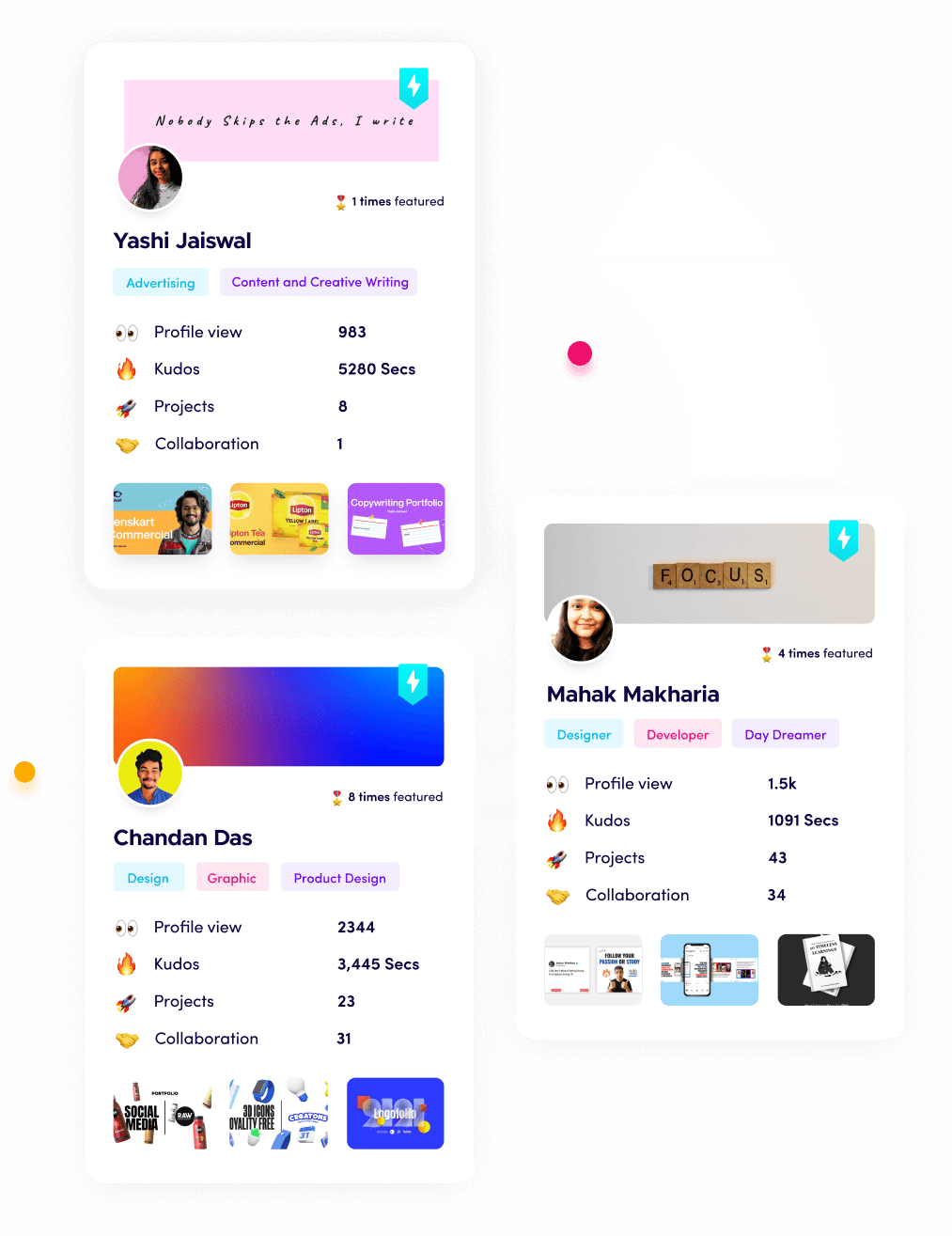
Fueler helps professionals showcase proof of work through projects, assignments, case studies, and achievements.
- Thousands of professionals use Fueler to create their digital portfolio
- Thousands of projects are published on Fueler. Check here
- Startups and Companies hire through proof of work on Fueler
- Used by freelancers, creators, marketers, video editors, writers, designers, and product managers
Our mission is to help the next 100 million professionals build a verified professional identity through proof of work

What should you do next?
You've read the article. Now turn your skills into proof of work and unlock more opportunities.
Build your proof of work portfolio
Create a clean portfolio with projects, assignments, resumes, and AI stack details that companies actually want to see.
Create your Fueler portfolio →Apply through assignments, not resumes
Stand out by solving real tasks from companies hiring on Fueler.
Explore assignments →Get discovered by companies
Make your work public and let recruiters discover your skills through actual projects instead of keywords.
Get discovered →