Before/After: 10 Real Portfolio Hacks That Helped From Zero to Interview Calls

Riten Debnath
30 Sep, 2026
Last updated: September 2026
You made the work.
You spent three nights fixing the design, rewrote the copy six times, cleaned up the code, edited the video, or built the campaign.
Then you put it in your portfolio.
Nothing happened.
No reply. No interview. Not even a “thanks, but no.”
Here is the uncomfortable part: your work may not be the problem. Your portfolio may simply be making your work harder to understand.
A hiring manager does not know what happened before the final screenshot. They do not know what you contributed, what problem you solved, what changed because of your work, or whether you can repeat that performance in another role.
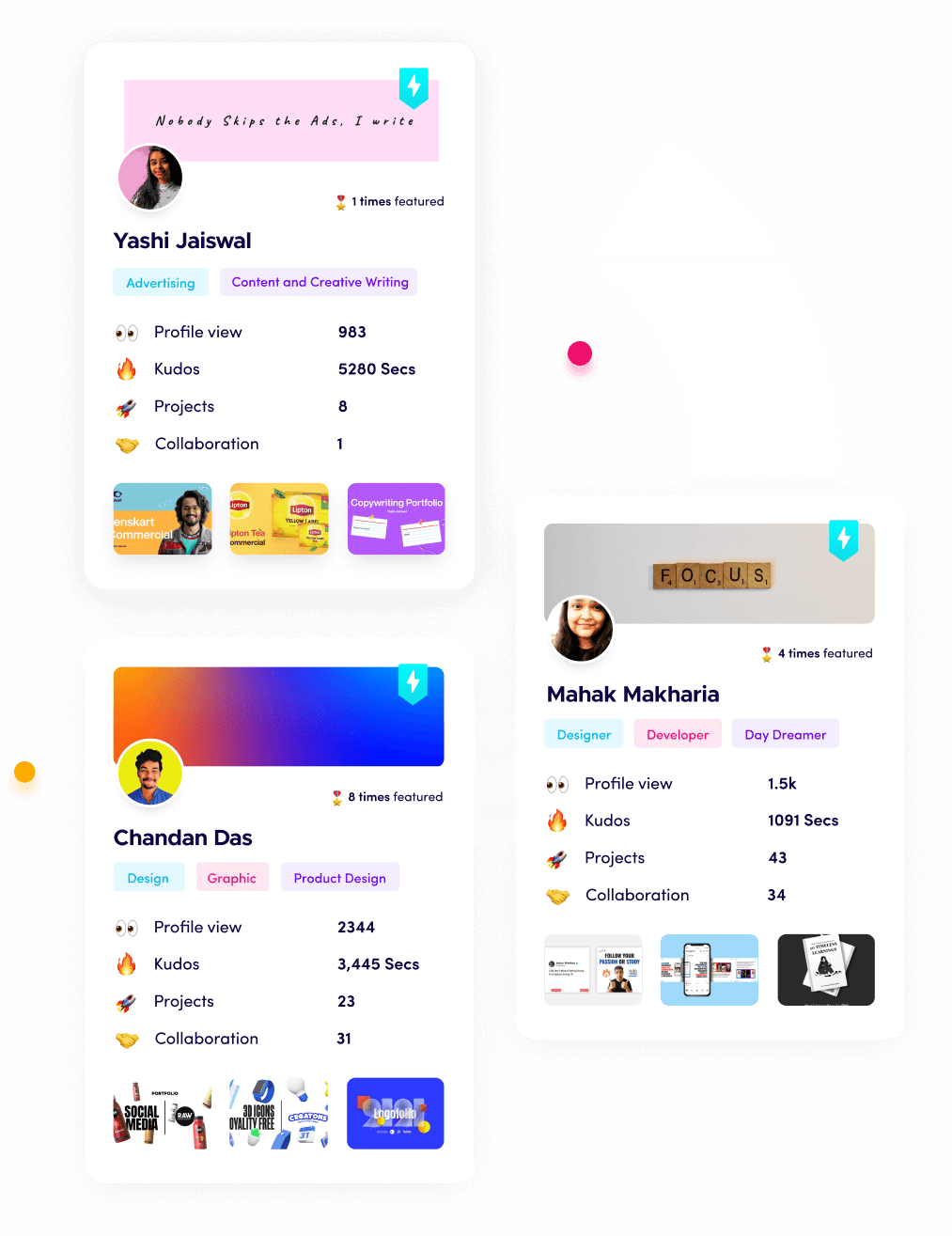
I’m Riten, founder of Fueler, a skills-first portfolio platform building the career infrastructure for 100 million creative professionals. Fueler connects talented individuals with companies through assignments, portfolios, and projects, not just resumes or CVs. Think of it as Dribbble/Behance for work samples combined with AngelList for hiring infrastructure.
So this article is not about making your portfolio prettier.
It is about changing what the person reviewing it can understand in the first few minutes.
1. Before: “I Designed This” → After: “Here Was the Problem I Solved”
A portfolio project without context forces the reviewer to guess. A strong project answers three questions quickly: What was the problem? What did you do? What changed? That shift turns a visual sample into evidence of professional thinking.
Before: “Brand identity created for a startup.” After: “The startup needed a visual identity that could work across social media, presentations, and marketing material.” The second version gives the work a business context instead of treating the design as decoration.
Before: “Created five Instagram posts.” After: “The objective was to create a consistent visual system for a campaign aimed at increasing awareness.” Now the reviewer can understand why the work existed and evaluate whether your decisions made sense.
Before: “Built a website.” After: “The existing website made it difficult for users to find key information, so I redesigned the navigation and page structure.” Suddenly, your work demonstrates problem-solving, not just execution.
A portfolio should make the problem visible before the solution. This is especially useful for designers, developers, marketers, writers, and product professionals because hiring managers can connect your output with an actual work requirement.
This approach also helps candidates with limited experience. A student project, freelance assignment, self-initiated project, or college project becomes more credible when you explain the problem, constraints, decisions, and final outcome honestly.
Why It Matters
Hiring managers are evaluating whether your skills can solve their problems. A portfolio that explains the problem gives them a reason to care about the work before they inspect the details. Work samples are useful precisely because they can provide evidence beyond the claims made on a resume.
2. Before: Show Everything → After: Show Your Best, Most Relevant Work
Your portfolio is not a hard drive with a homepage.
Uploading 27 projects does not automatically make you look experienced. In many cases, it makes the reviewer work harder to figure out which projects actually matter. Portfolio guidance consistently recommends curating relevant work rather than overwhelming the reader with everything you have created.
Remove projects that are weak, outdated, unfinished, or unrelated to the roles you want. If you are applying for content roles, five strong writing samples can communicate more than twenty unrelated college assignments.
Put the strongest and most relevant project first. Do not make the hiring manager scroll through old experiments before reaching the work you actually want them to see.
Match projects to the job description. A social media role should quickly reveal campaign work, content strategy, analytics, or relevant creative execution rather than a random collection of personal interests.
Use different versions of your portfolio when necessary. A general portfolio can remain useful, but the projects you highlight should change when the opportunity changes.
Look at your portfolio from a stranger’s perspective. If someone has never met you, can they understand your strongest skill within the first minute? If not, the problem may be selection, not talent.
Why It Matters
A portfolio has limited attention available. The goal is not to prove that you have done many things. The goal is to make the right evidence impossible to miss. A hiring manager should quickly understand what kind of work you can be trusted to handle.
3. Before: Final Screenshot → After: Show the Process Behind the Work
The final output is often the easiest part to show. The difficult part is explaining how you got there. For many roles, that process is where your actual professional judgment becomes visible.
A designer can show early sketches, discarded directions, iterations, and the reasoning behind the final design. A developer can explain the problem, architecture, implementation choices, and trade-offs instead of displaying only the finished interface.
A writer can show the brief, audience, research direction, content structure, revisions, and final article. That tells a much stronger story than simply attaching a published link.
A marketer can explain the campaign objective, audience, messaging approach, creative decisions, distribution, and results. The reader can then understand how strategy connected to execution.
Do not document every tiny step. Nobody needs twenty screenshots of your workspace. Show the decisions that changed the direction of the project or solved an important constraint.
This is also where portfolios become useful interview material. A clear project story gives you something concrete to discuss when someone asks, “Why did you make that decision?” Good portfolio case studies are built around that kind of reasoning.
Why It Matters
A final image proves that you finished something. The process can show how you think. That distinction becomes important when employers are hiring for judgment, problem-solving, collaboration, and decision-making rather than pure execution.
4. Before: “I’m a Graphic Designer” → After: Let the Work Prove It
Your headline can claim almost anything.
Your portfolio has to prove it.
A useful portfolio reduces the distance between what you say you can do and what the reviewer can actually see. That is why the work itself should carry much of the argument.
Instead of writing “creative graphic designer with excellent branding skills,” show several pieces where typography, visual hierarchy, identity systems, or campaign design are clearly visible.
Instead of listing “social media marketing” as a skill, show a campaign and explain the objective, audience, content direction, execution, and measurable outcome where available.
Instead of writing “SEO expert,” show what you worked on: keyword research, content structure, technical improvements, internal linking, search performance, or other verifiable work.
The portfolio of a professional such as Sarthak can be useful to study from this perspective because the work itself gives a visitor something concrete to evaluate rather than relying entirely on a skills list.
Treat every claimed skill as a question: Where is the proof? If you say you are good at something but the portfolio contains no relevant evidence, either add the evidence or remove the claim.
Why It Matters
Skills written on a resume are assertions. Work samples give employers something tangible to inspect. That does not guarantee an interview, but it makes your capabilities easier to evaluate and discuss.
5. Before: “I Edited a Video” → After: Explain the Creative Decision
For creative roles, simply uploading the finished work can leave too much unanswered. A reviewer may like the video but still know very little about your role, constraints, decisions, or ability to solve a real brief.
State the brief first. Was the video created for awareness, education, entertainment, product promotion, recruitment, or another objective? The same editing skill can require very different decisions depending on the goal.
Explain your contribution. If you worked with a team, separate your responsibilities from everyone else’s. Say what you personally handled rather than presenting the entire project as your individual work.
Show selected decisions. Explain why you changed pacing, structure, transitions, sound design, visual rhythm, captions, or storytelling rather than dumping every version into the case study.
If performance data exists, include it accurately. Views, watch time, completion rate, engagement, conversions, or other metrics can add useful context, but never invent numbers just to make a project look successful.
A real portfolio such as Prashast gives you another useful benchmark: study how a video professional presents work as a body of evidence rather than thinking your portfolio needs to become a long written essay.
Why It Matters
Creative hiring still requires creative judgment. The final video shows execution; the explanation can show whether you understand the reason behind the creative choices.
6. Before: “I Wrote 20 Articles” → After: Show What Your Writing Was Supposed to Achieve
A writing portfolio becomes much stronger when it stops behaving like a folder of links. Instead of asking the reviewer to read everything, give each important piece a reason to exist.
Identify the audience. A B2B article for founders requires different writing decisions from a student-focused explainer, product landing page, newsletter, or opinion piece.
Explain the objective. Was the article intended to rank for a search query, explain a complicated topic, generate leads, support a product launch, or establish subject-matter authority?
Show your contribution honestly. If you researched, outlined, wrote, edited, optimized, or managed publication, say exactly what you handled. Do not claim ownership over work completed by a team.
Pick samples that demonstrate range without becoming random. A content writer might show long-form SEO writing, conversion copy, research-heavy content, and concise editorial work if those skills match the target role.
Vikravardhan is one of the real content-writer portfolios in Fueler’s database that can be used as a reference point when thinking about how writing work should be presented as professional evidence.
Why It Matters
Employers hiring writers need to assess more than grammar. They are often evaluating research, clarity, audience understanding, structure, tone, and the ability to write toward a specific objective.
7. Before: Generic “About Me” → After: Tell Me What You Actually Do
“I am a passionate professional who loves creativity and innovation” could belong to almost anyone.
Your introduction should make it obvious what you work on, who you work for, and what type of problems you solve. Keep the personality. Remove the fog.
Start with your actual role or direction. “Content strategist helping early-stage brands build search-led content systems” tells the reader more than “digital enthusiast.”
Mention your strongest areas. If you specialise in SEO content, social media strategy, product design, or frontend development, make that visible without turning the introduction into a keyword dump.
Give the reader a reason to continue. Your introduction should connect naturally to the projects below it, so the portfolio feels like one story rather than unrelated pages.
Avoid writing your entire career history in the opening section. Your portfolio is not a second resume. Use the space to establish relevance, then let the projects provide evidence.
A clear professional introduction also helps when your experience is limited. You can position yourself around the kind of work you are capable of doing without pretending to have experience you do not have.
Why It Matters
A portfolio biography gives the reviewer an initial frame for interpreting everything that follows. Career guidance from Indeed similarly recommends using the biography to establish who you are, your current role, and what a visitor should expect from your portfolio.
8. Before: “Worked on the Project” → After: Make Your Contribution Impossible to Miss
One of the most dangerous portfolio phrases is “we worked on.”
Who is we?
If the project involved five people, the reviewer needs to know what you actually did. Clear ownership makes collaborative work much more credible.
Add a simple role line to every meaningful project: My role: Content Strategy, My role: UX Research, My role: Frontend Development, or whatever accurately describes your contribution.
Explain collaboration where it matters. Maybe you worked with a designer, developer, founder, editor, or marketing team. Showing collaboration can demonstrate professional maturity without taking credit for someone else’s work.
Separate your responsibilities from the final outcome. If the whole team generated the result, do not imply that you personally caused every metric.
For group projects, show the specific deliverables you owned. This could include a landing page, research report, campaign strategy, design system, content plan, or technical component.
Kartik Kochhar provides a useful real-world portfolio reference for developers thinking about how their technical work should be represented as visible evidence rather than a list of programming languages.
Why It Matters
Hiring managers are assessing the person they may hire, not the entire team you previously worked with. Clear ownership lets them understand what you can personally bring into their organisation.
9. Before: “Results: Successful” → After: Show Evidence Without Making Numbers Up
There is a strange pressure to make every portfolio project sound like a billion-dollar case study.
Don't.
If you have a real metric, show it. If you do not, explain the outcome honestly.
Use measurable results when they genuinely exist. Revenue, leads, conversion rate, traffic, engagement, retention, time saved, delivery speed, error reduction, or other relevant metrics can make the outcome easier to understand.
Give numbers context. “Increased traffic by 40%” is weak without knowing the starting period, timeframe, traffic source, or what you actually contributed.
Use qualitative outcomes when quantitative data is unavailable. A redesigned information architecture may have improved navigation clarity even if you cannot disclose analytics.
Never invent client results. This is particularly important for students and freelancers who may feel pressure to make small projects look bigger. A truthful project with modest results is more credible than an impressive-looking fiction.
For marketers, Sharvin offers another relevant portfolio reference when thinking about how marketing work can be presented around actual activities and outcomes rather than vague claims about being “results-driven.”
Why It Matters
Evidence makes claims easier to evaluate. But fake precision destroys trust. A portfolio should help a hiring manager understand what happened, not manufacture a success story.
10. Before: Beautiful Portfolio → After: Make It Easy to Scan
Here is the irony: you can spend 20 hours designing a portfolio that nobody wants to read.
Good portfolio presentation is not about adding more visual effects. It is about reducing the effort required to understand your work.
Put the important information near the beginning of each project. A reviewer should quickly see the project title, your role, objective, and final outcome before deciding whether to read further.
Use clear headings and short paragraphs. Dense blocks of text make even strong work feel difficult to review. Break explanations into small sections that can be scanned quickly.
Make navigation obvious. Someone should be able to move from one project to another without hunting for buttons, deciphering unusual menus, or repeatedly returning to the homepage.
Remove decorative elements that compete with the work. Animation, oversized headings, complicated interactions, and visual effects should support comprehension rather than become the project themselves.
UI/UX portfolios make this especially obvious. Mehul Kundu is a useful real portfolio reference for seeing how a professional portfolio can function as evidence of design ability rather than simply describing design ability.
Why It Matters
A hiring manager cannot evaluate evidence they cannot quickly find. Portfolio guidance repeatedly emphasises clear organisation, relevant work, accessible presentation, and straightforward navigation.
The Portfolio Hack Most People Ignore: Make the Project Read Like a Story
There is one pattern underneath almost every strong portfolio improvement in this article:
Context → Problem → Your Role → Process → Work → Result.
That is the basic story.
It works because the reader no longer has to reconstruct the project themselves.
Take a social media campaign.
A weak portfolio says:
“Created a social media campaign for a brand.”
A stronger version says:
Problem: The brand needed a consistent campaign around a new product launch.
My role: Developed the content direction and campaign structure.
Approach: Built the messaging around three audience pain points and created a content sequence around them.
Work: Developed the campaign assets and publishing plan.
Result: Include the actual performance data if available.
That is not longer for the sake of being longer.
It is simply easier to understand.
And that is the entire point.
How to Turn a Weak Portfolio Project Into a Strong Case Study
You do not need to rebuild your entire portfolio tonight.
Pick one project and ask these six questions:
What was the problem?
Who was the work for?
What exactly did I do?
Why did I make those decisions?
What was the final output?
What happened afterward?
If you cannot answer one of them, that does not automatically mean the project is bad.
It means the evidence may be incomplete.
For example, you might have created a college project with no measurable business result. That is fine. Explain the objective, constraints, decisions, execution, and what you learned.
The goal is not to make every project sound like a startup success story.
The goal is to make the truth easier to see.
What If You Have No Professional Experience?
This is where many students make their first portfolio mistake.
They wait.
They think they need a client before they can create a portfolio. Then they need experience before they can get a client. Then they need a portfolio before they can get experience.
That loop can continue forever.
A portfolio can include self-initiated work, academic projects, assignments, volunteer work, freelance projects, personal experiments, and other genuine work samples. What matters is that you clearly identify what the project was and what you personally did.
A student interested in marketing could analyse an existing brand and create a hypothetical campaign.
A designer could redesign a real interface as a practice project, clearly labelling it as self-initiated work.
A developer could build a small application around a genuine problem.
A writer could research and publish a series of useful articles around one topic.
You are not pretending that these projects were paid client work.
You are giving someone evidence that you can actually do the work.
The 10 Portfolio Before/After Changes at a Glance
Before | After |
“I designed this” | Explain the problem |
Show everything | Curate relevant work |
Final screenshot only | Show important decisions |
Skills list | Evidence of skills |
Finished creative | Explain creative choices |
List of articles | Show writing objectives |
Generic bio | Clear professional positioning |
“We worked on it” | Define your contribution |
“Successful project” | Show real evidence |
Beautiful but confusing | Easy to scan and navigate |
The common thread is simple:
Move from claims to evidence.
How does this connect to Building a Strong Career or Portfolio?
A strong portfolio creates execution visibility. It lets someone see not only what you made, but how you approached a problem, what you owned, and what happened afterward. That becomes especially valuable early in a career when a resume has limited experience to show. Documenting real projects also gives you better material for interviews, applications, networking, and future opportunities. A platform such as Fueler can help organise that proof of work, but the underlying principle remains the same: show the work, explain the thinking, and make your contribution clear.
Final Thoughts
A portfolio does not need to convince everyone.
It needs to help the right hiring manager understand your work quickly.
Stop asking, “How can I make my portfolio look impressive?”
Ask a better question:
“If someone had never met me, what would this project prove about how I work?”
That question changes what you include, what you remove, and what you explain.
And sometimes, the difference between being ignored and getting a closer look is not better work.
It is simply better proof.
Frequently Asked Questions
What should I include in a portfolio to get interviews?
Include your strongest and most relevant work, with clear context around the problem, your role, process, final output, and results. The goal is to give hiring managers evidence they can evaluate rather than a long list of claimed skills.
How many projects should a professional portfolio have?
There is no universal number. Focus on enough projects to demonstrate the skills relevant to your target role without creating unnecessary volume. A smaller set of strong, relevant case studies can be easier to evaluate than a large collection of unrelated work.
How do I build a portfolio with no work experience?
Use genuine self-initiated projects, academic assignments, freelance work, volunteer projects, or personal experiments. Clearly label the type of project and explain your objective, process, contribution, and outcome. You do not need to pretend a practice project was professional client work.
Should a portfolio show the process or only the final result?
Show selected parts of the process when they help explain your decisions. The final result demonstrates execution, while the process can reveal problem-solving, judgment, research, iteration, and trade-offs. For many roles, that additional context makes the work easier to evaluate.
Can a portfolio really help with getting interview calls?
A portfolio can give employers direct evidence of your skills and previous work, particularly in fields where work samples are relevant. It cannot guarantee interview calls, but a clear, relevant portfolio can make your capabilities easier for employers to assess alongside your application.
Why 100,000+ professionals use Fueler
Fueler helps professionals showcase proof of work through projects, assignments, case studies, and achievements.
Thousands of professionals use Fueler to create their digital portfolio
Thousands of projects are published on Fueler. Check here
Startups and Companies hire through proof of work on Fueler
Used by freelancers, creators, marketers, video editors, writers, designers, and product managers
Our mission is to help the next 100 million professionals build a verified professional identity through proof of work

What should you do next?
You've read the article. Now turn your skills into proof of work and unlock more opportunities.
Build your proof of work portfolio
Create a clean portfolio with projects, assignments, resumes, and AI stack details that companies actually want to see.
Create your Fueler portfolio →Apply through assignments, not resumes
Stand out by solving real tasks from companies hiring on Fueler.
Explore assignments →Get discovered by companies
Make your work public and let recruiters discover your skills through actual projects instead of keywords.
Get discovered →