Last updated: September 2026
Running ads across Meta, Instagram, TikTok, YouTube, and Google used to mean managing five different workflows, five dashboards, and an uncomfortable amount of spreadsheets. In 2026, AI has changed that equation.
Better advertising tools can now help generate creatives, adapt messaging, analyze campaigns, automate bidding, identify winning variations, and move performance data across channels. But there is a catch: not every AI advertising tool is actually built for cross-platform work.
Some are excellent creative generators. Others are campaign automation platforms. A few are strongest at measurement and optimization. The right choice depends on where your budget goes and how much control you want to keep.
I’m Riten, founder of Fueler, a skills-first portfolio platform building the career infrastructure for 100 million creative professionals. Fueler connects talented individuals with companies through assignments, portfolios, and projects, not just resumes or CVs. Think of it as Dribbble/Behance for work samples combined with AngelList for hiring infrastructure.
At a glance: Comparing the Best AI Tools for Cross-Platform Social Media Ads
1. Smartly
Best For
Large brands and agencies managing paid social campaigns across multiple markets and platforms.
What It Does
Smartly brings creative production, media buying, optimization, and reporting into one advertising workflow. Its biggest advantage is reducing the operational gap between creating hundreds of ad variations and actually managing them across paid social campaigns. It is particularly suited to organizations with large creative libraries, multiple markets, and substantial advertising budgets.
Key Features
- AI creative production: Generate and adapt large numbers of advertising assets while maintaining brand requirements across different formats and placements.
- Dynamic creative optimization: Match creative combinations to audiences and campaign objectives instead of relying on one static advertisement.
- Cross-channel campaign management: Manage paid social activity across supported advertising channels from a centralized workflow.
- Performance analytics: Connect campaign and creative performance data so teams can understand which combinations are producing results.
- Enterprise collaboration: Give creative, media, analytics, and marketing teams a shared environment for campaign execution.
Pricing
Custom pricing. Smartly does not publish a standard public subscription price.
Who Should Avoid It
Small advertisers with limited budgets may find the platform unnecessarily complex.
Why It Matters
Smartly is less about generating one clever ad and more about operating an advertising system at scale. That makes it particularly valuable when dozens or hundreds of creative variations need to move through multiple campaigns.
For agencies, this also connects closely with practical digital marketing skills, because understanding why a campaign works becomes just as important as knowing how to launch it.
2. Creatify
Best For
Marketers who need to produce large volumes of AI-generated video advertisements.
What It Does
Creatify converts product information, URLs, scripts, and other inputs into video advertising creatives. It includes AI actors, advertising templates, multiple media models, and tools for performance workflows across Meta, TikTok, Google, and other supported channels.
Key Features
- URL-to-video generation: Turn a product page or URL into an advertising video without starting the production process from scratch.
- AI actors: Choose from a large library of realistic AI actors or use custom avatars for UGC-style advertising.
- Ad templates: Start from advertising formats designed around common performance marketing requirements.
- Performance Agent: Connect creative production with performance insights across supported advertising platforms.
- Ad launching: Creatify supports advertising workflows involving platforms including Meta, TikTok, and AppLovin.
Pricing
Starter starts at $39/month, while Pro starts at $99/month. A free plan provides limited monthly credits and watermarked exports.
Who Should Avoid It
Teams primarily running static image campaigns may not need its video-first capabilities.
Why It Matters
Creative fatigue is a major operational problem in paid social. Creatify is useful when the challenge isn't coming up with one video, but producing enough variations to keep testing different hooks, presenters, products, and messages.
3. AdCreative.ai
Best For
Performance marketers who need many ad variations quickly.
What It Does
AdCreative.ai focuses on generating advertising creatives and copy at scale. It can be useful for producing multiple visual concepts, testing different messages, and giving marketers data-oriented creative insights instead of relying entirely on manual design workflows.
Key Features
- AI ad generation: Create advertising concepts from product and campaign information.
- Creative scoring: Evaluate generated creatives to help identify stronger potential performers before investing heavily in them.
- Ad copy generation: Produce headlines, descriptions, and other advertising copy alongside visual concepts.
- Creative variations: Generate multiple versions of a concept for testing across placements.
- Competitor insights: Analyze advertising patterns to help inform creative direction and campaign development.
Pricing
Plans vary by current subscription and usage structure, with entry-level plans generally starting in the tens of dollars per month.
Who Should Avoid It
Brands requiring a complete enterprise media-buying platform may need a broader solution.
Why It Matters
The value isn't simply "AI makes an ad." The real advantage is creative volume. When you can generate and evaluate more legitimate hypotheses, your testing process can become faster and more systematic.
That fits with the broader shift toward AI-assisted content creation, where AI is most useful when humans still control the strategy and final judgment.
4. Predis.ai
Best For
Small businesses, creators, and agencies that want social content and ad creatives in one place.
What It Does
Predis.ai combines AI content generation, creative editing, competitor analysis, and publishing. It can create ad creatives, videos, carousels, captions, and other social assets while helping teams manage multiple social channels.
Key Features
- AI ad creatives: Generate visual advertising assets from basic campaign or product inputs.
- AI video creation: Produce short videos and UGC-style content without traditional video production workflows.
- Competitor analysis: Review competitor activity on supported Facebook and Instagram accounts.
- Multi-channel publishing: Publish content to multiple connected social channels from the platform.
- Brand management: Store brand colors, logos, messaging, and tone so generated content remains more consistent.
Pricing
Current annual pricing starts at $19/month for Core, $40/month for Rise, and $212/month for Enterprise+. Monthly prices shown by Predis can be higher.
Who Should Avoid It
Large performance teams needing advanced enterprise media buying may need a specialized advertising platform.
Why It Matters
Predis is particularly convenient when the same team handles both organic social content and paid advertising. Instead of separating every creative workflow, marketers can use one environment for a broader content operation.
A marketer building this kind of workflow should also understand how AI tools improve productivity, because the biggest benefit comes from removing repetitive production work.
5. Pencil
Best For
Brands that want AI-assisted creative generation combined with creative intelligence.
What It Does
Pencil focuses heavily on predicting and improving advertising creative. Rather than treating AI as only a design generator, its approach connects creative production with performance data and testing, helping teams make more informed decisions about which concepts to develop further.
Key Features
- AI creative generation: Produce advertising concepts and variations for different campaign requirements.
- Creative prediction: Use historical and platform data to evaluate potential creative performance.
- Performance insights: Connect creative decisions with campaign outcomes and performance trends.
- Variant production: Quickly create multiple versions of successful concepts for further testing.
- Cross-platform workflow: Adapt creative intelligence for advertising campaigns running across supported social channels.
Pricing
Pricing depends on the current plan and enterprise arrangement.
Who Should Avoid It
Advertisers looking only for a simple graphic-design application may find its intelligence features unnecessary.
Why It Matters
The interesting part of AI advertising is moving from "make more ads" to "make better decisions about which ads to make." Pencil is designed around that second problem.
6. Madgicx
Best For
Performance marketers who spend heavily on Meta advertising.
What It Does
Madgicx combines AI-powered campaign analysis, automation, audience tools, creative generation, and performance monitoring. It is more specialized than general-purpose social media platforms and is particularly relevant to marketers who want to automate repetitive Meta advertising operations.
Key Features
- AI Marketer: Analyze campaign performance and surface opportunities for optimization.
- Automated rules: Automate repetitive campaign actions based on predefined performance conditions.
- Audience tools: Build and manage audiences around advertising objectives and customer signals.
- Creative generation: Produce advertising concepts and variations with AI assistance.
- Analytics: Monitor campaign performance and identify areas that require attention.
Pricing
Madgicx pricing varies by plan and advertising-spend level, with paid plans typically starting around the $99/month range.
Who Should Avoid It
Businesses that need equal depth across many advertising platforms may prefer a more platform-neutral solution.
Why It Matters
Automation becomes especially valuable when a marketer manages many campaigns simultaneously. Instead of checking every campaign manually, rules and AI analysis can flag situations requiring human attention.
The broader skill here is knowing how to combine automation with judgment, something explored in AI execution workflows.
7. Meta Advantage+
Best For
Advertisers primarily running Facebook and Instagram campaigns.
What It Does
Meta Advantage+ is Meta's collection of AI-powered advertising capabilities. It can automate elements including audience targeting, placements, creative optimization, and campaign delivery. Because it is built directly into Meta's advertising ecosystem, it is one of the first AI options advertisers should evaluate before paying for additional software.
Key Features
- Automated audience targeting: Let Meta's systems identify people who are more likely to take the desired action.
- Advantage+ campaigns: Automate important campaign decisions around delivery and optimization.
- Creative optimization: Adapt and optimize eligible creative assets for different users and placements.
- Automated placements: Distribute advertisements across eligible Meta inventory based on campaign objectives.
- Budget optimization: Use Meta's machine learning systems to allocate delivery toward opportunities identified by the platform.
Pricing
There is no separate Advantage+ software subscription. Advertisers pay their normal Meta advertising costs.
Who Should Avoid It
Businesses requiring a single interface for several independent advertising networks may need additional software.
Why It Matters
Native AI should not be overlooked. A third-party tool doesn't automatically beat the AI built into the advertising platform where your campaign actually runs.
8. Google Performance Max
Best For
Advertisers who want AI-powered campaigns across Google's advertising ecosystem.
What It Does
Google Performance Max uses AI to optimize campaigns across Search, YouTube, Display, Discover, Gmail, and Maps from a single campaign. It can automate bidding, targeting, budget allocation, creative combinations, and other campaign decisions based on the advertiser's conversion goals.
Key Features
- Cross-channel delivery: Reach customers across Google's major advertising inventory through one campaign.
- AI bidding: Automatically adjust bids based on predicted conversion opportunities.
- Asset optimization: Combine advertiser-provided and Google-generated creative assets.
- Audience signals: Use customer information and other signals to guide Google's AI.
- Real-time optimization: Continuously adjust campaign delivery around the selected business objective.
Pricing
There is no separate Performance Max subscription. You pay Google for advertising spend.
Who Should Avoid It
Advertisers who need granular manual control over every placement and targeting decision may find the automation restrictive.
Why It Matters
Performance Max is one of the clearest examples of where cross-platform advertising is heading: the advertiser defines the objective and supplies assets, while AI increasingly decides where, when, and how to deliver them. Google also reports that its AI Max and Performance Max systems are designed to optimize multiple campaign elements in real time.
9. TikTok Symphony
Best For
Brands creating TikTok-first advertising and short-form video campaigns.
What It Does
TikTok Symphony is TikTok's suite of AI-powered creative tools. It helps marketers develop scripts, generate creative concepts, work with AI-generated presenters and other production capabilities, and adapt advertising ideas for TikTok's content environment.
Key Features
- AI script assistance: Develop advertising scripts and content concepts faster.
- AI presenters: Create presenter-style video experiences without traditional production requirements.
- Creative generation: Develop new video concepts from product and campaign information.
- TikTok-native workflow: Build assets specifically for TikTok's advertising environment.
- Creative iteration: Produce different approaches to hooks, messaging, and presentation for testing.
Pricing
TikTok's Symphony creative tools are generally available as part of its advertising ecosystem, while media spend is separate.
Who Should Avoid It
Teams that need one centralized dashboard controlling several unrelated advertising networks may need another platform alongside it.
Why It Matters
TikTok demonstrates an important distinction: cross-platform strategy does not mean identical creative everywhere. A winning TikTok ad often needs different pacing, hooks, framing, and storytelling from a Meta or YouTube ad.
10. Omneky
Best For
Marketing teams that want AI-assisted creative personalization and campaign management.
What It Does
Omneky combines generative AI with advertising data to help marketers produce personalized creative, analyze campaign performance, and optimize advertising workflows. It is aimed more at organizations looking for an integrated AI advertising system than individuals who simply need an ad generator.
Key Features
- AI creative generation: Create advertising concepts and variations based on campaign requirements.
- Personalization: Adapt messaging and creative for different audiences and campaign segments.
- Performance analysis: Use advertising data to identify patterns and opportunities.
- Automated workflows: Reduce repetitive campaign and creative management tasks.
- Multi-channel support: Build advertising workflows designed to work across multiple digital advertising environments.
Pricing
Omneky pricing varies by plan, usage, and business requirements.
Who Should Avoid It
Solo marketers looking for a low-cost design tool will likely find simpler options more practical.
Why It Matters
Personalization is where cross-platform advertising becomes more complicated. The same customer may encounter your brand on Instagram, TikTok, Google, and YouTube. AI can help coordinate messaging without forcing every advertisement to look identical.
11. Canva
Best For
Marketers who need to produce professional-looking ad creatives without a dedicated designer.
What It Does
Canva combines templates, graphic design tools, resizing, brand controls, and generative AI features through its broader Magic Studio ecosystem. It is not a complete media-buying platform, but it is one of the easiest tools for producing the creative assets that cross-platform campaigns require.
Key Features
- Ad templates: Start with professionally structured designs for social advertising formats.
- Magic Studio: Use AI-assisted features for generating and editing creative assets.
- Automatic resizing: Adapt designs to different social dimensions and placements.
- Brand controls: Maintain logos, colors, fonts, and other visual identity elements.
- Collaborative editing: Let marketing teams create, review, and modify advertising assets together.
Pricing
Canva has a free plan. Canva Pro is generally around $15/month for an individual, though regional pricing and annual plans can differ.
Who Should Avoid It
Teams looking for automated bidding, audience optimization, or campaign-level AI will need another tool.
Why It Matters
Not every problem needs an autonomous advertising platform. Sometimes the bottleneck is simply producing a clean 1:1, 4:5, 9:16, and other creative variations quickly.
For example, Amanpreet Singh has built marketing work spanning content, digital marketing, and growth, and his digital marketing portfolio shows why the ability to connect creative work with measurable marketing outcomes matters.
12. Jasper
Best For
Marketing teams that need consistent AI-generated messaging across campaigns and channels.
What It Does
Jasper is a marketing-focused AI platform rather than a dedicated media-buying tool. Its value in cross-platform advertising comes from helping teams create consistent campaign messaging, copy, creative briefs, brand language, and marketing workflows that can then be used across advertising channels.
Key Features
- Brand Voice: Configure AI around specific brand voices so campaign messaging stays consistent.
- Marketing agents: Use purpose-built AI workflows for common marketing tasks.
- Campaign content: Develop advertising copy, messaging, briefs, and supporting campaign content.
- Knowledge assets: Give the AI additional brand and business context.
- Team workflows: Support collaborative marketing operations across multiple users and campaigns.
Pricing
Jasper's Pro plan is $69/month billed monthly or $59/month per seat when billed annually. Business pricing is custom.
Who Should Avoid It
If you only need automated campaign bidding or media buying, Jasper isn't the right primary tool.
Why It Matters
Advertising isn't only creative production. A campaign can have excellent visuals and still fail because the positioning, offer, landing-page message, and ad copy don't agree. Jasper is useful for maintaining that consistency.
Which AI advertising tool should you choose?
The answer depends on what is actually slowing your advertising operation down.
Choose Smartly if you're an enterprise team managing substantial multi-channel advertising operations.
Choose Creatify if your biggest bottleneck is producing video ads and UGC-style creative quickly.
Choose AdCreative.ai if you need high-volume image and copy variations for performance testing.
Choose Predis.ai if you're a small team or agency that wants social content creation and publishing alongside advertising creatives.
Choose Madgicx if most of your paid advertising budget is concentrated on Meta and you want deeper automation.
Choose Meta Advantage+ or Google Performance Max if you want to start with native platform AI before adding another subscription.
Choose TikTok Symphony if TikTok creative production is a major part of your acquisition strategy.
Choose Jasper when the bigger problem is campaign messaging and brand consistency rather than media buying itself.
One useful rule is to start with the AI already built into the advertising platform, then add specialist tools where you have a specific bottleneck.
What skills do you need to work with AI advertising tools?
You don't need to become a machine-learning engineer to work effectively with AI advertising platforms.
You do need to understand audiences, offers, creative strategy, campaign objectives, basic analytics, conversion tracking, copywriting, and experimentation.
And increasingly, you need to prove that you can actually use those skills.
For example, Sharvin Shitole has work spanning content strategy, social media marketing, copywriting, and growth, with campaign-oriented projects visible in his social media marketing portfolio. His Fueler work includes examples involving social media strategy and campaign thinking rather than simply listing those skills on a resume.
Similarly, Vaibhav Raaj documents paid acquisition work, including Google Ads campaigns and a D2C case study with reported ROAS in his performance marketing portfolio. That kind of evidence is much more useful than simply writing "experienced in paid advertising" on a CV.
The same principle applies to career portfolios: show the campaign, your role, the problem, what you changed, and the measurable outcome.
Manohar Singh Rajpurohit, for instance, documents PPC and Google Ads case studies involving lead-generation improvements in his PPC and advertising portfolio.
This is becoming more important because AI can make it easy for almost anyone to claim that they understand advertising. Proof of work shows what someone can actually execute.
Key takeaways
- No single AI tool dominates every part of cross-platform advertising.
- Native AI such as Meta Advantage+ and Google Performance Max should be evaluated before buying additional software.
- Creative volume matters, but producing more bad ads does not improve performance.
- Video-first tools such as Creatify are useful when short-form creative is the bottleneck.
- Enterprise teams may benefit more from platforms such as Smartly than lightweight creative generators.
- AI works best when marketers use it to accelerate testing and analysis rather than surrendering strategy completely.
- A strong advertising professional still needs to understand the business outcome behind every campaign.
FAQs
1. What is the best AI tool for cross-platform social media ads in 2026?
There isn't one universal winner. Smartly is a strong enterprise choice, Creatify is excellent for AI video advertising, AdCreative.ai is useful for creative testing, and native tools such as Meta Advantage+ and Google Performance Max are strong starting points for platform-specific optimization.
2. Can AI tools run ads on multiple social media platforms?
Yes, some can. Platforms such as Smartly and Creatify support workflows spanning multiple advertising environments, while other tools specialize in creative production rather than media buying. Always check which platforms a tool directly integrates with before assuming it can manage your entire advertising operation.
3. Are AI-generated ads better than ads made by humans?
Not automatically. AI is very good at producing variations quickly, but human strategy is still important for positioning, storytelling, brand judgment, offers, and quality control. The strongest workflow is usually AI-assisted production plus human creative direction and performance analysis.
4. What is the cheapest AI tool for social media advertising?
Several options have free or relatively inexpensive entry points. Meta Advantage+ and Google Performance Max don't charge a separate software subscription, while tools such as Predis.ai and Creatify offer lower-cost paid plans. Your actual cost will also include advertising spend, which is separate from the software subscription.
5. Should small businesses use AI advertising tools?
Yes, but they should avoid buying a complicated stack too early. A small business can often start with the AI features built into Meta or Google, then add a creative tool such as Canva, Predis.ai, or Creatify when content production becomes a bottleneck. The goal should be better decisions and faster testing, not more software.
Why 100,000+ professionals use Fueler
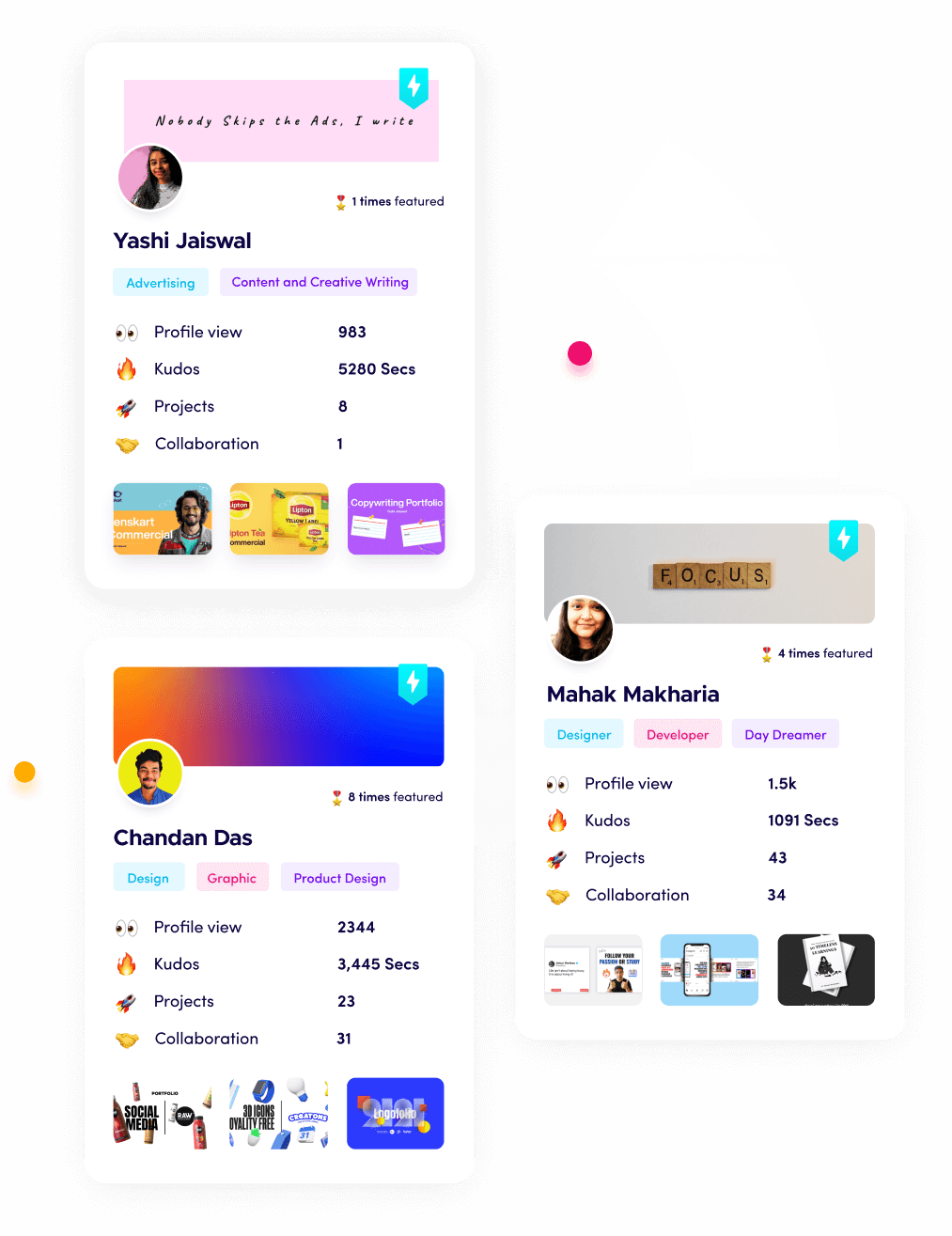
Fueler helps professionals showcase proof of work through projects, assignments, case studies, and achievements.
- Thousands of professionals use Fueler to create their digital portfolio
- Thousands of projects are published on Fueler. Check here
- Startups and Companies hire through proof of work on Fueler
- Used by freelancers, creators, marketers, video editors, writers, designers, and product managers
Our mission is to help the next 100 million professionals build a verified professional identity through proof of work