15 Best Coworking Spaces for Creators and Digital Nomads in Kolkata in 2026

Riten Debnath
17 Sep, 2026
Kolkata has always had a strong creative identity. Writers, filmmakers, photographers, designers, musicians, developers, marketers, and independent founders have been part of the city's culture for years. What has changed is where this work happens. Today, more professionals are choosing coworking spaces, cafés, studios, and flexible offices instead of working from a traditional office every day.
If you are searching for coworking spaces for creators in Kolkata, the right choice depends on what you actually need. A designer may care about natural light and a calm desk. A video creator may need a studio. A freelancer may care more about networking and flexible day passes. A developer may simply want reliable Wi-Fi, comfortable seating, and people around them who are also building things.
I’m Riten, founder of Fueler, a skills-first portfolio platform building the career infrastructure for 100 million creative professionals. Fueler connects talented individuals with companies through assignments, portfolios, and projects, not just resumes or CVs. Think of it as Dribbble/Behance for work samples combined with AngelList for hiring infrastructure.
Which Coworking Spaces Should Creators Consider in Kolkata?
Some of the coworking and flexible workspaces worth exploring in Kolkata in 2026 include Nexus Works, Calcutta AI Lab, GreenCove, IdeaPod, My Cube, Workzone, Kwicdeskz, Cospacio, Wownooks, Awfis, IndiQube, East India Works, CoKarya, Exospace, and Motherland Studio.
This is not a ranking. These spaces serve different kinds of professionals, and the right option depends on your location, work style, budget, need for community, and whether you need creator-specific facilities such as podcast or photography spaces.
1. Start With the Kind of Work You Want to Do
I would not choose a coworking space simply because its interiors look good on Instagram.
Before paying for a membership, ask what your typical working day actually looks like. If you spend eight hours writing, you need quiet and comfortable seating. If you regularly meet clients, meeting rooms and a central location become more important. If you create reels, podcasts, or product content, a workspace with studio infrastructure can save you the trouble of renting another location.
Kolkata's coworking market is spread across areas such as Park Street, Salt Lake, Sector V, New Town, and South Kolkata. Current workspace directories show a large mix of national operators and independent spaces across these areas.
That makes the first decision surprisingly simple: choose the part of Kolkata that you can realistically work from several days a week.
15 Coworking Spaces for Creators and Digital Nomads in Kolkata
1. Nexus Works
Nexus Works is particularly interesting for creators because it combines coworking with an in-house photography and podcast studio. The space offers flexible desks, private cabins, meeting rooms, training facilities, high-speed internet, and studio access. Its studio is designed for photography, Instagram reels, podcasts, and brand videos.
For a creator who wants to work and produce content without moving between multiple locations, this combination can be useful.
Good for: Content creators, marketers, podcasters, freelancers, small teams.
2. Calcutta AI Lab
Calcutta AI Lab takes a different approach. It is positioned around builders, AI projects, and a community of students, founders, engineers, designers, and freelancers.
The workspace at AJC Bose Road includes desks, meeting rooms, dual-monitor workstations, standing desks, GPU workstations, and a podcast corner. It also runs sprints, workshops, and demo-oriented activities.
For developers and product creators, this type of environment can be more useful than a conventional corporate coworking floor.
Good for: Developers, AI builders, product designers, founders.
3. GreenCove
Located in the Park Street area, GreenCove positions itself around a calmer and more environmentally conscious workspace experience. It offers open desks, private cabins, meeting rooms, Wi-Fi, printing, power backup, and community events.
The space can make sense for professionals who want a quieter working environment while still having opportunities to meet other people.
Good for: Writers, designers, consultants, freelancers, remote professionals.
4. IdeaPod Coworking
IdeaPod has a community-oriented coworking model with open desks, private offices, meeting spaces, and an in-house café. It has also been used for startup and networking events in Kolkata.
That makes it interesting for freelancers who do not want coworking to feel like sitting alone in another office.
Good for: Freelancers, founders, writers, consultants, small teams.
5. My Cube
My Cube is another Park Street-area option with a more creative positioning. Available workspace information describes it as suitable for people across different creative and professional fields, including writers, architects, photographers, and technology professionals.
For independent professionals, the combination of central location and flexible workspace can be useful when you want somewhere more structured than a café.
Good for: Writers, designers, photographers, freelancers, developers.
6. Workzone
Workzone offers open, semi-open, and private office formats in Park Street. Its positioning is built around shared work, collaboration, and flexible office infrastructure.
It can work well for creators who occasionally need more privacy but still want access to a shared professional environment.
Good for: Freelancers, agencies, consultants, startups.
7. Kwicdeskz
Kwicdeskz is located around the Camac Street area and combines shared workspace with private cabin options. Available listings highlight Wi-Fi, workspace flexibility, and privacy-oriented setups.
This makes it worth considering if you want coworking without giving up the option of working behind a closed door when a project requires concentration.
Good for: Freelancers, consultants, designers, small teams.
8. Cospacio
Cospacio operates a premium coworking and serviced-office format at Park Street. Its workspace model includes coworking facilities, private offices, and meeting infrastructure.
The central location can be useful for professionals who regularly have client meetings in central Kolkata.
Good for: Consultants, agencies, founders, client-facing professionals.
9. Wownooks
Wownooks in Sector V offers a more traditional coworking ecosystem with hourly workspace, day passes, hot seats, fixed seats, private offices, meeting rooms, a lounge, cafeteria, and conference facilities.
The flexibility is useful for digital nomads or freelancers who do not want to commit to a fixed desk immediately.
Good for: Digital nomads, freelancers, startups, remote employees.
10. Awfis
Awfis has a presence in Kolkata and offers different workspace formats, including its standard coworking model and premium Awfis Gold format. The company describes Kolkata as one of its premium workspace markets.
For creators who want a more standardized coworking experience, a larger operator can be worth considering, especially when infrastructure and predictable facilities matter more than a niche community.
Good for: Remote employees, freelancers, startups, growing teams.
11. IndiQube
IndiQube has coworking and managed-office locations in Salt Lake. Its Kolkata spaces provide facilities such as high-speed internet, pantry access, access-control systems, visitor management, and meeting rooms.
Salt Lake and Sector V are particularly relevant if your work connects with Kolkata's technology and business ecosystem.
Good for: Developers, technology professionals, startups, remote teams.
12. East India Works
East India Works is a Kolkata-born workspace operator with a community-focused model. Its ecosystem includes open desks, private cabins, meeting rooms, Wi-Fi, and community events.
For independent professionals, a locally rooted coworking community can sometimes offer a different networking experience from a large national operator.
Good for: Founders, freelancers, startups, consultants.
13. CoKarya Shared Office Spaces
CoKarya is another Kolkata-native coworking option with multiple locations across the city. Its model focuses on flexible workspace for startups, professionals, and small teams, with locations including AJC Bose Road, Dalhousie, and Kasba.
Having multiple locations can be useful if your work requires you to move around Kolkata rather than operate from one fixed neighbourhood.
Good for: Freelancers, small businesses, founders, remote professionals.
14. Exospace
Exospace operates in Sector V and is positioned around startups and SMEs. Its workspace model includes Wi-Fi, meeting rooms, dedicated desks, hot desks, and private cabins.
For a creator working closely with technology companies or startups, being inside the Sector V ecosystem can create more opportunities for professional conversations beyond your immediate work.
Good for: Developers, startup professionals, product people, marketers.
15. Motherland Studio
Motherland Studio is a more creative-oriented option around Park Street and Chowringhee. It combines workspace with a café and event-oriented environment, making it different from a conventional office-style coworking space.
If your work involves writing, creative strategy, brand building, or networking, a space that feels closer to a creative community can be worth trying.
Good for: Writers, creative strategists, founders, designers, independent creators.
A Simple Way to Match the Space to Your Work
Instead of asking which coworking space is the best, I would ask a different question: what do I need the space to help me accomplish?
Kolkata Has a Useful Split Between Creative and Tech Communities
One thing I like about Kolkata is that you do not have to treat the entire coworking ecosystem as one market.
Park Street and central Kolkata can make more sense for people working with agencies, consultants, media professionals, brands, and clients. Salt Lake and Sector V have a stronger technology and business orientation, while New Town continues to attract newer commercial and startup activity.
This matters because your coworking space can become part of your professional network.
If you are a designer sitting around other designers, marketers, founders, developers, and content professionals every week, conversations can naturally turn into collaborations. That is often more valuable than another free coffee or another attractive lounge.
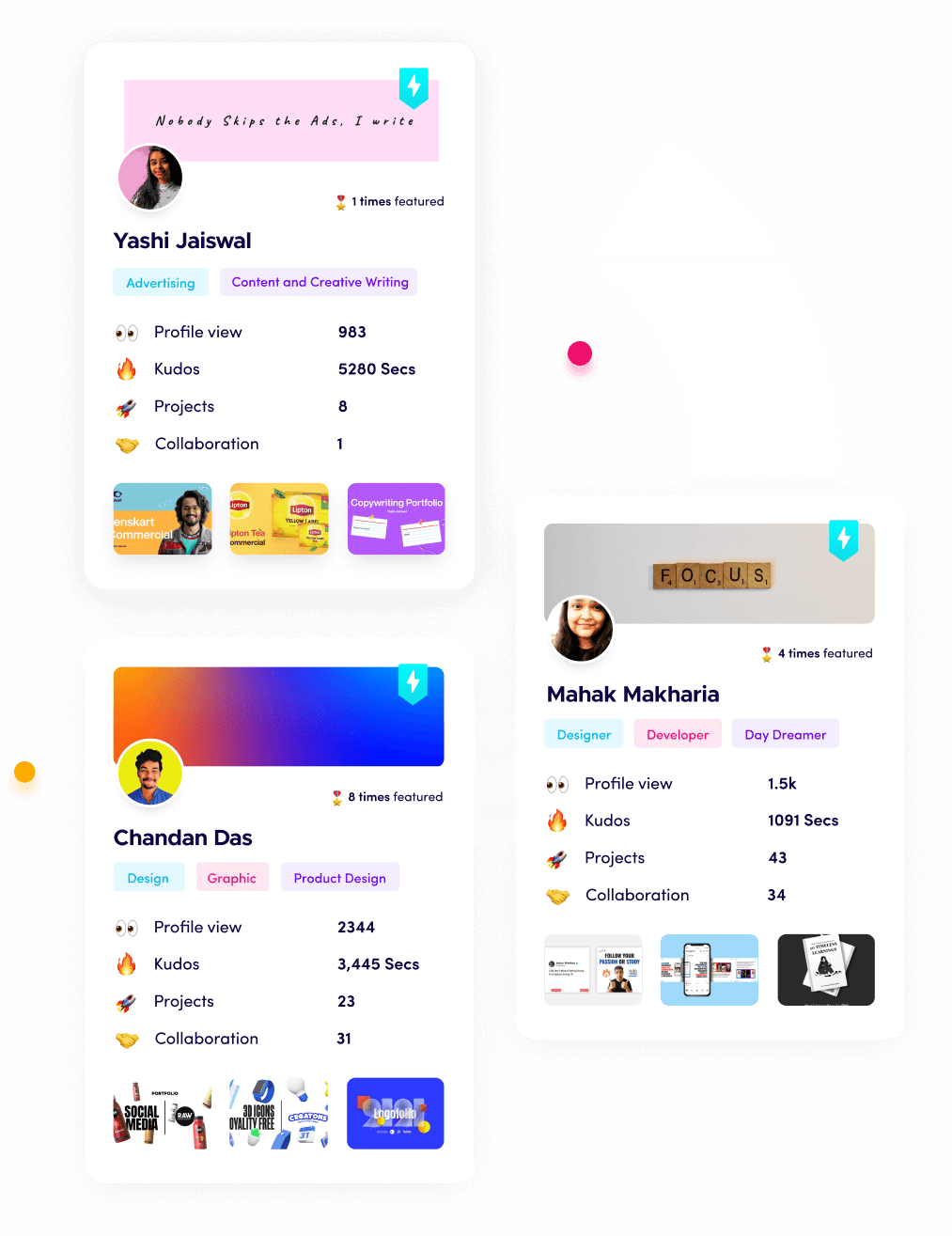
Five Fueler Profiles That Reflect the Creator Mix
A coworking space becomes more valuable when you know how to use it as part of your career system.
Here are five Fueler profiles from different creative and professional categories that show the kind of skills creators can document and present through a portfolio:
Akanksha Hizkiel, Creative Strategist
Creative strategists often work across brand thinking, content, positioning, and communication. A coworking environment can be useful when these projects require conversations with designers, marketers, founders, and content teams.
Karthikeyan, Content Writer
For writers, a portfolio is particularly important because the finished work is the strongest evidence of writing ability. I would recommend showing the actual articles, campaigns, research, or other work rather than only listing writing as a skill.
Rishi, Graphic Designer
Graphic designers can use coworking communities to meet founders and marketing professionals who need brand assets, social content, presentations, and campaign creatives. Your portfolio should make those capabilities visible immediately.
Pratik Mane, Developer
Developers can turn side projects, websites, applications, dashboards, and technical experiments into proof of work. A coworking community can then become a place to find people with problems worth solving.
Yasin Alyani, Video Editor
Video editors should show the transformation created by their work. A strong portfolio can include before-and-after examples, short-form edits, long-form videos, thumbnails, or campaign content.
If you are building your own portfolio, my guide on how to build a career portfolio that actually gets jobs is a good place to start. I would rather see five well-explained projects than twenty random uploads.
Do Not Go to Coworking Events Just to Collect Contacts
Networking works better when there is a reason for the conversation.
If you are a designer, talk to founders about how they currently handle design. If you are a developer, ask startup teams what they are building. If you are a writer, speak with marketing teams about the kind of content they struggle to produce.
The goal is not to leave with fifty LinkedIn connections.
The goal is to leave with one useful conversation that could become a collaboration, referral, project, or simply a better understanding of the market.
Kolkata already has founder and startup communities that organize meetups and events, including gatherings hosted at coworking spaces such as IdeaPod.
That makes coworking more than a desk rental if you use the community intentionally.
Creators Should Also Look Beyond Traditional Coworking
If your main objective is content production, a conventional coworking desk may not actually be what you need.
Kolkata has dedicated creator infrastructure as well. For example, 11 Minds Studio offers kitchen, fashion, and podcast production setups, while New Town Podcast Studio provides multi-camera podcast production and recording setups.
There are also dedicated podcast and recording studios in the city for creators who need professional audio, lighting, cameras, and technical assistance.
So I would separate the decision into two questions:
Where do I want to work?
and
Where do I want to produce?
They do not necessarily need to be the same place.
Test the Space Before Buying a Long Membership
This is one of the simplest things you can do and one of the things people often skip.
Spend a full working day there before committing. Do not visit for fifteen minutes when the space is empty.
Test it during your actual working hours.
Check whether the internet remains stable when the space is busy. Sit at the desk for two or three hours. Take a client call. Check the noise level. See how easy it is to get food. Ask how meeting rooms are booked. Find out what happens when you need a visitor to enter.
If you create videos, ask whether recording is allowed. If you take frequent calls, check whether phone booths are actually available when you need them.
A beautiful coworking space that makes your work harder is still the wrong workspace.
Key Takeaways
- Kolkata has several different coworking ecosystems, with Park Street, central Kolkata, Salt Lake, Sector V, and New Town offering different working environments.
- Creators should choose based on their workflow, not just interiors, reviews, or brand name.
- Nexus Works and Calcutta AI Lab stand out for creator-specific infrastructure, including studio or podcast-oriented facilities.
- Park Street has a dense selection of flexible workspaces, making it useful for professionals who want central access and client-facing infrastructure.
- Salt Lake and Sector V are useful areas for technology and startup professionals, with multiple coworking and managed-office options.
- A portfolio can make coworking relationships more valuable, because people you meet can immediately understand what you actually do.
- Try before committing to a long membership. Your commute, noise level, community, and actual work routine matter more than a polished tour.
Final Thoughts
Kolkata does not need to copy Bengaluru or Mumbai to become a useful city for independent professionals.
It already has something different: a strong creative culture combined with a growing technology, startup, and flexible-work ecosystem.
For me, the interesting part is what happens when these groups start sharing the same spaces. A designer can meet a founder. A developer can meet a content strategist. A video editor can meet a brand owner. A writer can meet a startup that needs its story told.
That is when a coworking space becomes more than a place to sit.
Your work should be ready when those conversations happen. That is why I keep coming back to the importance of proof of work. A good workspace can put you in the room, but your work is what gives people a reason to remember you.
If you are starting from scratch, you can also use my guide on how to create a digital portfolio for jobs in 30 minutes. And if you are freelancing, how to build a freelance portfolio with no experience explains how to turn personal projects and practice work into something you can actually show clients.
Frequently Asked Questions
1. What are the best coworking spaces for creators in Kolkata?
There is no single coworking space that works for every creator. Nexus Works is worth exploring if you need coworking with photography and podcast infrastructure, while Calcutta AI Lab is designed more around builders, engineers, designers, and AI projects. GreenCove, IdeaPod, My Cube, and Motherland Studio offer different community and creative-work environments.
2. Which area in Kolkata is best for coworking?
It depends on your work and commute. Park Street and central Kolkata offer many flexible workspaces and are useful for client-facing professionals. Salt Lake and Sector V are particularly relevant for technology, startup, and business professionals, while New Town is another growing commercial area.
3. Are coworking spaces in Kolkata suitable for freelancers?
Yes. Freelancers can use coworking spaces for reliable internet, professional meeting facilities, flexible desks, networking, and a more structured work routine. Spaces such as Wownooks also offer flexible workspace formats, including hourly, daily, hot-seat, and fixed-seat options.
4. Where can content creators record podcasts in Kolkata?
Some coworking and creator-oriented spaces now provide podcast infrastructure. Nexus Works has an in-house photography and podcast studio, while dedicated facilities such as 11 Minds Studio and New Town Podcast Studio offer more specialized production setups.
5. How can a coworking space help freelancers get more clients?
A coworking space can increase the number of professional interactions you have with founders, marketers, designers, developers, consultants, and other businesses. However, networking alone is not enough. Keep your portfolio ready and show specific examples of what you have done. A proof-of-work portfolio on Fueler gives people something concrete to evaluate after meeting you.
Why 100,000+ professionals use Fueler
Fueler helps professionals showcase proof of work through projects, assignments, case studies, and achievements.
- Thousands of professionals use Fueler to create their digital portfolio
- Thousands of projects are published on Fueler. Check here
- Startups and Companies hire through proof of work on Fueler
- Used by freelancers, creators, marketers, video editors, writers, designers, and product managers
Our mission is to help the next 100 million professionals build a verified professional identity through proof of work

What should you do next?
You've read the article. Now turn your skills into proof of work and unlock more opportunities.
Build your proof of work portfolio
Create a clean portfolio with projects, assignments, resumes, and AI stack details that companies actually want to see.
Create your Fueler portfolio →Apply through assignments, not resumes
Stand out by solving real tasks from companies hiring on Fueler.
Explore assignments →Get discovered by companies
Make your work public and let recruiters discover your skills through actual projects instead of keywords.
Get discovered →