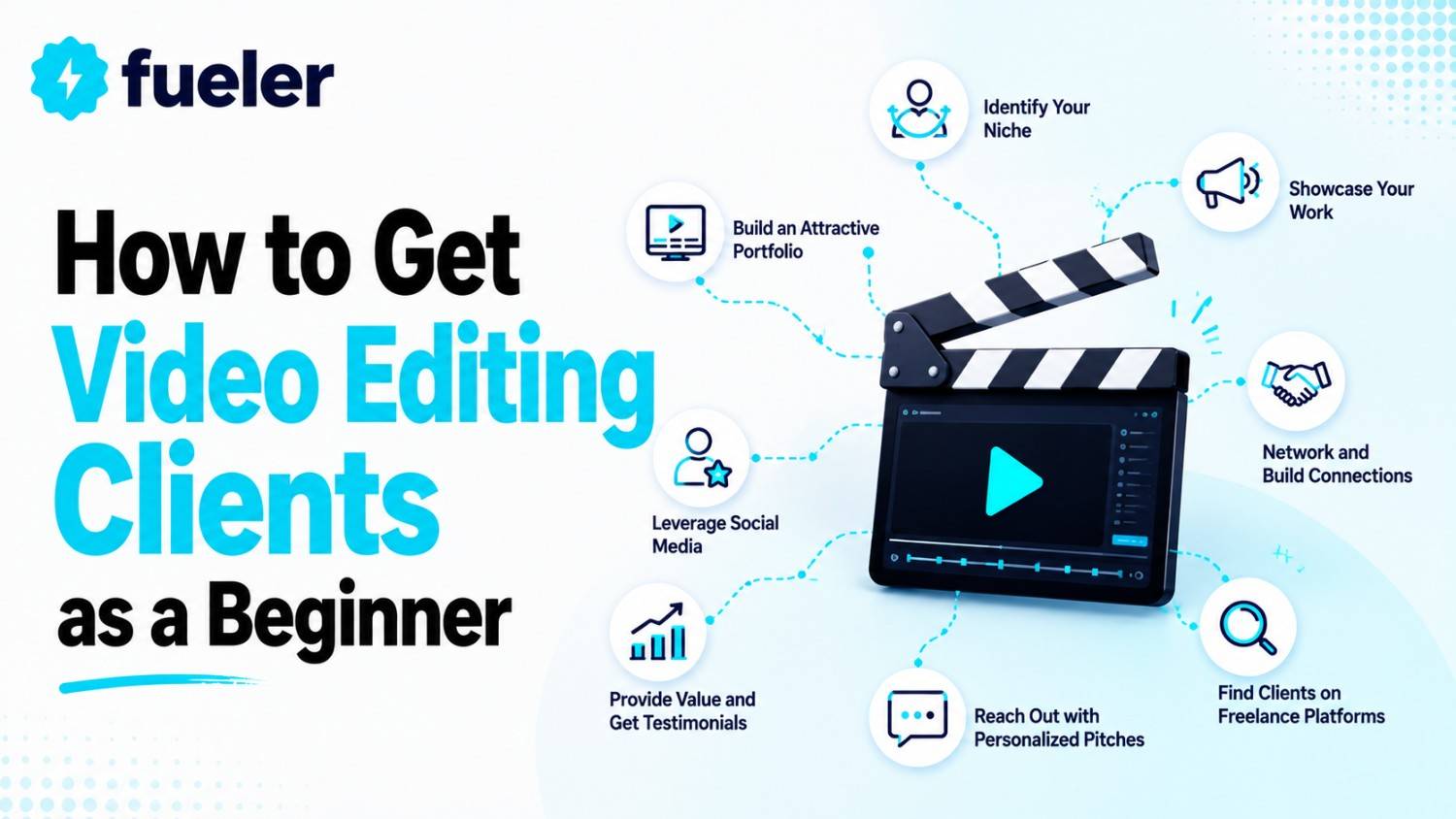
How to Get Video Editing Clients as a Beginner?

Riten Debnath
09 Aug, 2026
Last updated: August 2026
Why does getting your first paying video editing client feel like shouting into a void? Most beginner editors fall into the same trap: they build a generic resume, apply to hundreds of saturated job board postings, and get zero responses.
I’m Riten, founder of Fueler, a skills-first portfolio platform building the career infrastructure for 100 million creative professionals. Fueler connects talented individuals with companies through assignments, portfolios, and projects, not just resumes or CVs. Think of it as Dribbble/Behance for work samples combined with AngelList for hiring infrastructure.
In this guide, you will learn a structured, repeatable system to attract, pitch, and land high-paying video editing clients from scratch. We will cover actionable outreach frameworks, positioning tactics, and real-world execution strategies that set you apart immediately.
Why Traditional Job Applications Fail Beginner Video Editors
Applying through traditional job boards usually puts beginner video editors at an immediate disadvantage. When a client posts a job listing, they receive hundreds of identical resumes within hours, making it almost impossible for a new editor to stand out based on text credentials alone.
Clients hiring video editors do not care about where you went to school or what software certificates you hold. They care about one thing: can you make content that keeps viewers watching? When you rely solely on traditional job applications, you force clients to guess your capabilities instead of showing them your actual technical output.
- High Competition Density: Job boards pool thousands of applicants into a single inbox, reducing your chances of being noticed to a fraction of a percent.
- Resume Misalignment: Resumes outline past job titles, but video editing is a visual trade that requires immediate proof of pacing, style, and narrative control.
- Low Client Intent: Open job postings often attract budget-conscious buyers who prioritize the absolute lowest hourly rate over high-quality content production.
- Lack of Direct Access: Applications go through automated filters or HR managers who lack the technical knowledge to evaluate good editing craft.
- Passive Positioning: Waiting for clients to post job listings puts you in a reactive state instead of proactively pitching creators who actively need help.
Why It Matters: Understanding why traditional job applications fail helps you shift from passive applying to proactive pitching. By bypassing crowded job boards, you position yourself as a problem solver directly in front of decision-makers, significantly increasing your chances of landing paid video editing projects.
Audit Content Channels to Find Creator Pain Points
Finding potential clients starts with analyzing creators and businesses who are already publishing video content regularly. The goal is not to find perfect channels, but to locate creators who have great ideas or strong distribution but lack polished post-production execution.
When you audit a creator’s content channel, look for specific technical flaws like poor audio balancing, dull visual hooks, weak color grading, or slow pacing. Identifying these exact issues gives you a direct, relevant reason to reach out with a clear solution rather than a generic sales pitch.
- Analyze Upload Consistency: Target channels publishing at least two or three times a week, as high upload volume indicates an active need for production support.
- Evaluate Visual Hooks: Watch the first ten seconds of recent videos to check if the opener effectively grabs viewer attention or lags setup time.
- Check Audio Quality: Listen for background noise, uneven vocal levels, or missing sound effects that lower the overall production value of the video.
- Assess On-Screen Graphics: Look for static text, unengaging captions, or lack of visual assets that make long-form content feel monotonous and slow.
- Identify Repurposing Gaps: Check if long-form YouTube videos are being converted into short-form clips for platforms like Instagram Reels, TikTok, or YouTube Shorts.
Why It Matters: Auditing content channels allows you to ground your outreach in objective observations rather than generic compliments. When you point out specific visual or technical gaps, creators immediately recognize that you actually watched their content and understand how to improve their channel metrics.
The Cold Redesign Method for Unsolicited Proof of Work
The most effective way to grab a creator's attention is by showing them what their content looks like after your edits. Instead of asking for a job, take a 30-to-60-second clip from their existing video, re-edit it completely, and send it to them with a brief explanation of your creative choices.
This approach strips away all friction for the client because they do not have to guess your skill level or wonder if your style fits their brand. You present them with an immediate, tangible improvement to their own asset, making it easy for them to say yes to a working relationship.
- Select High-Potential Clips: Pick a segment from a recent video that has strong verbal points but lacks engaging visuals, dynamic cuts, or clear pacing.
- Enhance Visual Engagement: Add clean motion graphics, dynamic text overlays, sound design, and subtle B-roll to elevate the narrative flow of the chosen clip.
- Optimize for Retention: Tighten dead air, remove pauses, and speed up the visual cadence to demonstrate how editing directly improves audience retention.
- Keep Source Files Organized: Save your project templates and assets cleanly so you can quickly turn around revisions or scale this workflow for multiple pitches.
- Publish Your Case Study: Upload the before-and-after breakdown to Fueler so you have a permanent, shareable link that acts as instant proof of work for future prospects.
Why It Matters: The cold redesign method shifts the dynamic from asking for a favor to offering immediate value. Demonstrating your skills directly on a client's own content builds instant authority, proves your technical execution, and separates you from editors who only send static portfolio links.
Repurpose Long-Form Videos Into Short-Form Content Clips
Creators and businesses producing long-form videos often struggle to keep up with short-form content demands across platforms like TikTok, Instagram Reels, and YouTube Shorts. Offering a specialized short-form editing service allows you to solve a major workflow bottleneck for busy content creators.
You can take an existing 20-minute YouTube video or podcast episode, extract the three most compelling insights, and edit them into vertical clips with modern captions and hooks. This strategy gives creators extra content without requiring them to spend additional time in front of the camera.
- Identify Hook Moments: Scan long-form videos for strong statements, surprising insights, or emotional stories that work well as standalone vertical clips.
- Format for Vertical Viewing: Crop and frame the original footage to fit 9:16 aspect ratios while keeping the main speaker properly centered throughout.
- Add Dynamic Captions: Design clear, animated subtitles that match the creator's brand identity and make the video easy to watch without audio.
- Incorporate Sound Design: Layer subtle background tracks and audio transitions to maintain high energy and viewer focus across short content loops.
- Pitch Package Options: Offer bundle packages, such as turning one long-form video into five ready-to-post short-form reels every single week.
Why It Matters: Repurposing content offers a low-friction entry point for clients who may not be ready to hire a full-time video editor. Providing a predictable, high-volume short-form package helps you build recurring monthly retainer revenue while saving creators dozens of hours every month.
Leverage Free Value Upfront via Strategic Pitch Micro-Audits
When reaching out to prospective clients, sending a long text pitch usually leads to low response rates. A far more effective approach is delivering a short, 2-minute video audit analyzing their recent video performance and presenting two or three actionable edits that would immediately lift viewer retention.
Record your screen while pointing out specific timeline edits, visual transitions, or pacing adjustments they can make. Keep the tone helpful, constructive, and concise, making it clear that you are highlighting real opportunities to help their channel grow rather than simply criticizing their work.
- Keep Audits Concise: Limit your video audit to under two minutes to respect the creator's time while delivering rapid, high-impact insights.
- Focus on Retention Metrics: Explain how specific visual adjustments, like trimming intro fluff or adding pattern interrupts, directly increase average view duration.
- Offer Specific Solutions: Avoid vague advice like "make it faster" and instead offer exact solutions like "add a zoom-cut here to emphasize this key takeaway."
- Provide an Easy Next Step: End the pitch video with a low-pressure invitation to chat or receive a fully edited draft of the clip you audited.
- Host Pitch Assets Cleanly: Organize your video pitches alongside your published proof of work on Fueler so potential clients can review your full work history in one click.
Why It Matters: Strategic micro-audits demonstrate founder-level thinking and deep domain knowledge before any money changes hands. Showing clients exactly how technical editing choices tie into audience retention builds trust fast, leading to higher response rates and better client retention.
Build Niche-Specific Micro-Portfolios Instead of Generic Reels
A common mistake made by beginner editors is creating a single, generic showreel that mixes gaming footage, corporate interviews, travel vlogs, and wedding clips. Clients hire specialists who understand their specific industry aesthetics, pacing, and target audience needs, not generalists who do a little of everything.
Instead of a generic reel, build micro-portfolios tailored to specific niches like SaaS product demos, finance YouTube channels, real estate walk-throughs, or fitness vlogs. When a prospect sees a portfolio made exclusively for their industry, they immediately view you as an expert who understands their market.
- Select a High-Demand Niche: Choose one or two industries where businesses regularly invest in video marketing, such as B2B tech, fitness, or digital education.
- Produce Spec Work: If you lack real client projects in that niche, create three high-quality sample videos using public assets or open-source footage.
- Focus on Industry Metrics: Tailor your visual style to match the pacing and tone expected by viewers in that specific vertical market.
- Organize Projects by Category: Group your work clearly so prospects can view niche-specific video samples without sifting through unrelated content.
- Share Proof of Work Links: Send prospective clients a curated link to your Fueler profile showcasing your niche-specific assignments, breakdowns, and project results.
Why It Matters: Niche-specific micro-portfolios eliminate doubt for potential clients by proving you already know how to edit for their exact audience. Tailoring your work to a clear industry sector allows you to charge higher rates and win projects over generalist editors with larger generic portfolios.
Systematize Cold Outreach Across Professional Networks
Cold outreach works when treated as a consistent, structured process rather than a sporadic effort. Building a simple daily pipeline where you identify, audit, and pitch five targeted prospects every day ensures a steady stream of potential editing projects.
Choose platforms where decision-makers actively communicate, such as LinkedIn for corporate and B2B clients, or Twitter/X and Instagram for creators and agency founders. Keep your outreach messages short, direct, and centered around how your editing helps them save time or improve video metrics.
- Set Daily Pitch Targets: Commit to reaching out to five carefully vetted prospects every business day to build a healthy pipeline over time.
- Personalize First Sentences: Reference a specific detail from the client's latest video to show that your message is custom-crafted, not an automated template.
- Highlight Business Outcomes: Frame your editing services around time saved, higher retention, or increased content output rather than just software skills.
- Include Instant Proof: Provide a single, clean link to your work samples so the recipient can verify your skill level in seconds.
- Track Pitch Responses: Maintain a simple spreadsheet recording outreach dates, response rates, and follow-up schedules to optimize your pitch strategy continuously.
Why It Matters: Systematizing your outreach removes emotional burnout and creates predictable client acquisition for your freelance business. Consistently delivering personalized, high-value pitches builds momentum, filling your pipeline with quality prospects over time.
Partner with Digital Agencies and Content Strategists
Direct outreach to creators is powerful, but partnering with established agencies and content strategists can unlock consistent white-label work without the need for constant pitching. Agencies often win client accounts that require video production but lack internal editing capacity to fulfill the workload.
Reach out to marketing agencies, podcast production companies, and social media managers with a clear proposal: offer your editing services as an on-demand white-label partner. This setup allows the agency to expand its service offerings while providing you with steady, recurring video editing projects.
- Target Mid-Sized Agencies: Connect with agencies managing social media accounts or content strategy for multiple corporate clients or busy executives.
- Offer Flexible Capacity: Position yourself as a reliable overflow editor who can step in during launch campaigns or busy content production cycles.
- Standardize File Handoffs: Set up organized cloud folders and clear naming conventions to make collaboration effortless for busy agency managers.
- Deliver Consistent Quality: Adhere strictly to project deadlines and brand guidelines to make yourself an indispensable asset to the agency's team.
- Document Agency Projects: Record your role and technical contributions for agency projects on Fueler to showcase your experience managing complex team workflows.
Why It Matters: Agency partnerships provide stable revenue and predictable project volume, allowing you to focus on editing rather than constant lead generation. Becoming a trusted white-label partner secures recurring monthly contracts that help stabilize your freelance business income.
How Does This Connect to Building a Strong Career or Portfolio?
Landing long-term video editing clients comes down to visibility and proof. Clients rarely care about resumes or formal degrees; they hire editors who demonstrate execution through clear, accessible proof of work. Documenting your creative process, video breakdowns, and technical achievements shows prospective clients exactly what you bring to the table. When you build a public repository of projects on Fueler, you create a dynamic portfolio that highlights your real-world outcomes, making client acquisition an inbound process driven by credibility rather than cold outreach.
Final Thoughts
Building a sustainable video editing career requires shifting your perspective from finding a job to offering valuable solutions. Focus on mastering niche-specific editing styles, delivering value upfront through pitch audits, and showcasing your work through clear proof of performance. Consistency in outreach, paired with public proof of your skills, will set you apart from low-effort applicants. Focus on solving real content bottlenecks for creators and businesses, and steady client acquisition will follow naturally.
Frequently Asked Questions
How do beginner video editors get their first clients without experience?
Beginner editors land clients by creating unsolicited proof of work, re-editing existing videos for creators, and delivering short micro-audits that demonstrate value upfront instead of relying on traditional resumes or job board applications.
What is the best platform to showcase a video editing portfolio?
Platform options vary, but using a dedicated portfolio platform like Fueler allows you to organize video projects, embed high-quality clips, and detail your specific creative contributions, giving prospective clients complete visibility into your work.
How much should a beginner video editor charge per video?
Beginner editors usually start with project-based pricing or flat video rates, ranging from $50 to $150 per short-form clip or $150 to $400 for long-form content, raising rates as proof of work increases.
Should video editors specialize in a specific niche early on?
Yes, specializing in a specific niche like SaaS demos, fitness channels, or podcast highlights helps you build targeted micro-portfolios, making your outreach far more compelling to decision-makers in those specific industries.
How long does it take to land your first video editing client?
With consistent daily outreach, personalized micro-audits, and clear proof of work, most beginner video editors can land their first paying client within three to six weeks of active pitching.
Why 100,000+ professionals use Fueler
Fueler helps professionals showcase proof of work through projects, assignments, case studies, and achievements.
- Thousands of professionals use Fueler to create their digital portfolio
- Thousands of projects are published on Fueler. Check here
- Startups and Companies hire through proof of work on Fueler
- Used by freelancers, creators, marketers, video editors, writers, designers, and product managers
Our mission is to help the next 100 million professionals build a verified professional identity through proof of work

What should you do next?
You've read the article. Now turn your skills into proof of work and unlock more opportunities.
Build your proof of work portfolio
Create a clean portfolio with projects, assignments, resumes, and AI stack details that companies actually want to see.
Create your Fueler portfolio →Apply through assignments, not resumes
Stand out by solving real tasks from companies hiring on Fueler.
Explore assignments →Get discovered by companies
Make your work public and let recruiters discover your skills through actual projects instead of keywords.
Get discovered →