Last updated: November 2026
A marketing professional who knows how to use AI for customer research, a content writer who can verify AI-generated information, and a designer who understands AI-assisted creative workflows may have something increasingly valuable in common: they can apply artificial intelligence to their existing profession without becoming technology specialists.
This is exactly the shift highlighted in LinkedIn's latest labour-market research. Job postings requiring AI literacy have increased by approximately 65% over the last 12 months. LinkedIn also reports that members listing AI literacy skills are 78% more likely to get hired and 11% more likely to receive a promotion than members who do not list these skills.
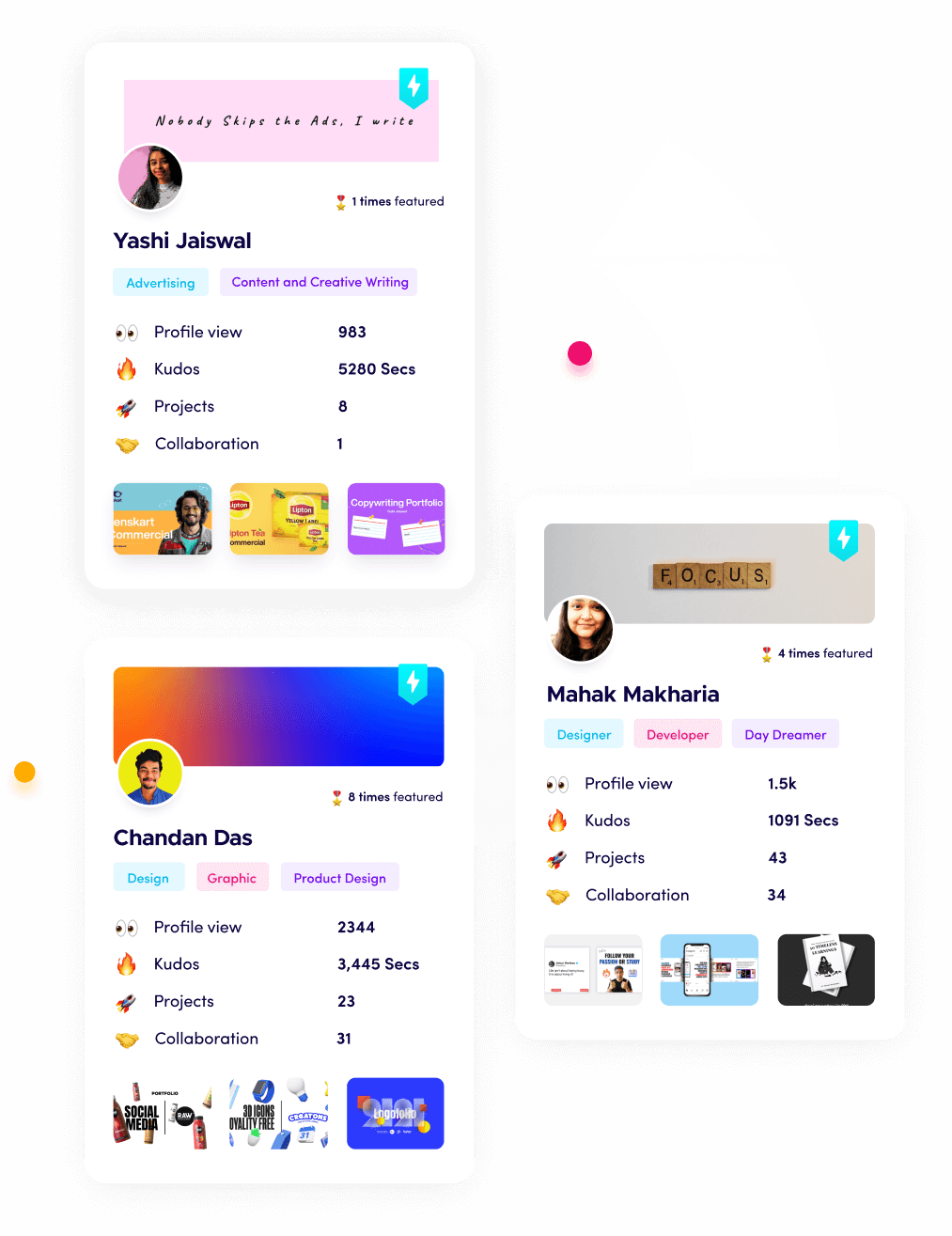
I'm Riten, founder of Fueler, a skills-first portfolio platform building the career infrastructure for 100 million creative professionals. Fueler connects talented individuals with companies through assignments, portfolios, and projects, not just resumes or CVs. Think of it as Dribbble/Behance for work samples combined with AngelList for hiring infrastructure.
What makes this development particularly interesting is that employers are increasingly looking for AI capabilities across professions that have traditionally not required technical expertise. Marketing, writing, design, administration and project management are all part of this conversation. LinkedIn's October 27, 2026 announcement also highlights the growth of entry-level AI engineering opportunities in India and the United States, alongside the increasing importance of AI skills in entrepreneurship.
The question is no longer limited to how many AI engineers companies need. It is also about how existing professionals can use AI to become more capable in their respective fields.
What Did LinkedIn's AI Literacy Research Reveal?
LinkedIn published its latest labour-market findings on October 27, 2026, examining where employment opportunities are emerging as workplaces change. The research covers AI-related hiring, professional skills, entrepreneurship and the unequal distribution of opportunities across different markets.
One of its central findings is that the share of job postings requiring AI literacy has increased approximately 65% over the last 12 months. LinkedIn also reports that demand is now more than ten times its 2023 level. This indicates that AI literacy is becoming a much more visible requirement in job descriptions.
The research includes several other findings that help explain this development.
LinkedIn research finding | Reported figure |
Increase in job postings requiring AI literacy | Approximately 65% |
Higher likelihood of getting hired for members listing AI literacy | 78% |
Higher likelihood of receiving a promotion | 11% |
Growth in entry-level AI Engineer hiring in India | 55% YoY |
Growth in entry-level AI Engineer hiring in the US | 68% YoY |
LinkedIn members listing an AI skill | 1.2% |
AI Engineer among fastest-growing occupations | 7 major economies |
Founder among fastest-growing roles | 5 major economies |
One particularly interesting finding is that only 1.2% of LinkedIn members currently list an AI skill, despite the growing demand for AI literacy in job postings. This highlights a difference between what employers are increasingly asking for and what professionals explicitly communicate about their capabilities.
However, the hiring and promotion statistics need to be interpreted carefully. The 78% and 11% figures describe differences observed among LinkedIn members who list AI literacy skills and those who do not. They do not establish that adding an AI skill to a profile directly causes someone to get hired or promoted.
Why Is AI Literacy Becoming Important Beyond Technical Careers?
For several years, artificial intelligence was primarily associated with software development, machine learning, data science and technical research. Companies needed specialised professionals to develop models, maintain AI infrastructure and build products using machine learning technologies.
That is still an important part of the AI industry, but businesses are also finding applications for AI within their existing departments. Marketing teams can use it for research and campaign planning, writers can use it to organise information, designers can experiment with AI-assisted creative tools, and project managers can apply it to documentation and administrative workflows.
These applications do not necessarily require employees to understand how an AI model is trained. They require an understanding of the technology's practical capabilities, limitations and appropriate uses.
LinkedIn specifically identifies marketing, design, writing, administration and project management as areas where AI literacy is becoming relevant. This matters because professionals in these fields can develop AI capabilities without necessarily changing their career direction.
For example, someone pursuing AI marketing can learn how artificial intelligence supports audience research, content planning and campaign execution while continuing to build traditional marketing knowledge. The same principle applies to writers, designers and other professionals who want to incorporate AI into their existing workflows.
How AI Literacy Applies to Marketing Professionals
Marketing professionals work across several activities, including audience research, competitor analysis, campaign planning, advertising, content distribution and performance measurement. AI tools can assist with many of these responsibilities by organising information, generating campaign variations and helping marketers examine large amounts of data.
However, using AI does not remove the need to understand customers or business objectives. A tool might generate several advertising concepts, but the marketer still needs to decide which message suits the target audience and brand positioning. Professionals who understand both marketing fundamentals and AI applications can bring a more complete skill set to their work.
Why Content Writers Need to Understand AI
Content writers can use AI for research assistance, outlining, editing, brainstorming and organising information. However, producing accurate and useful content requires considerably more than generating paragraphs. Writers must understand the subject, verify important claims, identify reliable sources and communicate information in a way that readers can understand.
This is particularly relevant as companies produce more digital content and look for professionals who can maintain quality while working with newer tools. Understanding AI content creation can help writers identify where artificial intelligence supports their work and where human research, judgment and editorial decisions remain necessary.
How AI Is Changing Design and Creative Work
Graphic designers, UX designers and other creative professionals can use AI-assisted tools to explore visual concepts, develop references and experiment with different creative directions. These tools can support parts of the design process, but they do not automatically produce work that meets a client's requirements.
A professional designer still needs to understand typography, composition, usability, visual communication and brand consistency. The ability to use AI is valuable when it supports these existing capabilities rather than replacing the thinking required to complete a design project.
AI Applications in Project Management and Administration
Project managers regularly handle documentation, meeting notes, reporting, task allocation and communication between teams. AI can assist with summarising discussions, organising project information and preparing routine updates. Administrative professionals can also use AI to support repetitive information-processing activities.
The important capability is knowing which tasks can be supported by AI and which require human supervision. Professionals must still check outputs, protect sensitive information and take responsibility for important decisions.
AI Literacy vs AI Engineering: What Is the Difference?
One common misunderstanding is that learning artificial intelligence means learning programming or becoming a machine learning engineer. That is not necessarily true because AI literacy and AI engineering involve different types of knowledge and professional responsibilities.
AI literacy focuses on understanding and applying AI tools to practical situations. AI engineering involves developing, testing and maintaining the systems that power AI applications. Both are valuable, but they serve different purposes.
Parameter | AI Literacy | AI Engineering |
Main focus | Understanding and applying AI | Building AI systems |
Programming requirement | Not necessarily required | Usually required |
Typical activities | Research, writing, analysis and workflow improvement | Model development and AI application engineering |
Relevant professions | Marketers, writers, designers and managers | AI engineers and machine learning specialists |
Primary objective | Use AI effectively in existing work | Develop and maintain AI technology |
Consider a content writer who uses an AI assistant to organise research, checks the information against original sources and produces a well-structured article. That person is demonstrating AI literacy without necessarily having any machine learning knowledge.
An AI engineer, on the other hand, might work on the development and technical implementation of the model powering the assistant. The distinction matters because students and professionals should choose learning paths that match their actual career goals rather than assuming that every AI-related opportunity requires advanced programming.
Entry-Level AI Engineer Hiring Is Growing in India and the US
Although LinkedIn's findings highlight the increasing importance of AI skills across non-technical professions, the research also reports considerable growth in specialised AI engineering opportunities.
Between July and September 2026, AI Engineer ranked among the ten fastest-growing occupations across seven major economies: Canada, Germany, India, France, Brazil, the United Kingdom and the United States. LinkedIn also reported that entry-level AI Engineer hiring grew 55% year over year in India and 68% in the United States.
The research estimates that AI has helped create approximately 2 million new jobs. These findings indicate that the technology is influencing employment through both the creation of specialised occupations and the introduction of new skill requirements within existing professions.
For Indian students, the distinction is important. Someone interested in software development or machine learning may choose to pursue specialised AI engineering skills, while someone studying business, marketing or communications may focus on AI applications relevant to their industry. Both approaches can be useful, but they require different learning priorities.
Are AI Skills Actually Improving Hiring and Promotion Opportunities?
The 78% higher likelihood of getting hired and 11% higher likelihood of receiving a promotion are among the most attention-grabbing findings in LinkedIn's research. They suggest that professionals who identify AI literacy as part of their skill set are experiencing better hiring and promotion outcomes than those who do not.
However, these statistics should not be interpreted as guaranteed benefits. LinkedIn's announcement reports an association between listing AI literacy and these employment outcomes; it does not establish that AI literacy alone caused the differences. Other factors, including professional experience, education, job responsibilities and existing qualifications, may also influence employment outcomes.
Still, the findings raise an important question about how professionals communicate their abilities to employers. A candidate who understands how to use AI for research, reporting or campaign planning may be able to demonstrate capabilities that are relevant to changing workplace requirements. But simply mentioning ChatGPT or another AI tool on a resume does not establish that the candidate knows how to use it effectively.
This is where practical experience becomes important. A candidate who has completed a project, explained the tools used and demonstrated the decisions behind the final result provides employers with more information than someone who only lists software names.
Why Knowing AI Tools Is Not Enough to Get Hired
Imagine two candidates applying for a content marketing position. The first candidate lists ChatGPT, Gemini and several other AI tools under their technical skills. The second candidate also knows these tools but presents a completed content marketing project, explains how AI supported research and planning, and shows how the final content was reviewed for accuracy and relevance.
The second candidate provides more context about their actual capabilities. The employer can evaluate not only which tools they know but also how they approach a task and what they can deliver.
This is why writing portfolios are relevant to professionals working in content, marketing and research. A portfolio can include published articles, campaign examples, research projects and other work samples that demonstrate how someone applies their knowledge.
The same principle applies to designers, developers, analysts and freelancers. Employers need to understand what candidates can actually accomplish, particularly when many people have access to similar AI tools.
At Fueler, we believe that practical assignments, portfolios and completed projects help companies evaluate professional capabilities beyond what a resume communicates. The ability to explain how AI was used, which decisions were made independently and what the final work achieved is becoming an important part of demonstrating professional competence.
How Can Students and Professionals Develop AI Literacy?
The increasing demand for AI literacy raises a practical question: what should someone learn first? There is no single learning path for every profession, but students and working professionals can begin by understanding how AI applies to their existing responsibilities.
The first step is to identify relevant applications within your industry. A marketing student could learn AI-assisted audience research and campaign planning, while a content writer could explore research organisation and editing. A designer could experiment with AI-supported concept development, and a project manager could understand how AI assists with documentation and routine workflows.
The second step is learning to evaluate AI-generated information. AI tools can produce incorrect answers, outdated information and unsupported claims. Professionals must understand how to verify important details and recognise when human judgment is necessary. This becomes especially important when working with sensitive information or making decisions that could affect customers and businesses.
The third step is to apply these capabilities to practical work. Instead of only watching tutorials, create a project that solves a specific problem. A student could develop a marketing campaign, produce a research-backed article or create a design concept using relevant AI tools. Documenting the process helps demonstrate that the person understands both the technology and the professional task.
Professionals can also study AI workflow automation to understand how repetitive activities can be organised and supported through intelligent systems. The objective is not to automate everything but to identify where technology can make a genuine difference to the quality or efficiency of work.
Finally, continue developing the underlying professional skills. A marketer still needs to understand customers, a writer needs research and communication skills, and a designer needs creative judgment. AI literacy becomes useful when it complements these foundations rather than replacing them.
LinkedIn Also Identifies Founder as a Fast-Growing Role
Another interesting finding in LinkedIn's October 2026 research concerns entrepreneurship. Between July and September 2026, Founder ranked among the ten fastest-growing roles in India, the United States, the United Kingdom, Germany and France.
LinkedIn also reports that founders are 12 times more likely than the average LinkedIn member to have an AI skill. Additionally, four in ten professionals surveyed said AI had made them more likely to start a business.
These findings suggest that AI is becoming relevant to people building companies as well as those seeking employment. Founders can use AI tools across research, content development, customer communication and business operations, although the specific applications depend on the nature of the business.
The research also reports that founders who launched startups in 2024 employed 26% fewer people after their first year than founders who launched startups in 2021. However, LinkedIn does not establish that AI caused this difference. The two findings should not be treated as proof that AI is directly responsible for smaller startup teams.
For aspiring entrepreneurs, the more useful takeaway is that understanding AI applications can complement traditional business capabilities such as product development, customer research, sales and financial planning.
Who Is Getting Access to AI Career Opportunities?
The growth of AI-related opportunities does not mean that everyone has equal access to them. LinkedIn's research highlights differences in educational qualifications, gender representation and the geographical distribution of AI talent.
More than 90% of AI roles went to workers with at least a bachelor's degree in 2025, while women accounted for approximately one-quarter of new AI hires. LinkedIn also found that, as of September 2026, only five countries or territories ranked among the top ten for both AI-builder availability and employer demand for AI talent.
These findings raise important questions about access to emerging career opportunities. Education, practical experience and the availability of relevant training can influence who gets considered for AI-related roles. The gender representation figure also indicates that the growth of the AI industry has not translated into equal hiring opportunities.
For students and early-career professionals, learning AI tools is one part of career development. Building relevant experience, developing professional skills and gaining access to employment opportunities matter as well. It would be misleading to suggest that learning a few AI tools can eliminate these broader barriers.
How Could AI Change the Way Employers Evaluate Candidates?
As AI literacy becomes more common in job descriptions, employers also need ways to understand whether candidates can apply these skills effectively. A resume may mention AI tools, automation or generative AI experience, but those terms alone do not explain the quality of someone's work.
Practical assignments can provide more useful evidence. A marketing candidate could be asked to develop a campaign using AI-assisted research, while a content writer could be evaluated on research quality, accuracy and editorial judgment. A designer might explain how AI supported the development of a creative concept, and a project manager could demonstrate how they use technology to organise information.
This is where career portfolios can become useful. They allow professionals to present completed projects, explain their responsibilities and provide context behind the final output. Rather than relying entirely on claims made in a resume, employers can examine examples of work.
Fueler's AI Stack also addresses an important part of this changing hiring environment. It allows professionals to explain which AI tools they used, how they incorporated them into their workflow and which parts of a project involved their own work. As AI-generated outputs become easier to produce, understanding the process behind a project becomes increasingly relevant.
A proof of work approach can help make these capabilities more visible. It does not guarantee employment, but it provides a more concrete way for candidates to communicate their professional experience and for companies to evaluate what they can actually do.
What We Know and What Remains Unclear
LinkedIn's research provides useful evidence of how AI is influencing hiring and professional skills, but it is important to distinguish the findings from assumptions about what will happen next.
What LinkedIn confirms | What the research does not establish |
Job postings requiring AI literacy increased approximately 65% over the last 12 months. | Every profession will require identical AI skills. |
Members listing AI literacy are 78% more likely to get hired. | Listing an AI skill guarantees employment. |
Members listing AI literacy are 11% more likely to receive a promotion. | AI literacy alone causes career advancement. |
Entry-level AI Engineer hiring grew 55% in India and 68% in the US. | Every AI-related occupation is growing at these rates. |
Founder ranked among the ten fastest-growing roles in five economies. | AI alone caused the growth in founder roles. |
More than 90% of AI roles went to workers with at least a bachelor's degree in 2025. | A degree is the only possible route into every AI-related career. |
Women accounted for approximately one-quarter of new AI hires. | The announcement explains every reason behind the representation gap. |
The announcement also does not provide a complete list of specific AI tools that employers expect every non-technical professional to know. Therefore, it would be incorrect to turn the research into a universal checklist of software that everyone must learn.
The more practical approach is to understand which AI capabilities are relevant to a particular profession and develop the ability to apply them responsibly.
Conclusion
LinkedIn's October 2026 research highlights an important change in the employment landscape: understanding artificial intelligence is becoming relevant to people who may never work as AI engineers. The growth in job postings requiring AI literacy, alongside the hiring and promotion differences reported by LinkedIn, shows why professionals should pay attention to how these capabilities fit into their careers.
However, knowing how to use an AI tool is not the same as being able to produce quality professional work. Companies still need people who understand their industries, make sound decisions, communicate effectively and take responsibility for their output. AI literacy becomes valuable when it strengthens these existing capabilities.
For students and working professionals, the practical next step is to identify where AI fits into their chosen field, use it to complete meaningful projects and demonstrate what they can actually accomplish. As more people gain access to similar AI tools, the ability to apply them thoughtfully and show the quality of the resulting work can become an important professional advantage.
Frequently Asked Questions
1. What is AI literacy?
AI literacy is the ability to understand, use and evaluate artificial intelligence appropriately. It includes knowing how AI tools can support professional tasks, recognising their limitations and checking their outputs before relying on them.
2. Why is AI literacy becoming important in 2026?
LinkedIn's October 27, 2026 research reports approximately 65% growth in job postings requiring AI literacy over the previous 12 months. The demand is expanding beyond technical positions into professions such as marketing, writing, design, administration and project management.
3. Do non-technical professionals need to learn AI?
AI literacy is increasingly relevant to non-technical professionals. Marketers, writers, designers and project managers can use AI to support research, content development, documentation and other responsibilities without necessarily learning programming or machine learning.
4. Are AI skills improving hiring opportunities?
LinkedIn reports that members listing AI literacy skills are 78% more likely to get hired and 11% more likely to receive a promotion than members who do not list these skills. These figures describe observed associations and should not be interpreted as guaranteed individual outcomes.
5. How can students develop AI literacy?
Students can begin by learning AI applications relevant to their chosen profession, experimenting with appropriate tools, verifying generated information and completing practical projects. Documenting these projects can help demonstrate their abilities to potential employers.
Why 150,000+ professionals use Fueler
Fueler helps professionals showcase proof of work through projects, assignments, case studies, and achievements.
Thousands of professionals use Fueler to create their digital portfolio
Thousands of projects are published on Fueler. Check here
Startups and Companies hire through proof of work on Fueler
Used by freelancers, creators, marketers, video editors, writers, designers, and product managers
Our mission is to help the next 100 million professionals build a verified professional identity through proof of work