Portfolio vs Resume vs LinkedIn: Which One Gets Read at Each Stage of an Indian Hiring Process

Riten Debnath
28 Sep, 2026
Last updated: September 2026
A recruiter has 200 applications open.
Yours is one of them.
Do they open your resume? Search your LinkedIn? Click your portfolio? Or reject you before any of that happens?
The answer is surprisingly simple: it depends on where you entered the hiring process and what the recruiter needs to know next.
That is why the endless debate around “resume vs LinkedIn vs portfolio” is slightly wrong.
These three assets are not fighting for the same job.
Your resume summarises your background. Your LinkedIn profile helps people discover and understand you. Your portfolio provides evidence of your ability.
That distinction matters in India, where hiring is becoming increasingly skills-focused. LinkedIn reported in 2025 that 78% of surveyed Indian recruiters were prioritising skills over formal qualifications.
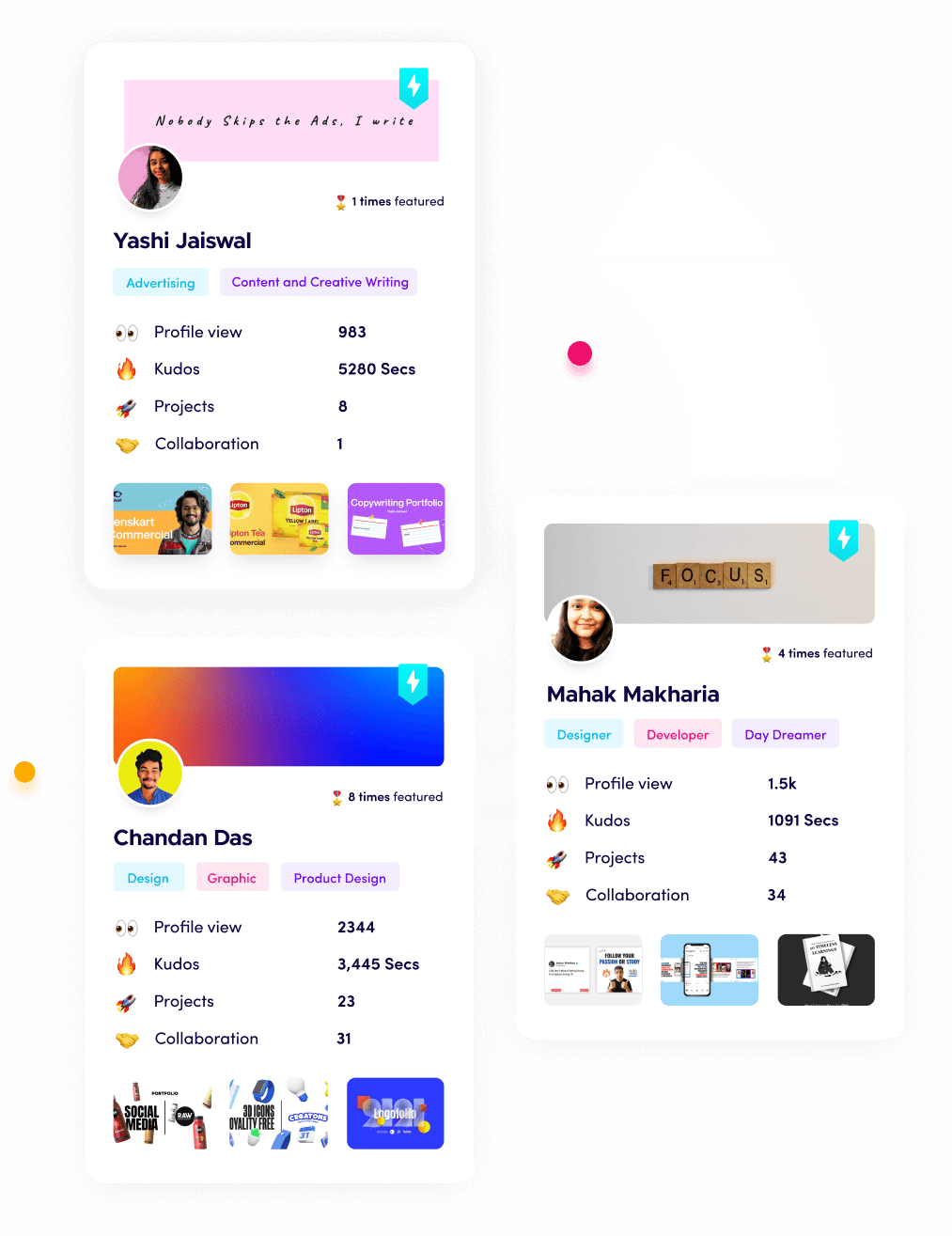
I’m Riten, founder of Fueler, a skills-first portfolio platform building the career infrastructure for 100 million creative professionals. Fueler connects talented individuals with companies through assignments, portfolios, and projects, not just resumes or CVs. Think of it as Dribbble/Behance for work samples combined with AngelList for hiring infrastructure.
So instead of asking which one is “best,” let’s follow the actual hiring journey.
From discovery to application, screening, interviews, and final evaluation, we’ll look at what recruiters are likely to check, what each asset should contain, and where candidates usually get it wrong.
Resume vs LinkedIn vs Portfolio: What Does Each One Actually Do?
Think of these three as different depths of the same professional story.
Your resume gives the shortest version. LinkedIn adds context. Your portfolio lets someone inspect the work behind your claims.
Resume: Your resume is a structured summary of your education, experience, skills, projects, and achievements. It is designed to help a recruiter quickly compare your background with a job description. For formal applications, internships, campus hiring, and job portals, it remains one of the most important documents.
LinkedIn: LinkedIn works more like a professional identity layer. Recruiters can discover candidates through searches based on skills, experience, job titles, and other professional information. This means your profile can matter even before you apply for a role.
Portfolio: A portfolio answers a different question: “Can you show me what you have actually done?” It can include campaigns, articles, designs, websites, research, presentations, code, case studies, or other relevant work.
They should tell one story: Your resume should not say you worked for two years while LinkedIn says three. Your portfolio should not present work unrelated to the role you are targeting. Consistency builds credibility because every asset reinforces the others.
Depth increases as the process moves forward: The resume gives the overview. LinkedIn gives additional professional context. The portfolio provides deeper evidence. You do not need to repeat the same information three times.
Why It Matters
Hiring involves uncertainty.
The recruiter does not know you personally, so each asset helps reduce a different kind of uncertainty.
Resume: Does this background fit?
LinkedIn: Who is this professional?
Portfolio: Can this person actually do the work?
Stage 1: When a Recruiter Discovers You, LinkedIn Can Get the First Look
Not every hiring process begins with an application.
Recruiters can search for candidates directly, particularly when they need people with specific skills or experience. LinkedIn's recruiting products are built around this kind of professional discovery.
That makes your LinkedIn profile important before you even know someone is looking.
Your headline needs to explain your direction: “Student” or “Looking for opportunities” gives a recruiter very little to work with. A clearer headline such as “Content Writer | SEO | B2B Content” immediately tells the reader what kind of professional you are becoming.
Your experience should be specific: “Worked in marketing” is weak. Explain what you actually did: managed campaigns, wrote SEO content, analysed performance, created social calendars, conducted research, or supported lead generation. Specific work creates stronger professional signals.
Skills need supporting evidence: Listing 30 skills does not prove that you possess them. Relevant experience, projects, certifications, recommendations, and portfolio work make those skills easier to believe.
Keep information consistent: If a recruiter discovers you on LinkedIn and later receives your resume, major differences can create unnecessary doubt. Employment dates, titles, education, and experience should broadly match across both.
Discovery is different from application: Your resume usually reaches a recruiter because you or someone else submits it. LinkedIn can put you in front of a recruiter before that happens. That makes discoverability an important advantage of maintaining a useful profile.
Why It Matters
At this stage, the goal is not to prove everything.
The goal is to make the recruiter think:
“This person looks relevant. Let me investigate.”
Your LinkedIn profile should make that next click easy.
Stage 2: When You Apply, the Resume Usually Takes Centre Stage
Once you submit an application, the question changes.
The recruiter is no longer asking who you are.
They are asking whether your background matches what they need.
That is where the resume becomes especially important.
Match the role honestly: Read the job description and identify the skills and experience that genuinely match your background. If the position needs SEO experience and you have it, make that visible. Do not hide relevant experience beneath unrelated information.
Make the first section useful: A recruiter should understand your professional direction quickly. If you are applying for content roles, relevant writing, SEO, research, editorial, or content experience should not be buried at the bottom.
Use outcomes instead of task lists: “Managed social media” describes an activity. “Created and managed monthly content strategy for three platforms” gives more context. If you have a genuine measurable result, include it.
Keep formatting simple: Recruiters should be able to find your experience, education, skills, and projects without searching. Design should support readability rather than compete with it.
Tailor emphasis, not your identity: You do not need a completely different resume for every job. Keep your factual career history consistent, but bring the most relevant projects, skills, and achievements forward for each application.
Why It Matters
Your resume is essentially the screening document.
Its job is not to tell your entire life story.
Its job is to give the recruiter enough relevant information to justify moving you forward.
Think trailer, not full movie.
Stage 3: When Someone Wants Proof, Your Portfolio Becomes More Important
This is where portfolios become powerful.
A resume tells someone that you can write.
A portfolio can show them how you write.
A resume says you have worked on campaigns.
A portfolio can show the campaign.
That difference matters.
Show relevant work: If you are applying for a content role, lead with articles, SEO projects, research, or content strategy. If you are applying for design, show relevant design work. The portfolio should reflect the job you want.
Give every project context: A screenshot alone makes the recruiter guess. Explain the problem, objective, your role, approach, and result. Even a short explanation can turn an ordinary sample into useful evidence.
Show your thinking: Strong portfolios do not only display the final product. They explain decisions. Why did you choose that strategy? What audience were you targeting? What changed after implementation?
Use real outcomes: Traffic, leads, conversions, engagement, adoption, rankings, efficiency, or other relevant outcomes can make work much stronger. But only use numbers you can genuinely support.
Curate instead of dumping: Five excellent projects are often more useful than fifty random ones. A recruiter should quickly understand your strongest capabilities without scrolling through years of unrelated work.
Why It Matters
The portfolio becomes valuable when the question changes from:
“Does this person look qualified?”
to:
“Can this person actually produce useful work?”
That is a question a resume alone cannot always answer.
Stage 4: During the Interview, Your Resume, LinkedIn and Portfolio Get Cross-Checked
The interview is where your professional story gets tested.
The interviewer may ask about a resume bullet, a LinkedIn experience entry, or a portfolio project.
Suddenly, vague wording becomes difficult to hide.
Know what you claim: If your resume says you led a project, be prepared to explain your specific contribution. If your portfolio says you increased results, know how the result was measured.
Use projects to create better conversations: A real project gives an interviewer something concrete to discuss. They can ask what went wrong, what you would change, why you chose an approach, or how you measured success.
Use your resume as the timeline: Your resume helps explain when you worked somewhere and how your experience developed. The interviewer can then dig deeper into specific roles and achievements.
Keep LinkedIn professional and accurate: Your public profile may become another reference point. It does not need to look like a personal-brand advertisement, but it should not contradict your application.
Evidence makes answers easier: When your claims come from genuine work, interview answers usually become more natural. You have real decisions, problems, mistakes, and outcomes to discuss.
Why It Matters
At interview stage, these assets stop working separately.
They become one professional story.
If that story is consistent, each asset strengthens the others.
If it is inconsistent, each asset creates another question.
Resume vs LinkedIn vs Portfolio for Freshers in India
Freshers often assume they have a disadvantage because they do not have years of employment history.
That is true in one sense.
But a lack of full-time experience does not mean a lack of evidence.
Projects, internships, freelance work, college work, competitions, volunteering, and self-initiated projects can all demonstrate relevant skills.
Build a focused resume: Include education, internships, projects, relevant skills, certifications, achievements, and experience. Remove irrelevant information simply because you are worried the page looks empty.
Use LinkedIn to show direction: You do not need to pretend to be an experienced professional. Clearly state what you are learning, what you have worked on, and what kind of roles you are pursuing.
Create projects around real problems: A marketing student could analyse a brand's content strategy. A designer could redesign an existing interface. A finance student could build a financial model. A developer could create and document an application.
Document your process: “Made a website” is not very informative. Explain the problem, technology, decisions, challenges, and outcome. Documentation turns an activity into evidence.
Never manufacture experience: Skills-based hiring makes proof more valuable, but fake proof creates more risk. Your projects do not need to look like Fortune 500 work. They need to be genuine and well explained.
Why It Matters
A fresher may not have five years of employment experience.
But they can still demonstrate:
“I can research.”
“I can write.”
“I can analyse.”
“I can build.”
“I can solve problems.”
That is the beginning of a professional portfolio.
Resume vs LinkedIn vs Portfolio for Experienced Professionals
Experienced professionals face a different problem.
They usually have too much information, not too little.
The challenge is deciding what deserves attention.
Make the resume selective: Ten years of experience does not mean ten years of bullet points. Recent, relevant achievements should receive more attention than old responsibilities.
Use LinkedIn for discovery: Experienced professionals may be approached directly rather than only applying for jobs. A clear profile helps recruiters understand your seniority, function, industry, and expertise.
Use your portfolio strategically: Senior professionals rarely need dozens of examples. A few strong case studies can demonstrate decision-making, ownership, leadership, and commercial impact.
Show business outcomes: Senior hiring often requires more than proving that you completed tasks. Where appropriate, show revenue impact, cost savings, growth, efficiency, retention, adoption, or other genuine business outcomes.
Respect confidentiality: Never publish confidential client information or internal company material simply to make your portfolio stronger. Anonymised projects or approved examples can still demonstrate your capabilities.
Why It Matters
Early-career evidence often says:
“I can do the work.”
Experienced evidence increasingly says:
“I have solved problems like this before.”
That is a much stronger career story.
What Are Indian Recruiters Looking For in the Current Hiring Market?
The hiring environment is becoming more skills-focused.
LinkedIn's 2025 research found strong movement toward skills-based hiring in India, while recent reporting has also highlighted the growing role of AI in recruitment and the difficulty recruiters face in identifying qualified candidates.
The practical lesson is simple: being discoverable is not enough.
Relevant skills matter: Employers need capabilities that connect directly to the job. A degree provides context, but it does not automatically demonstrate current ability.
Execution matters: Projects and work samples can make skills more tangible. What counts as proof depends on the profession.
Positioning matters: A candidate claiming every possible skill can become difficult to understand. Clear professional direction helps recruiters place you.
Accuracy matters: LinkedIn's recruiting systems can use information from profiles and resumes when helping recruiters identify candidates. Keeping your information accurate therefore matters.
Human evaluation remains important: Technology can assist recruitment, but recruiters still review information and make hiring decisions. Your documents should therefore work for both systems and humans.
Why It Matters
Modern hiring is becoming more information-heavy.
The easier you make your actual skills, experience, and evidence to understand, the easier it becomes for a recruiter to evaluate you.
What Should You Put in Your Resume, LinkedIn Profile, and Portfolio?
The easiest way to avoid repetition is to give each asset a different level of depth.
Think of them as three layers.
Resume: Include relevant experience, achievements, education, skills, and selected projects. Keep it concise enough for quick screening and focused enough to match the role.
LinkedIn: Expand the story. Use a clear headline, About section, experience, skills, education, projects, and other relevant professional information. Someone should understand your career direction even without your resume.
Portfolio: Go deeper into selected work. Explain the problem, your role, process, decisions, output, and results. The portfolio should answer questions the resume cannot.
Do not copy-paste everything: Repeating the same paragraph across three places adds little value. Instead, let each asset reveal another layer of information.
Connect the three: Your resume can point to your portfolio. LinkedIn can feature selected work. Your portfolio can explain projects mentioned in your resume. This creates a natural journey from summary to evidence.
Why It Matters
The strongest professional profile works like a funnel:
Resume → quick understanding
LinkedIn → professional context
Portfolio → detailed proof
Every layer should give the recruiter something new.
The Biggest Portfolio Mistake: Showing Work Without Explaining It
A portfolio can look impressive and still provide weak evidence.
A gallery of screenshots is not automatically a case study.
The explanation matters.
Start with the problem: Explain what needed to be solved, who the work was for, or what objective you were given. Without context, the reader cannot judge whether your solution was appropriate.
Clarify your contribution: If the project involved a team, explain what you personally handled. This makes your contribution easier to evaluate and prevents you from accidentally taking credit for someone else's work.
Explain your decisions: Why did you choose that design? Why that content strategy? Why that research method? Decision-making often reveals more about your ability than the final output.
Show outcomes honestly: Not every project needs a huge growth number. Explain what happened after the work was completed, implemented, published, or presented.
Remove weak projects: Your portfolio is edited evidence. If a project is irrelevant, repetitive, unfinished, or significantly weaker than the rest, removing it can improve the overall quality.
Why It Matters
A good portfolio does not simply say:
“Look what I made.”
It says:
“Here was the problem. Here is what I did. Here is why I did it. Here is what happened.”
That is much more useful to a hiring manager.
Which One Gets Read at Each Stage of an Indian Hiring Process?
There is no universal sequence. Companies hire differently, and roles vary.
But this is a useful way to think about the process:
Recruiter discovery: LinkedIn can matter heavily because recruiters can search for candidates before they apply. Your headline, skills, experience, and professional positioning determine whether your profile looks relevant.
Application screening: The resume usually becomes central because it provides a structured summary that can be compared with the role requirements.
Shortlisting: The resume and LinkedIn profile may reinforce each other. Recruiters can check whether the public profile supports the information in the application.
Skill validation: Portfolios, assignments, case studies, technical tests, and work samples become more valuable when the employer wants evidence of actual capability.
Interview and final evaluation: All three can matter because your answers should remain consistent with the professional story you have presented.
Why It Matters
There is no single winner because the hiring question changes.
At discovery:
“Who is this person?”
During screening:
“Does this background fit?”
During evaluation:
“Can this person actually do the work?”
Different assets answer different questions.
How Does This Connect to Building a Strong Career or Portfolio?
Your resume records your career. LinkedIn provides professional context. Your portfolio documents the evidence behind your experience.
That evidence becomes especially useful when you have limited experience or are moving into a new role. Documenting projects, decisions, responsibilities, and outcomes creates a record of execution instead of relying entirely on job titles.
Fueler is built around this idea of making proof of work easier to present.
The goal is not to look impressive everywhere.
It is to make your actual ability easier to understand.
Final Thoughts: Resume vs LinkedIn vs Portfolio
Stop trying to make one asset do all three jobs.
Your resume should make your background easy to screen.
Your LinkedIn profile should make you easier to discover and understand.
Your portfolio should make your ability easier to verify.
For freshers, that may mean using projects to demonstrate skills before they have extensive employment history.
For experienced professionals, it may mean turning years of work into a few strong case studies.
The hiring process will continue changing, but evidence will remain useful.
A claim tells someone what you say you can do.
A project gives them something they can actually examine.
Final Verdict
If you absolutely want one answer, there isn't a universal winner.
The resume is the core application document.
LinkedIn is the discovery and professional-context layer.
The portfolio is the proof-of-work layer.
So don't choose one.
Build all three, but give each a different job.
Let the resume get you understood.
Let LinkedIn get you discovered.
Let the portfolio show what you can actually do.
That is the more realistic way to think about hiring in India today.
Frequently Asked Questions
Is a portfolio more important than a resume in India?
Not always. The resume is usually more important during formal application screening, while portfolios become particularly useful for roles where work samples can demonstrate ability. The importance of each depends on the role, company, hiring stage, and candidate's experience.
Should freshers in India have both a resume and LinkedIn?
Yes. A resume provides a structured application document, while LinkedIn gives recruiters another way to discover and understand you. Keep the information consistent and use projects, internships, and relevant work to demonstrate your skills.
What should be included in a portfolio for a job application?
Include selected projects relevant to the role. Explain the problem, your contribution, process, final work, and outcome. Do not simply upload screenshots. A strong portfolio helps a recruiter understand both what you produced and how you approached the problem.
Do recruiters check LinkedIn after receiving a resume?
They may, but there is no universal process. Some recruiters discover candidates through LinkedIn first, while others begin with applications. Keeping your LinkedIn profile accurate and broadly consistent with your resume is therefore a sensible approach.
Is a portfolio necessary for every job?
No. Portfolios are particularly useful for roles where work can be demonstrated, such as design, writing, content, marketing, development, product, and research. Other positions may rely more heavily on resumes, interviews, assessments, references, or work history.
Why 100,000+ professionals use Fueler
Fueler helps professionals showcase proof of work through projects, assignments, case studies, and achievements.
Thousands of professionals use Fueler to create their digital portfolio
Thousands of projects are published on Fueler. Check here
Startups and Companies hire through proof of work on Fueler
Used by freelancers, creators, marketers, video editors, writers, designers, and product managers
Our mission is to help the next 100 million professionals build a verified professional identity through proof of work

What should you do next?
You've read the article. Now turn your skills into proof of work and unlock more opportunities.
Build your proof of work portfolio
Create a clean portfolio with projects, assignments, resumes, and AI stack details that companies actually want to see.
Create your Fueler portfolio →Apply through assignments, not resumes
Stand out by solving real tasks from companies hiring on Fueler.
Explore assignments →Get discovered by companies
Make your work public and let recruiters discover your skills through actual projects instead of keywords.
Get discovered →